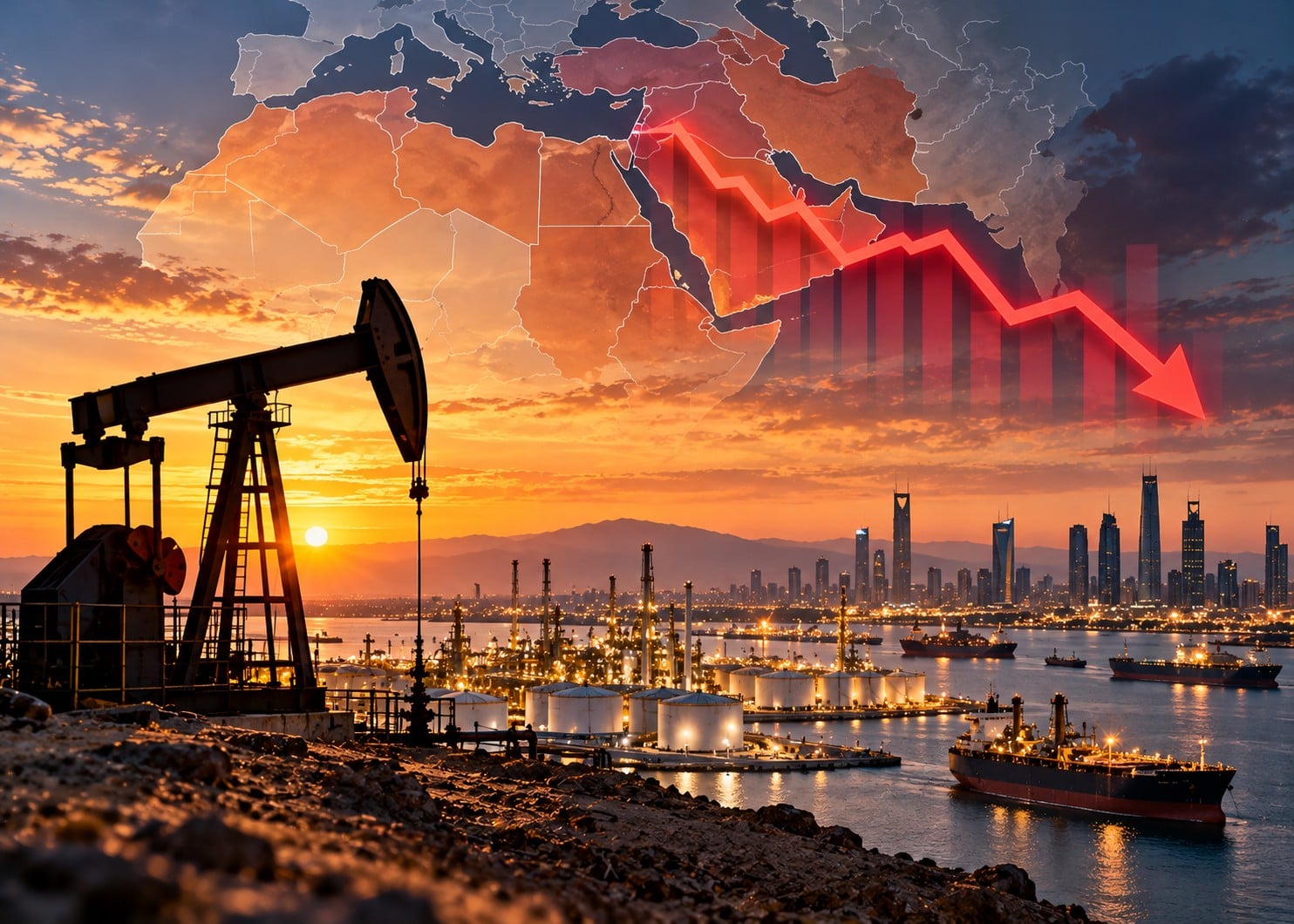
The International Monetary Fund expects economic output across the Middle East, North Africa and Pakistan to contract 1.3% in 2026, marking a sharp reversal as the Iran war disrupts energy production, shipping and regional commerce.
The contraction follows growth of approximately 3.3% in 2025.
The IMF expects growth to rebound to 6.6% in 2027, but warned that output across affected economies would generally remain below levels projected before the war.
Damage is concentrated among economies most exposed to energy production and shipping disruptions.
Gulf Cooperation Council economies are expected to contract this year with the exception of Oman. Bahrain, Kuwait and Qatar, along with Iraq, are projected to record double-digit GDP declines.
Saudi Arabia and the United Arab Emirates are also expected to enter recession in 2026, according to the IMF.
Oil-importing economies have generally proved more resilient because of domestic demand, remittances, tourism and government measures designed to cushion consumers from higher commodity prices.
The divergence demonstrates why high oil prices do not automatically strengthen every petroleum-exporting economy.
Exporters benefit from higher prices only when they can maintain production and move crude to international customers. Disrupted facilities and shipping routes can overwhelm the benefit of higher benchmark prices.
The IMF’s baseline assumes the conflict begins easing in early 2027 and trade gradually normalizes during the year.
That assumption represents the principal uncertainty surrounding the forecast.
A longer conflict or additional disruption to energy infrastructure and shipping could deepen the contraction while adding further inflation pressure internationally.
The economic consequences therefore extend beyond the region.
Energy supply disruptions can transmit through oil prices into transportation, manufacturing and consumer inflation, potentially keeping global interest rates higher for longer.
The next variables are the duration of the conflict, energy-production capacity and whether critical Gulf shipping routes can operate reliably enough to support the recovery assumed for 2027.