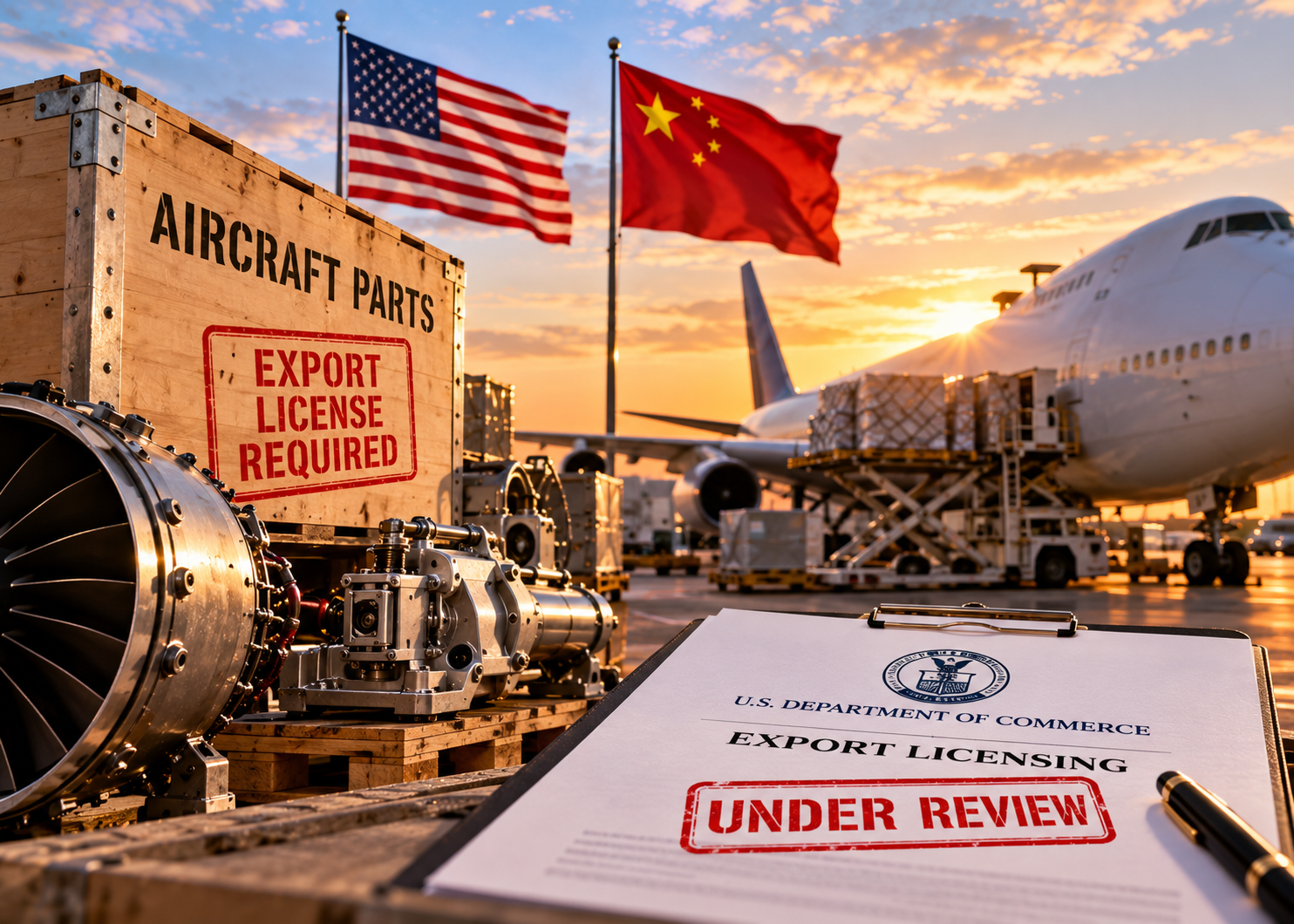
The United States has begun slowing approvals for exports of aircraft components to China as Washington looks for additional leverage in economic negotiations with Beijing.
The Commerce Department has slowed export licensing for airplane parts destined for China in recent weeks, according to people familiar with the matter.
Officials have also considered a draft regulation that could make it easier to restrict exports of landing gear and other aviation components.
One version included a new licensing requirement covering aviation hydraulic fluid supplied by U.S. companies.
The Commerce Department has separately limited the quantity of parts approved for shipment to Chinese state-owned aircraft manufacturer COMAC, with the objective of preventing the company from building large inventories.
The potential pressure point is significant because China’s commercial aviation industry remains dependent on components supplied by American and other Western manufacturers.
Washington is attempting to improve its negotiating position as it seeks concessions from Beijing involving rare-earth minerals, which are critical to U.S. industries including automobiles, semiconductors and aerospace.
The strategy illustrates the increasingly reciprocal nature of economic leverage between the world’s two largest economies.
China has substantial influence over global supplies of rare-earth materials and processing. The United States retains leverage through advanced technology, aerospace components and other specialized industrial products that Chinese companies cannot easily replace.
No broad new aircraft-component prohibition has been announced.
That distinction is important. The current development involves slower licensing, limits on certain shipments and consideration of additional regulatory authority rather than a blanket U.S. ban on aviation exports to China.
The Commerce Department and White House had not immediately responded to requests for comment when the development was reported. The Chinese embassy in Washington also had not immediately responded.
For markets, the issue is whether these measures remain negotiating leverage or develop into broader export restrictions.
Investors should watch U.S.-China negotiations, any formal Commerce Department rule, treatment of COMAC and potential exposure for American aerospace suppliers with significant Chinese customers.