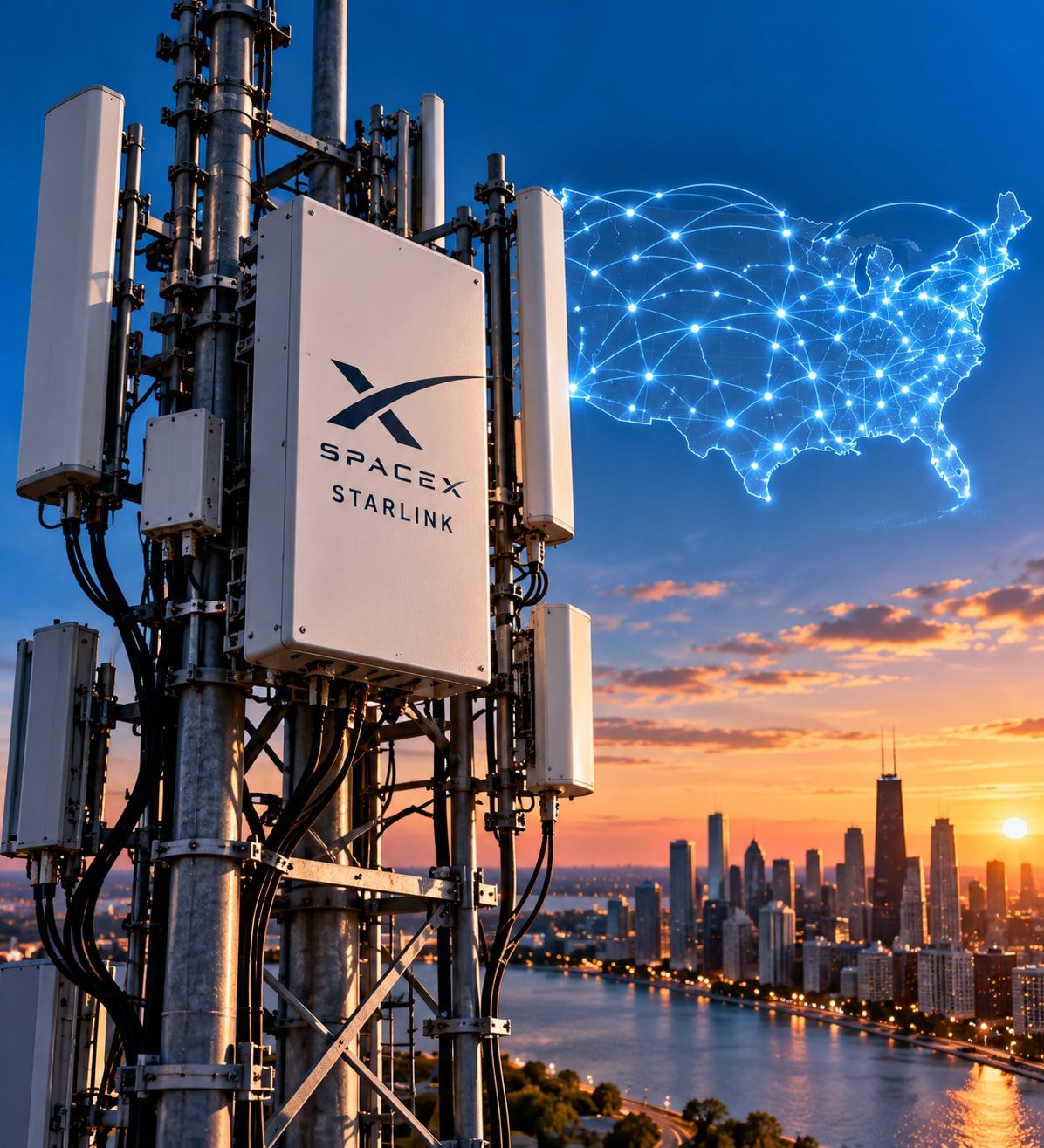
SpaceX is in discussions with cellular-infrastructure companies to secure access to at least 80,000 U.S. cell sites, a move that could accelerate its attempt to build a fourth nationwide wireless network.
The talks include mobile-infrastructure provider Crown Castle, according to reporting cited by Reuters.
The scale is significant. Eighty thousand sites would equal roughly half of the 158,500 purpose-built cell towers operating in the United States last year.
Crown Castle operates about 40,000 U.S. towers, while American Tower controls approximately 42,000.
The reported negotiations represent a major expansion of SpaceX’s telecommunications strategy.
SpaceX has also agreed to acquire a nationwide 800 MHz spectrum portfolio from Grain Management, subject to Federal Communications Commission approval. The spectrum is intended to support Starlink Mobile services using terrestrial and satellite infrastructure.
Building a conventional terrestrial network would require substantial additional investment.
TD Cowen estimates a nationwide network could cost more than $80 billion and take years to construct.
The market reacted immediately to the potential competitive threat.
AT&T, Verizon and T-Mobile shares fell between 4.2% and 5% in extended trading following the report. (Reuters)
SpaceX already operates the rapidly expanding Starlink satellite network, but a large terrestrial system would move the company deeper into direct competition with established U.S. wireless carriers.
The strategy could eventually combine satellites, low-band spectrum and conventional cell sites rather than relying exclusively on space-based connectivity.
That could strengthen Starlink Mobile in dense urban areas and inside buildings, where terrestrial low-band networks have important technical advantages.
The negotiations remain preliminary, and SpaceX has not confirmed agreements covering the reported 80,000 sites.
Investors will now watch potential tower agreements, FCC review of the spectrum acquisition, infrastructure spending and how aggressively AT&T, Verizon and T-Mobile respond to the emerging competitive threat.