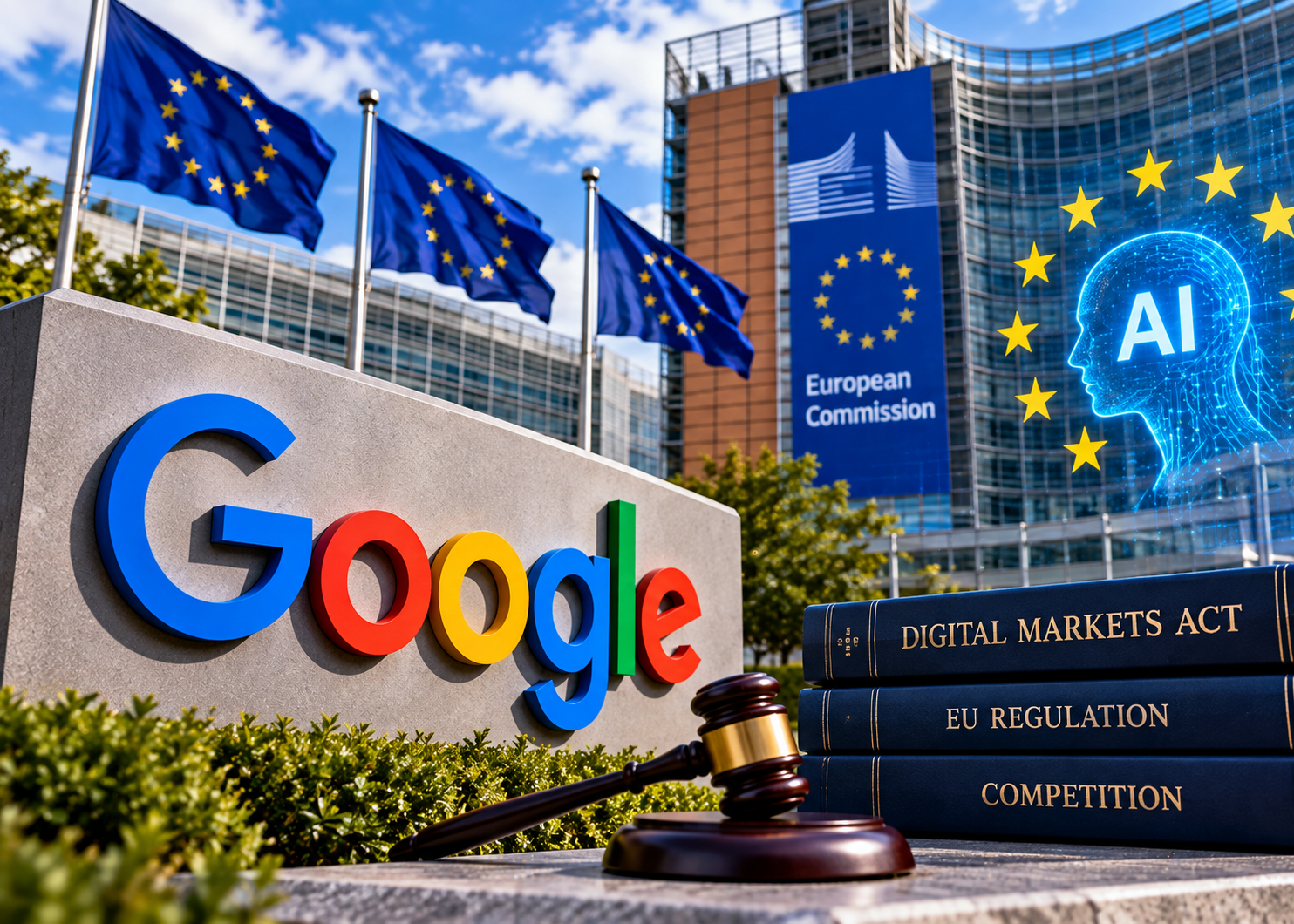
Google has challenged two European Union regulatory orders requiring it to provide greater access to artificial-intelligence rivals and competing search engines, escalating the confrontation over how Europe’s Digital Markets Act applies to the technology company’s core services.
The Alphabet unit filed appeals with the European Union’s General Court.
One contested order would require Google to provide AI competitors, including OpenAI, greater access to certain services. Another concerns access by rival search engines to Google search data.
Google argues that the requirements could weaken privacy protections and expose sensitive user information.
The company says sharing search data under the mandated framework could create security and privacy risks and potentially cause lasting harm to European users.
EU regulators take a different view.
The European Commission has argued that safeguards can protect user privacy and device security while allowing competitors greater access to services controlled by dominant digital platforms.
The dispute sits at the center of the Digital Markets Act.
Alphabet is one of the companies formally designated by the European Commission as a gatekeeper under the law, subjecting specified services to additional competition requirements.
The case matters beyond Google.
AI companies increasingly depend on access to search, online content, mobile platforms and other infrastructure controlled by established technology groups. Rules determining whether those resources must be opened to competitors could materially affect the competitive structure of Europe’s AI market.
The appeals do not themselves invalidate the EU requirements.
They begin a legal challenge in which Google will seek to overturn or modify the regulatory orders.
For technology investors, the important issue is whether European regulators can compel incumbent platforms to share strategically valuable data and infrastructure without courts concluding that those requirements create unacceptable privacy or security risks.
The eventual outcome could influence how the EU applies the Digital Markets Act to other technology platforms as artificial intelligence becomes increasingly integrated into search, mobile devices and online services.