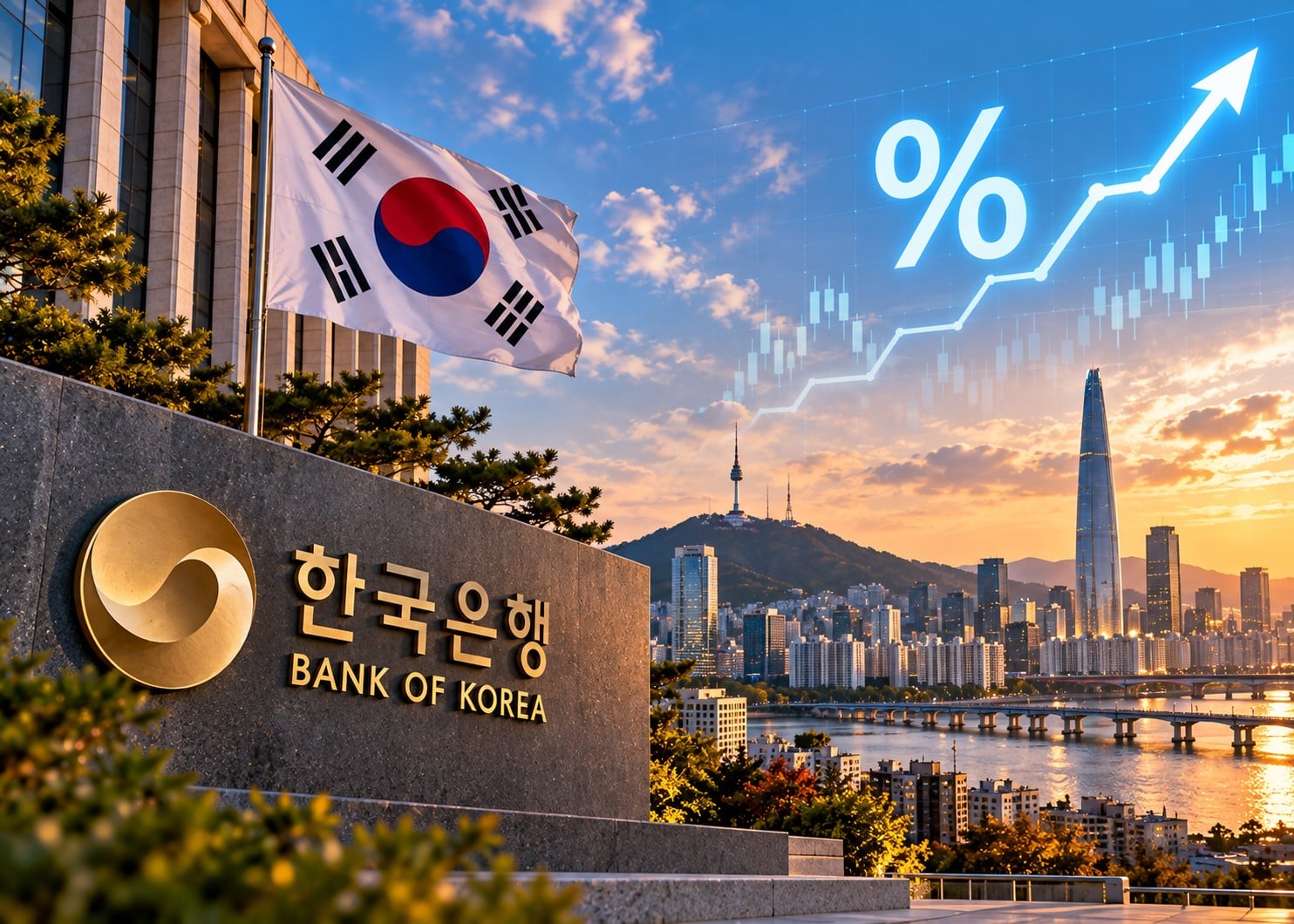
The Bank of Korea left its benchmark interest rate unchanged at 3.00% Thursday, pausing after consecutive increases while signaling that its tightening cycle may not be finished.
The seven-member monetary-policy board unanimously kept the seven-day repurchase rate unchanged, matching the forecast of economists surveyed by Reuters.
The decision follows rate increases in July and August, the Bank of Korea’s first consecutive hikes in more than three years.
The central bank said future increases remain possible and that it will determine their timing and pace based on inflation, financial stability and economic conditions.
Economic momentum is giving policymakers greater room to remain restrictive.
The bank said growth in both 2026 and 2027 is now expected to be considerably stronger than its previous forecasts of 3.3% and 2.9%, respectively.
South Korea’s export sector has been particularly strong, supported by global investment in artificial intelligence and technology.
Inflation also remains above the central bank’s 2% target. Headline inflation eased to 2.9% in September from 3.1% in August.
Markets broadly expect additional tightening, although Governor Shin Hyun Song emphasized that the central bank is not committed to a predetermined path.
That distinction is important.
A pause following consecutive increases does not necessarily signal the end of the tightening cycle. Instead, the Bank of Korea is giving itself time to assess how earlier increases are affecting inflation, housing, household debt and economic activity.
The next decision will therefore depend on whether strong exports and economic growth continue while inflation remains above target.
Another increase would reinforce South Korea’s divergence from economies where policymakers are already considering eventual monetary easing.