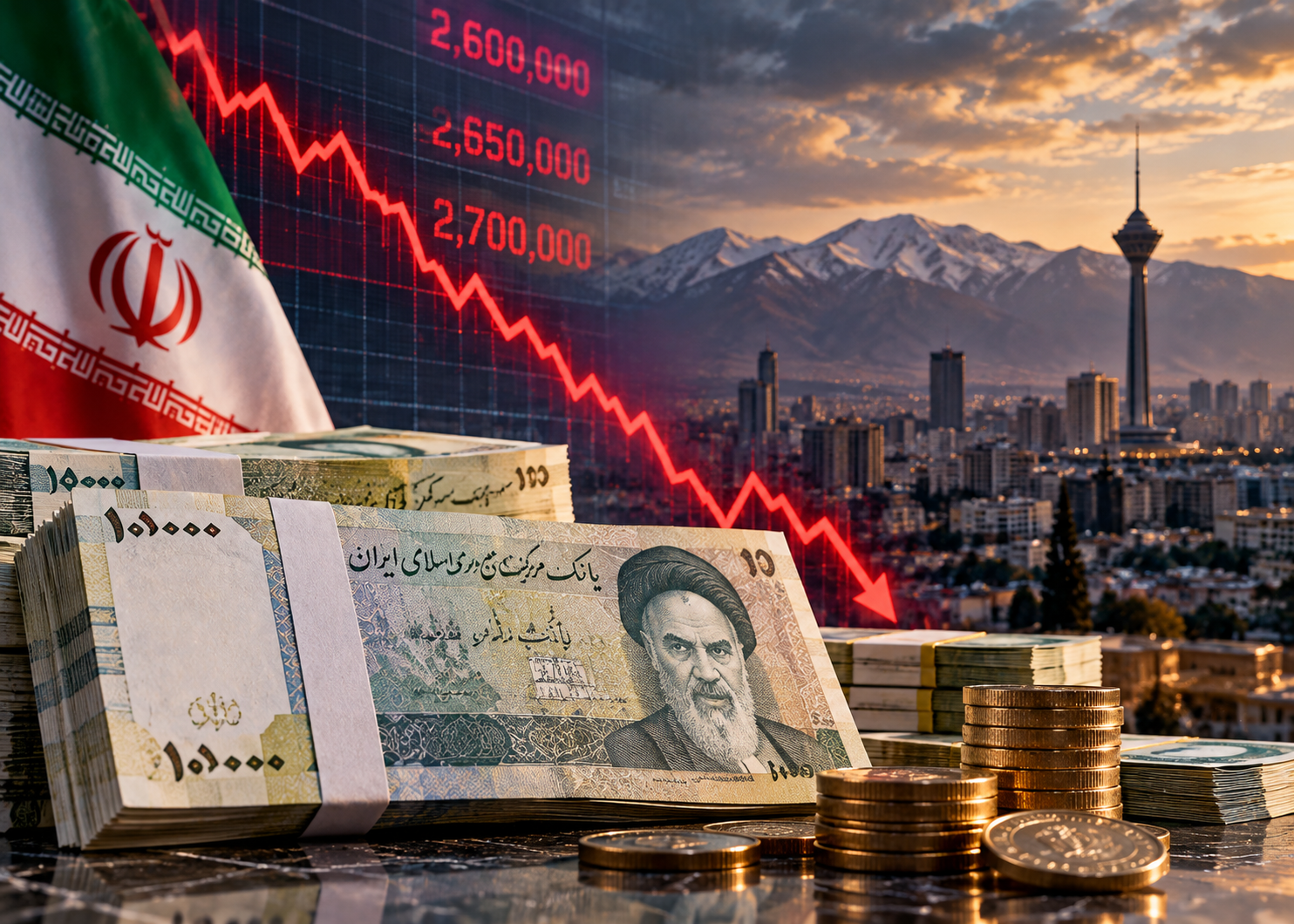
Iran’s rial fell to another record low as the country’s central bank began deploying as much as $2 billion through state banks in an attempt to support the currency.
The U.S. dollar traded around 2.688 million rials on the free market, compared with approximately 2.632 million previously, according to market data cited by Reuters. Another exchange-rate tracker put the dollar around 2.695 million rials.
Iranian state television said state banks had begun selling up to $2 billion in foreign currency.
The intervention comes after the rial lost more than half of its value during the past year.
Inflation is running above 70%, according to Reuters, severely reducing household purchasing power and increasing the cost of basic goods and housing.
External pressure is adding to the domestic problem.
U.S. sanctions and restrictions affecting Iranian oil exports have reduced access to one of the country’s most important sources of foreign currency. At the same time, households seeking protection from inflation and depreciation have increased demand for dollars, other hard currencies and gold.
That creates a difficult feedback loop.
Currency depreciation raises the local-currency cost of imported goods. Higher prices can then increase demand for foreign currency as households attempt to preserve savings, putting additional pressure on the rial.
The central bank’s intervention could provide temporary liquidity and reduce disorderly trading, but the longer-term trajectory will depend heavily on inflation, oil-export revenues, sanctions and confidence in domestic economic policy.
For markets, the immediate question is whether the $2 billion intervention can stabilize the exchange rate or whether continued demand for hard currency pushes the rial through additional lows.