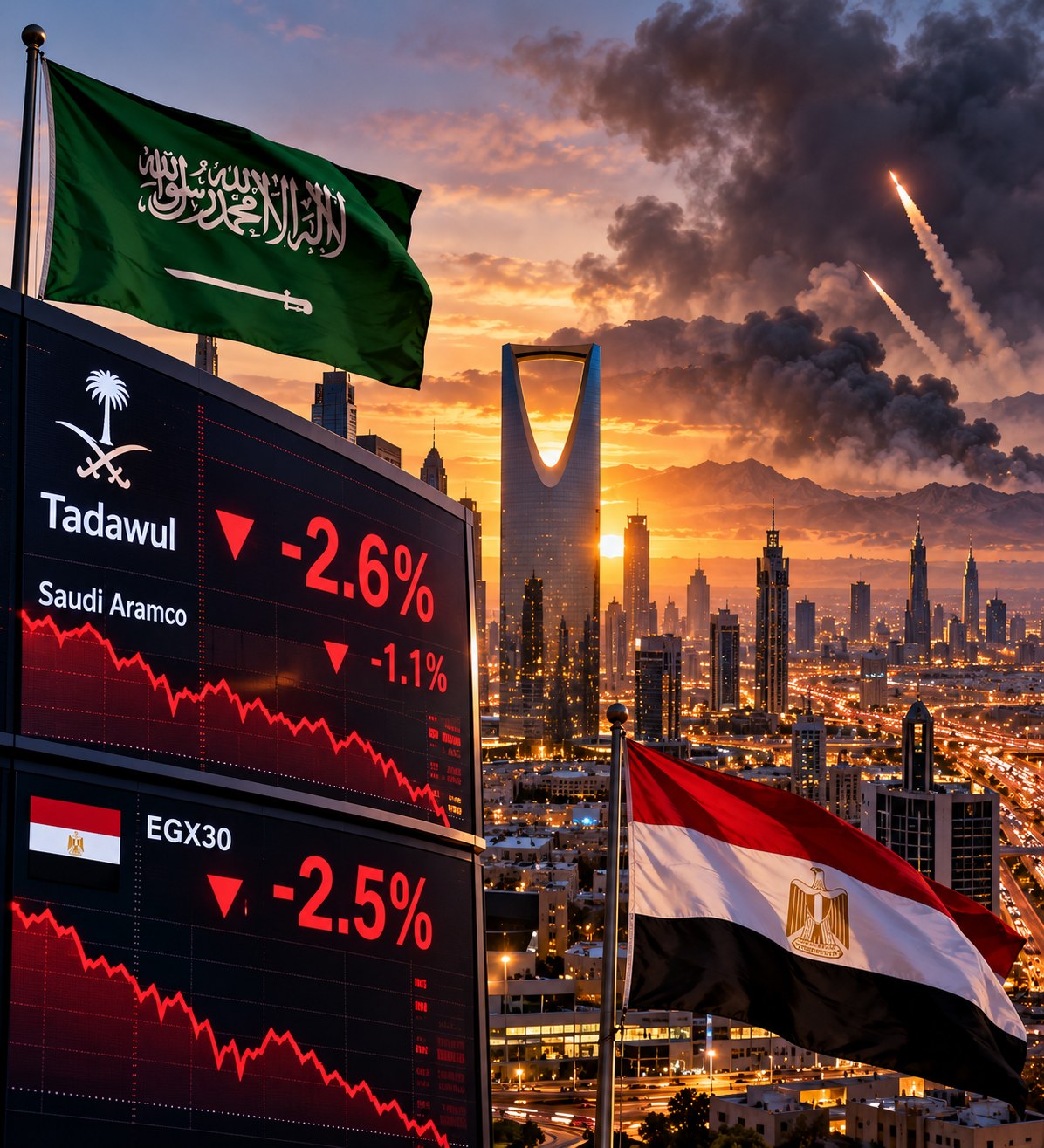
Saudi and Egyptian equities fell sharply Sunday as intensifying fighting between Saudi Arabia and Yemen’s Houthis pushed geopolitical risk back to the center of regional markets.
Saudi Arabia’s benchmark Tadawul All Share Index dropped 2.6%, putting it on course for its worst intraday performance since April 2025. Selling was broad, with Saudi Aramco down about 1.1%.
Egypt’s EGX30 simultaneously fell 2.5%, approaching its lowest level in nearly seven months, with every constituent trading lower.
The latest market reaction marks a significant deterioration from October 18, when Saudi equities gained even as other regional markets weakened. At that stage, higher oil prices were still providing support to Saudi energy shares despite geopolitical risk.
That relationship reversed Sunday.
Investors are now confronting the possibility that continued fighting could impose broader costs on Saudi infrastructure, corporate activity and regional investment sentiment rather than simply increasing the value of Saudi oil production.
Egypt represents an additional source of uncertainty.
Egypt’s parliament is scheduled to vote on October 26 on whether to authorize its armed forces to support Saudi Arabia if Riyadh requests assistance. President Abdel Fattah al-Sisi has said Egypt’s role would be limited to defending Saudi territory and borders rather than participating in attacks on Yemen.
The distinction between authorization and actual military deployment remains important. Parliamentary approval would not by itself mean Egyptian forces had entered the conflict.
For markets, however, the widening political involvement increases the risk that a Saudi-Houthi confrontation develops into a broader regional crisis.
Investors should now watch Saudi energy and transport infrastructure, Monday’s Egyptian parliamentary vote, regional equity flows and crude prices for evidence that geopolitical stress is spreading further into financial markets.