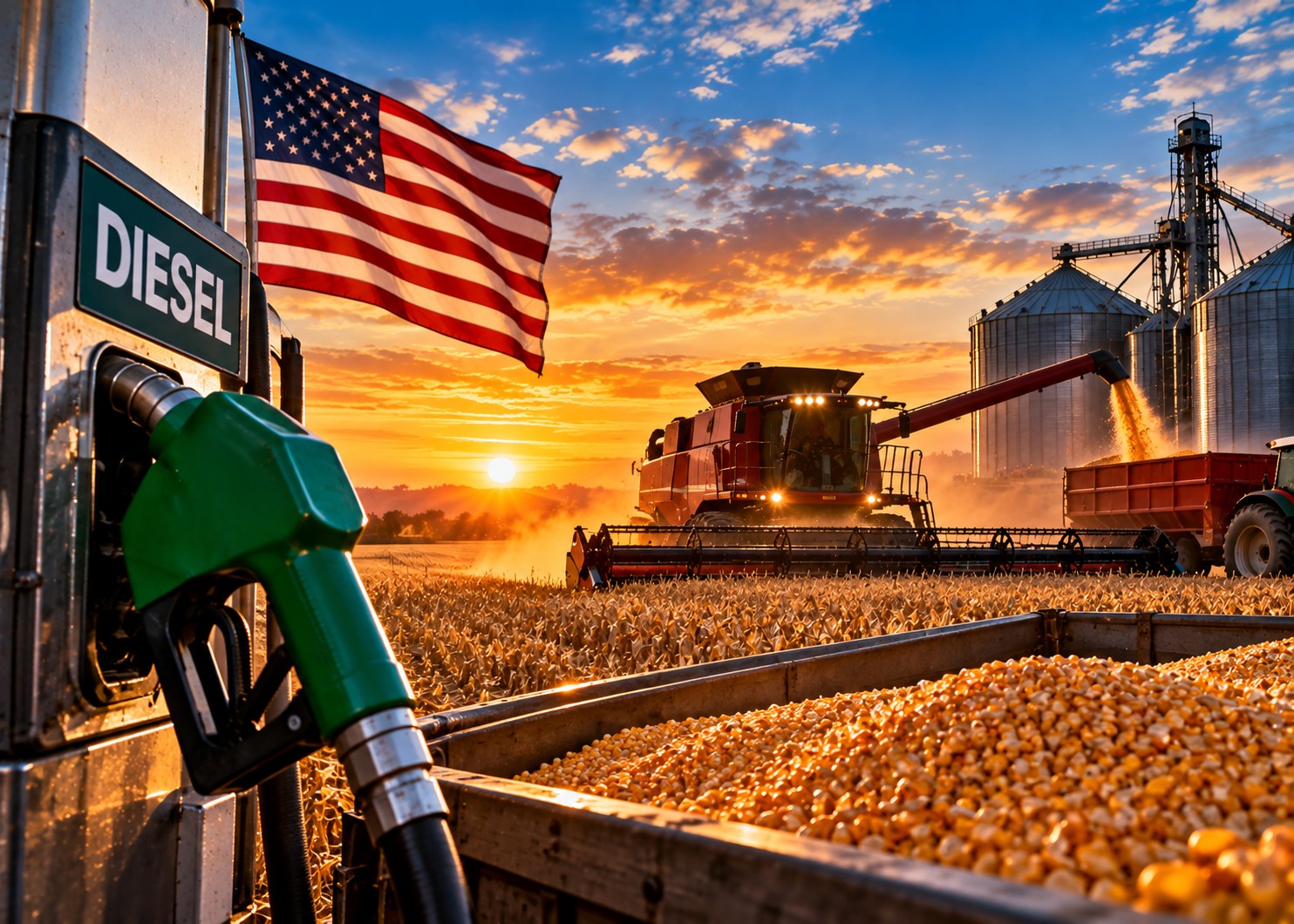
The U.S. government’s $8 billion fuel-relief program for farmers is expected to begin distributing payments after the November 3 election, with assistance likely arriving near the end of the year.
The program comes as elevated diesel prices increase the cost of operating combines, tractors and other agricultural equipment during harvest season.
The U.S. Department of Agriculture estimates farmers will spend nearly $5 billion more on fuel this year than last year.
The administration formally announced the $8 billion Harvest Fuel Relief Program on October 19.
The program will provide one-time payments to farmers facing higher input costs and temporary market disruptions.
Payment calculations will use models of average fuel consumption rather than requiring producers to document individual fuel purchases.
Government payments to farmers were already expected to exceed $47 billion this year.
Adding the diesel program would push that figure to approximately $55.4 billion, surpassing the previous record of about $45 billion reached during pandemic assistance in 2020.
Funding will come from USDA’s Commodity Credit Corporation, which also financed $12 billion in tariff-related farm relief earlier this year.
The economic significance extends beyond agriculture.
Persistently high diesel prices increase costs across food production, trucking, construction and other fuel-intensive industries.
Government subsidies can cushion those effects for targeted sectors but shift part of the cost onto federal finances.
The assistance could also help prevent elevated fuel costs from forcing farmers to reduce spending elsewhere during an already difficult agricultural environment.
For farmers, attention now turns to final payment rates, eligibility rules and the timing of disbursements.