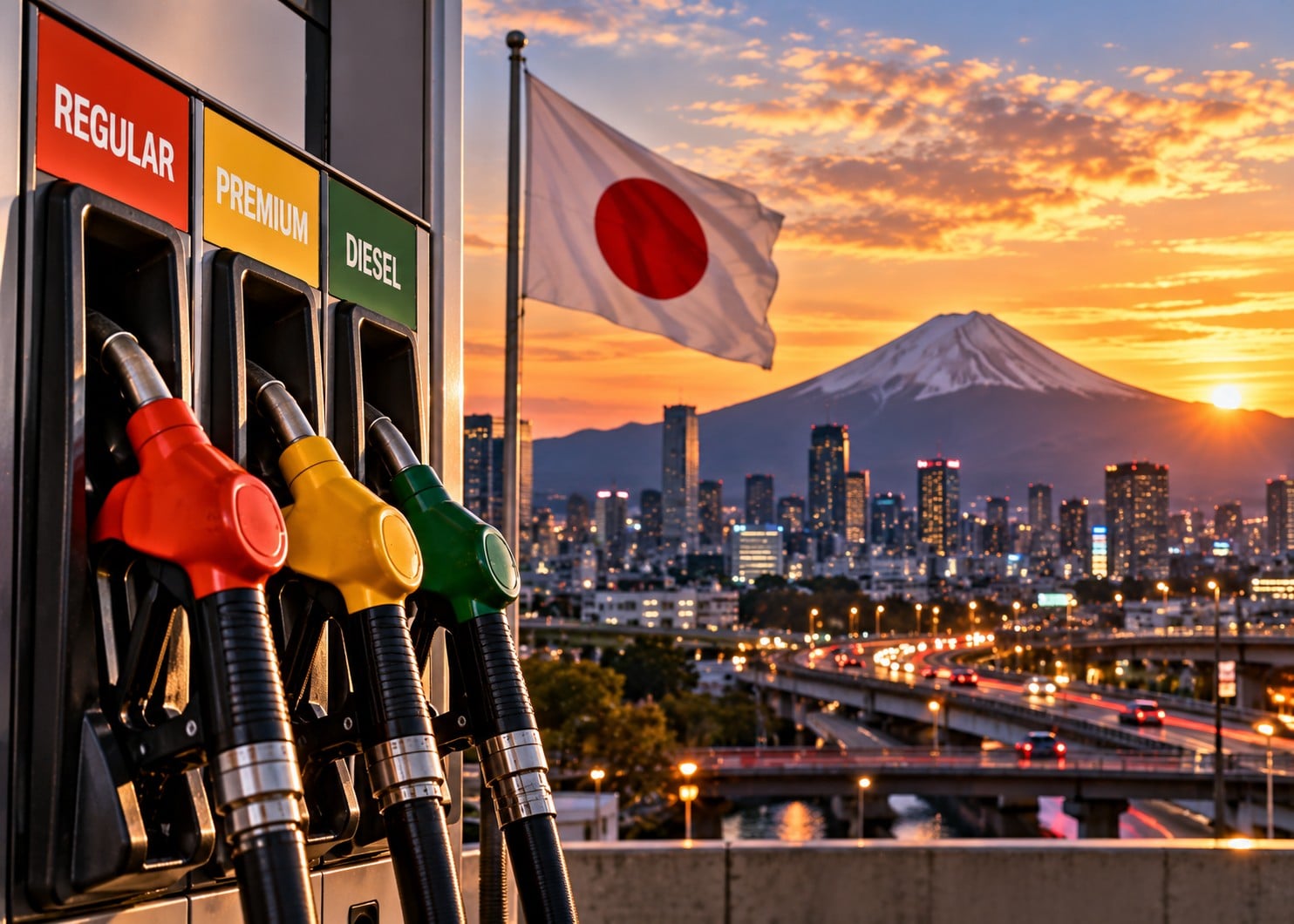
Japan is considering reducing emergency gasoline subsidies as early as December as elevated oil prices increase the fiscal cost of shielding households from the global energy shock.
The subsidy program was introduced in March following the surge in oil prices caused by the U.S.-Israeli war with Iran.
Maintaining the program is costing the government several billion dollars each month and has kept the nationwide average price of regular gasoline near 170 yen per liter.
The pressure is rapidly consuming a 3.1 trillion yen supplementary budget approved in June.
Under a proposal being discussed by the government and ruling coalition, subsidies paid to fuel distributors would be gradually reduced.
That could push average gasoline prices toward 175 yen per liter in December and 180 yen in January.
Prime Minister Sanae Takaichi said Friday she would instruct Industry Minister Ryosei Akazawa to review the program while considering current oil prices and the rate at which subsidy funds are being depleted.
The government is simultaneously considering other measures to protect households, including potentially restoring gas and electricity subsidies that expired in September.
The policy dilemma illustrates how sustained oil prices can migrate from commodity markets into government budgets.
Japan imports most of its energy, making households and businesses particularly sensitive to sustained increases in global crude prices and currency movements.
Reducing the gasoline subsidy could therefore increase consumer inflation just as households face broader pressure from higher living costs.
Investors will watch whether Tokyo formally approves the phase-down, how consumers respond to higher pump prices and whether other energy subsidies are expanded to offset the impact.