Wall Street technology stocks fell sharply Thursday as investors turned increasingly skeptical about the enormous amounts of capital being committed to artificial intelligence.
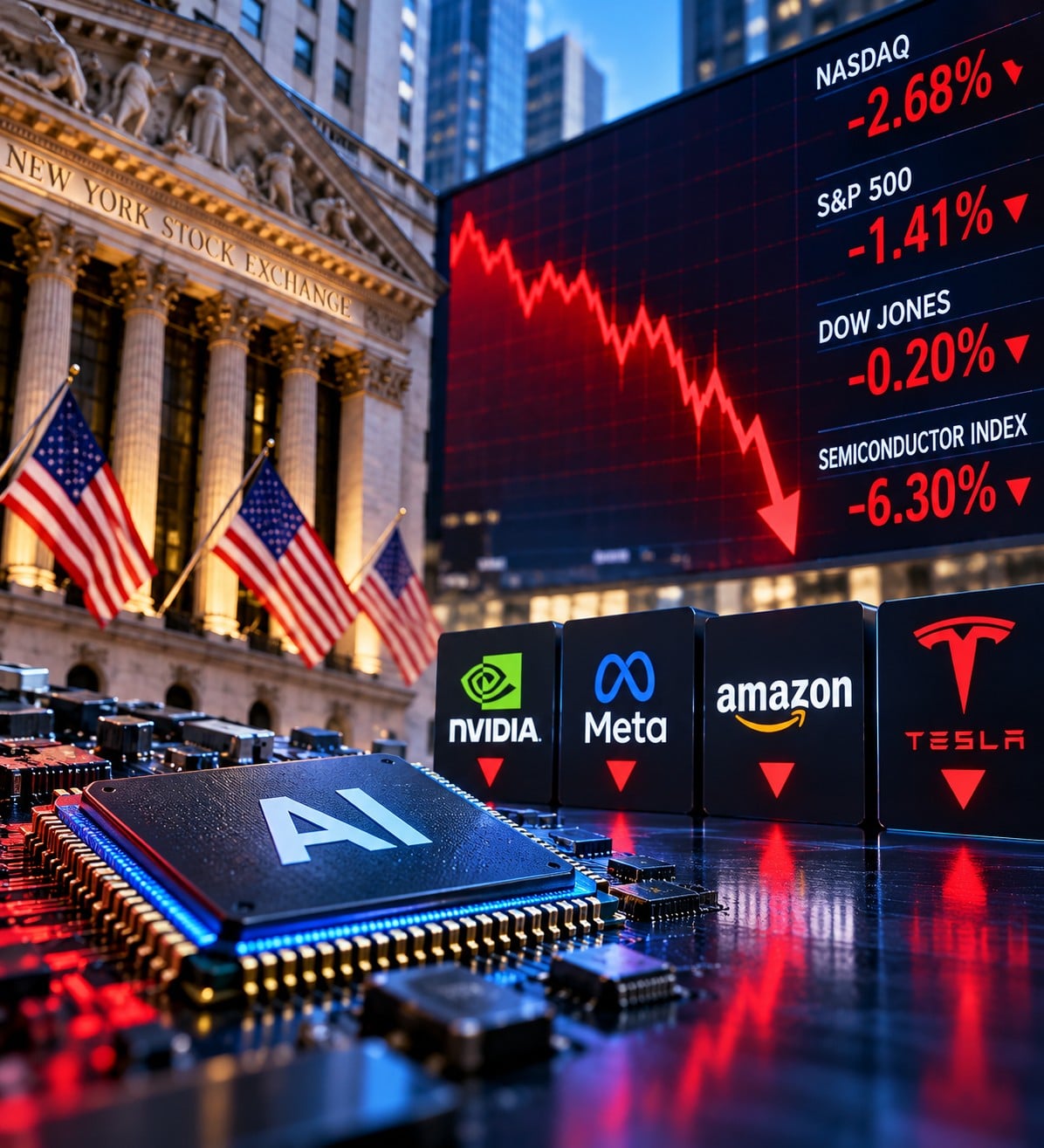
The Nasdaq Composite dropped 2.68%, its steepest daily decline since early June, while the Philadelphia Semiconductor Index plunged 6.3%.
The semiconductor selloff reflected renewed concerns over whether the enormous investment flowing into artificial-intelligence infrastructure can generate returns quickly enough to justify elevated technology valuations.
The reversal followed another round of corporate earnings and investment plans that forced markets to reconsider the economics of the AI boom.
Meta Platforms fell 7.5% even after reporting results above analyst expectations as investors focused on the company’s enormous AI-related expenditures and plans to issue non-voting shares through a two-for-one split.
Tesla declined 2.1% despite unexpectedly generating positive free cash flow during the quarter and reducing its 2026 capital-spending plans.
Other semiconductor companies suffered considerably larger losses.
Western Digital, Intel, Sandisk and Marvell each fell more than 7% as selling spread throughout the chip sector.
The market’s concern is increasingly shifting away from whether artificial intelligence can generate revenue.
Instead, investors are questioning whether the capital required to build data centers, purchase processors, expand networking capacity and secure electricity will produce acceptable returns.
Technology companies have committed extraordinary amounts of capital to AI infrastructure.
Those investments have supported semiconductor manufacturers, data-center operators, utilities and equipment suppliers, but they have also raised the financial threshold that artificial intelligence must clear to justify current valuations.
Thursday’s selloff indicates investors are demanding clearer evidence that revenue and cash flow can keep pace with infrastructure spending.
The broader market backdrop provided little relief.
Middle East tensions pushed crude oil to a five-month high, increasing concerns that energy prices could keep inflation elevated and force the Federal Reserve to maintain restrictive monetary policy.
The Dow Jones Industrial Average declined approximately 0.2%, while the S&P 500 fell 1.41%.
The next test will come from additional technology earnings and guidance.
If hyperscalers continue increasing capital expenditure without demonstrating stronger returns from AI, technology valuations could face additional pressure. Stronger evidence that AI investment is translating into sustainable revenue and cash flow would challenge that concern and potentially restore confidence in the sector.