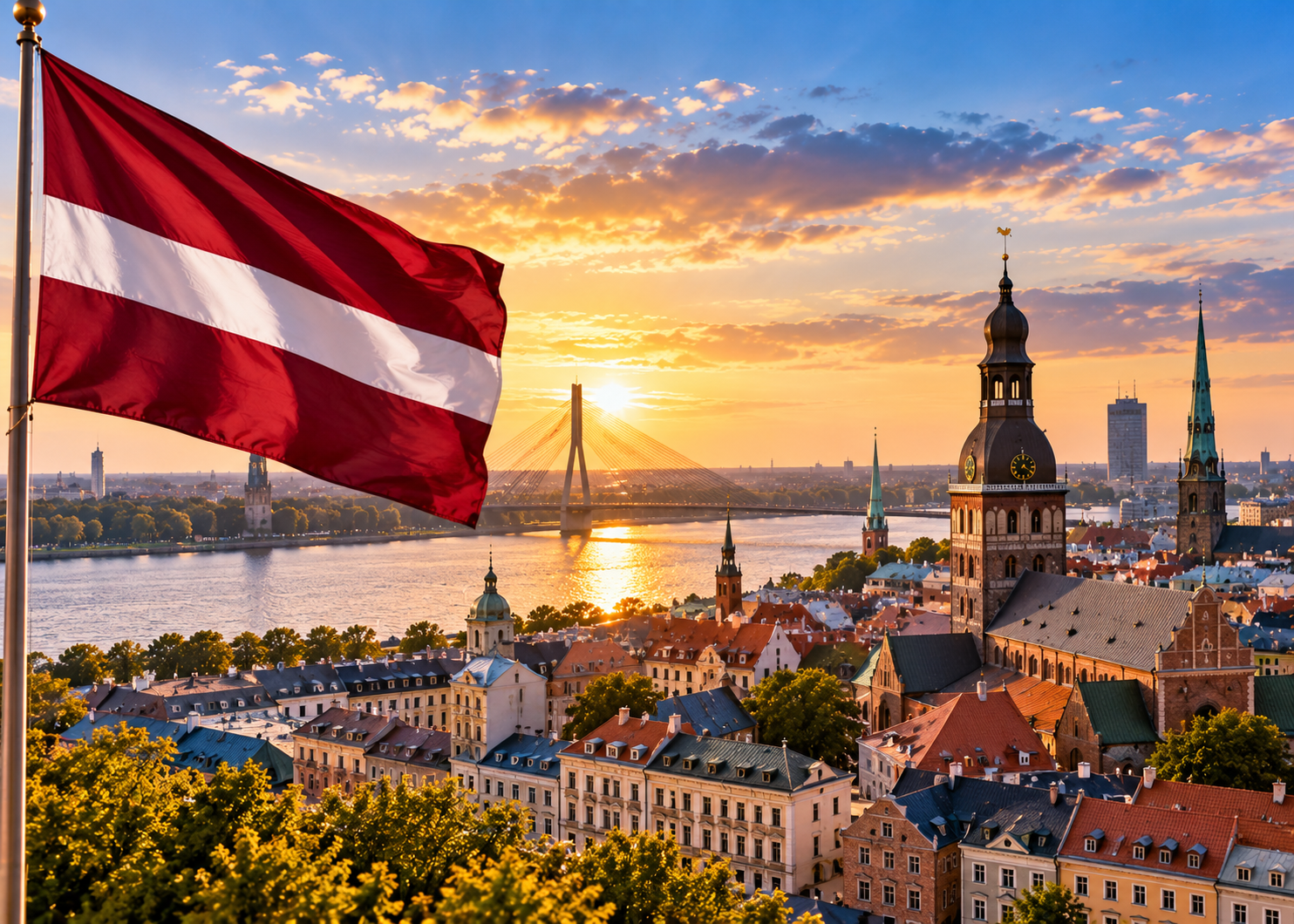
Latvian Prime Minister Andris Kulbergs is positioned to remain in power after his centrist United List secured the country’s largest parliamentary-election victory since Latvia regained independence in 1991.
With 97% of ballots counted, United List had secured 35.3% of the vote, enough for a projected 42 seats in Latvia’s 100-seat parliament.
The result gives Kulbergs a commanding position in negotiations to form another government, although his party remains short of the 51 seats required for an outright parliamentary majority.
The election carries significance beyond Latvia’s relatively small economy.
Latvia is a member of both NATO and the European Union and shares a border with Russia, making its foreign and defense policies relevant to Europe’s broader security architecture.
Kulbergs campaigned on maintaining strong support for Ukraine and continuing a hard line toward Moscow.
Economic concerns were also central to the election.
Latvia has struggled with weaker economic performance than some of its Baltic neighbors, putting pressure on the government to improve competitiveness while simultaneously financing higher defense and security spending.
That creates a difficult fiscal balancing act.
Governments across NATO’s eastern flank are increasing military expenditures while confronting the same demands for infrastructure, social programs and economic growth faced by other European countries.
Kulbergs’ victory provides political continuity but does not eliminate those pressures.
Coalition negotiations now become the immediate issue.
United List will need partners to establish a parliamentary majority, and the composition of that coalition could influence fiscal policy, defense spending and the pace of domestic economic reforms.
For European markets, Latvia’s direct financial weight is limited.
Its strategic importance is considerably greater.
The Baltic states remain central to NATO’s eastern defenses and among Europe’s strongest supporters of Ukraine. The election therefore reinforces political continuity along one of Europe’s most sensitive geopolitical frontiers.