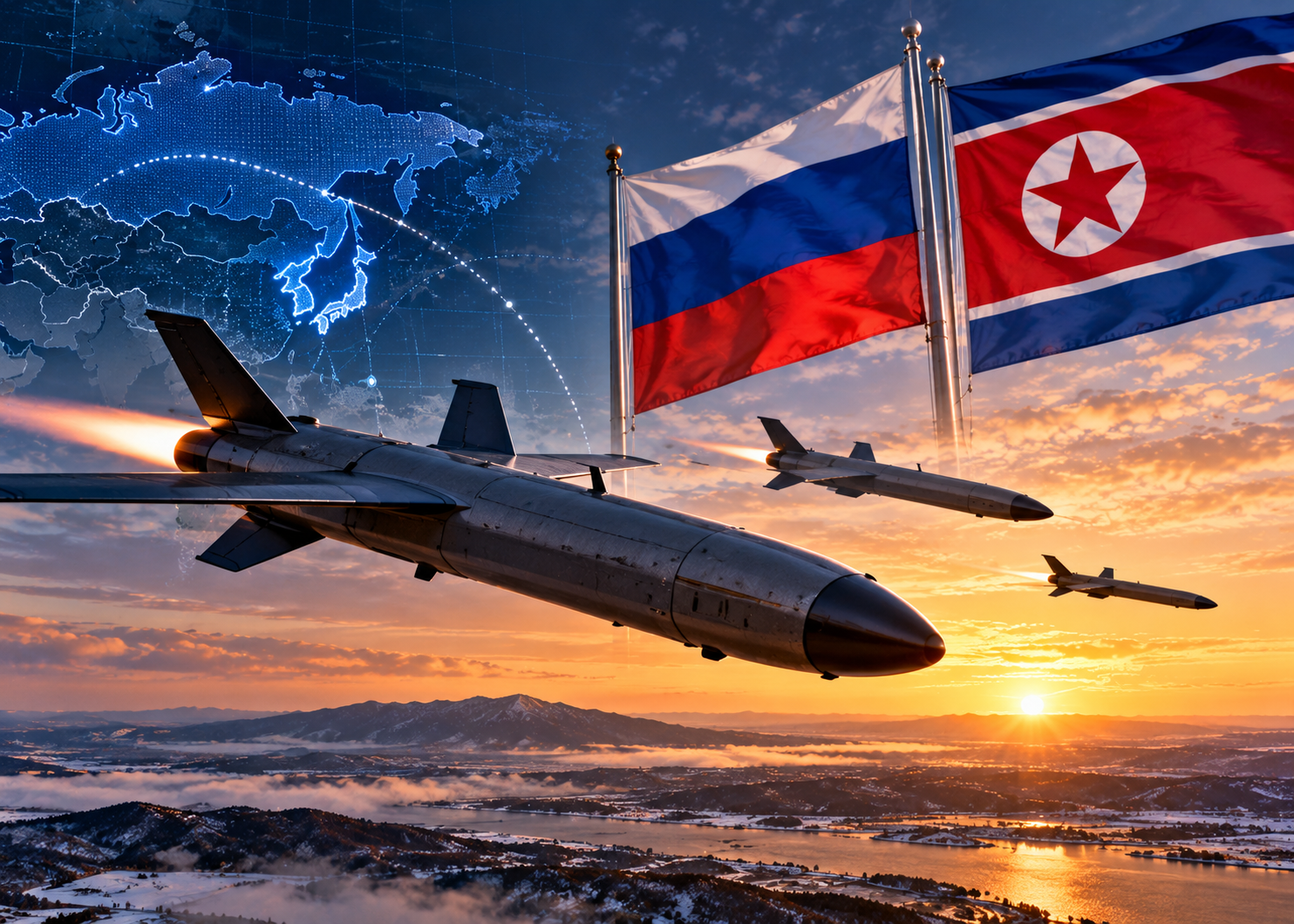
Ukrainian President Volodymyr Zelenskiy said Sunday that he believes Russia may have shared jet-powered drone technology with North Korea, raising concerns about the deepening military relationship between Moscow and Pyongyang.
The technology-transfer claim has not been independently confirmed and remains an assessment presented by the Ukrainian president.
Russia has sharply increased its use of jet-powered attack drones against Ukraine in recent weeks.
Unlike slower propeller-driven systems, jet-powered drones can travel substantially faster, reducing the amount of time available for defenders to detect and intercept them.
Ukraine currently has limited options for countering the systems and has used combat aircraft against some attacks.
Asked whether Russia had transferred technology behind the new generation of drones to North Korea, Zelenskiy said he believed Moscow was sharing military technologies with Pyongyang.
The allegation comes against a broader backdrop of established military cooperation between the two countries.
North Korea has supplied Russia with artillery ammunition and ballistic missiles during the Ukraine war, while North Korean troops have gained combat experience alongside Russian forces.
South Korea and Western governments have previously expressed concern that Pyongyang could receive advanced military knowledge or technology from Moscow in return for that assistance.
Jet-drone technology would add another dimension to those concerns.
Faster unmanned aircraft can complicate conventional air-defense networks by shortening interception windows and potentially forcing defenders to deploy more expensive missiles or crewed aircraft.
Any transfer of the technology could therefore have security implications extending beyond Ukraine if North Korea incorporates the systems or production knowledge into its own military capabilities.
The development also highlights the rapidly changing economics of aerial warfare.
Russia and Ukraine are increasingly deploying inexpensive unmanned systems while defense companies race to develop cheaper methods of detecting and destroying them.
For now, however, the central Russia-North Korea technology-transfer claim remains unverified.
Independent evidence that Moscow transferred designs, components or manufacturing expertise would materially change the significance of the story, potentially turning an allegation from Kyiv into a broader proliferation issue affecting both European and East Asian security.