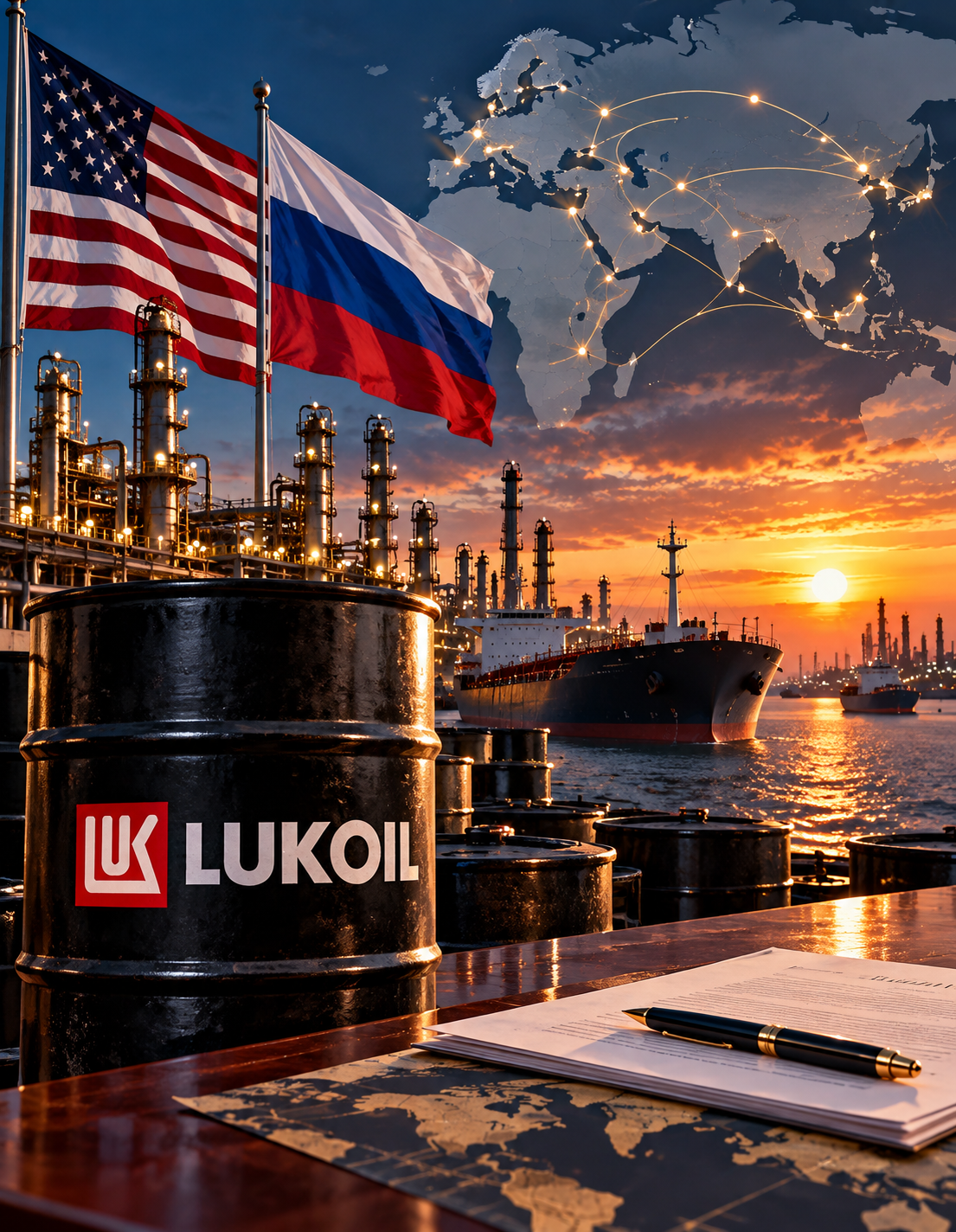
U.S.-Russia negotiations surrounding the war in Ukraine have expanded to include discussions over a potential multibillion-dollar transaction involving international assets owned by Russian energy producer Lukoil.
The proposed transaction would involve a broad portfolio of Lukoil assets outside Russia, including oil fields, refineries and fuel stations around the world.
According to reporting by The New York Times subsequently reported by Reuters, Russian President Vladimir Putin raised the potential transaction during a September 5 Kremlin meeting with U.S. negotiators Steve Witkoff and Jared Kushner.
The group pursuing the transaction reportedly includes U.S. investor Todd Boehly, Middle Eastern business groups with connections to people involved in the negotiations, and an arm of the U.S. government.
No transaction has been completed, and significant regulatory and political hurdles remain.
Any transfer involving Lukoil’s international assets could require approval from both Washington and Moscow, while U.S. sanctions and other restrictions involving Russian energy assets could require additional government authorization.
The White House, U.S. Treasury Department and Lukoil had not publicly confirmed an agreement when the reports emerged.
The development is significant because it introduces a major commercial-energy component into negotiations that have primarily centered on ending the war in Ukraine.
Lukoil controls an extensive international energy portfolio, meaning a transaction could affect ownership of producing fields, refining assets and downstream fuel businesses across multiple markets.
It also comes while global energy markets remain unusually sensitive to disruptions in Russian and Middle Eastern supply.
The reported proposal therefore sits at the intersection of diplomacy, sanctions policy and global energy markets.
For investors, the next signals will be whether the governments involved formally acknowledge the negotiations, which Lukoil assets would be included, how the transaction would be financed and whether U.S. sanctions would need to be modified or waived.
Until those details emerge, the proposal remains under discussion rather than an agreed transaction.