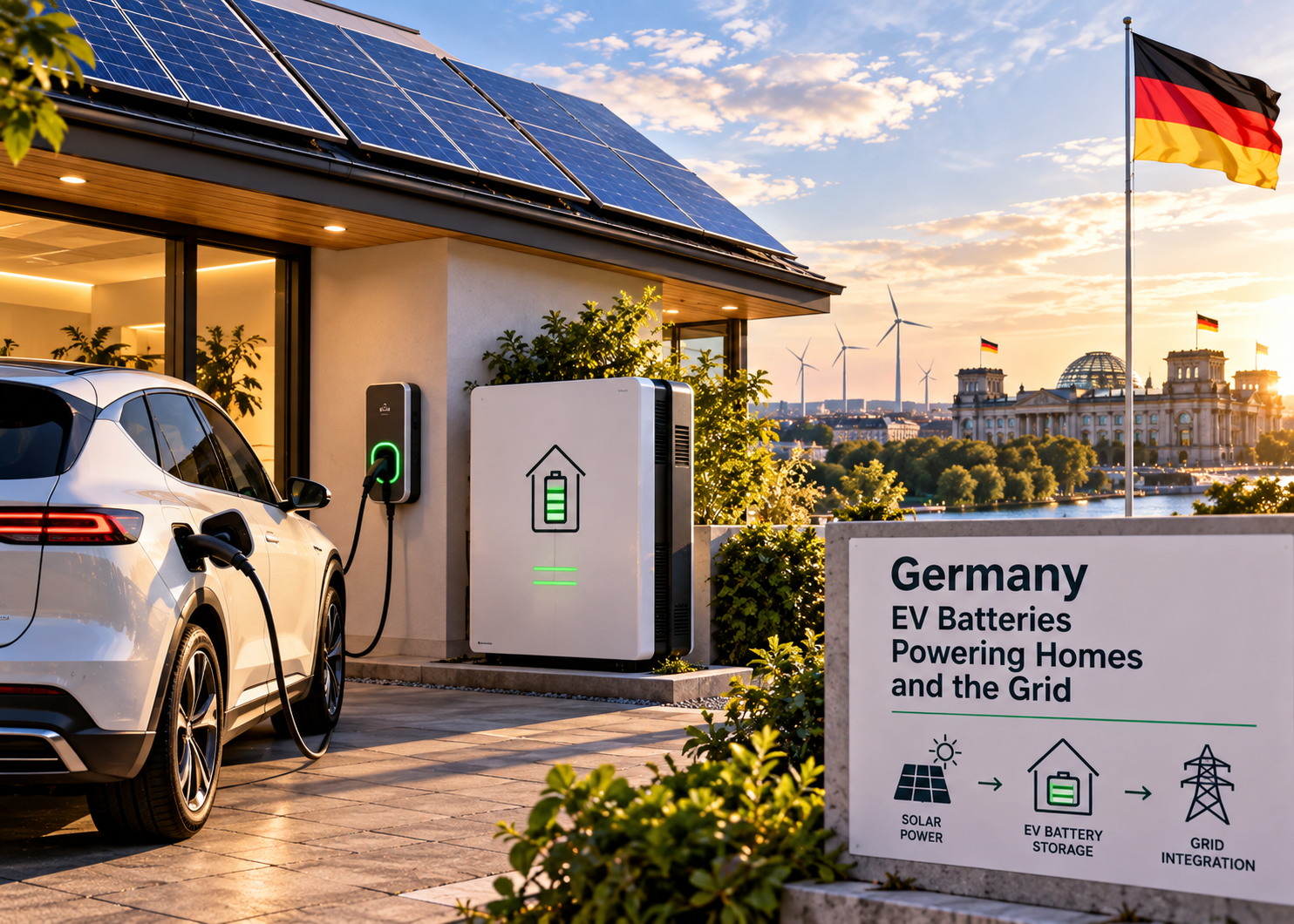
Germany’s energy regulator has cleared an important regulatory obstacle to using electric-vehicle batteries as part of the country’s electricity system.
The Bundesnetzagentur issued new rules Thursday allowing EV owners to store electricity in their vehicle batteries and later use that power in their homes or feed it back into the grid.
The decision addresses a longstanding problem for households combining electric vehicles with subsidized rooftop solar systems.
Under the previous framework, mixing electricity from the grid and solar panels inside the same battery could jeopardize renewable-energy support payments because regulators could not easily determine where electricity being exported back into the grid originated.
The new MiSpeL framework — short for Market Integration of Storage and Charging Points — establishes an accounting system designed to separate those electricity flows.
Fifteen-minute meter readings will distinguish electricity originating from solar generation, the grid and storage systems. That allows eligible renewable power to retain its support treatment while giving consumers greater flexibility over how batteries are charged and discharged.
In practical terms, an EV owner could charge a vehicle when electricity is inexpensive, use the battery to supply a home when prices rise or potentially sell electricity back into the grid when market conditions make that attractive.
That turns electric vehicles from pure electricity consumers into potential distributed energy-storage assets.
The change could become increasingly important as Germany adds renewable generation. Solar and wind output can vary sharply throughout the day, increasing the value of flexible storage capable of absorbing electricity when supply is abundant and returning it when the system is tighter.
Implementation will not be immediate everywhere.
During a transition period lasting until September 30, 2027, users will need approval from grid and metering operators while companies develop the necessary information-technology and billing systems.
For utilities, automakers and energy-storage companies, the key question is whether the regulatory change produces widespread commercial adoption of bidirectional charging.
Investors should watch rollout by German grid operators, automaker support for vehicle-to-grid systems and the economics available to households that use EV batteries as flexible storage.