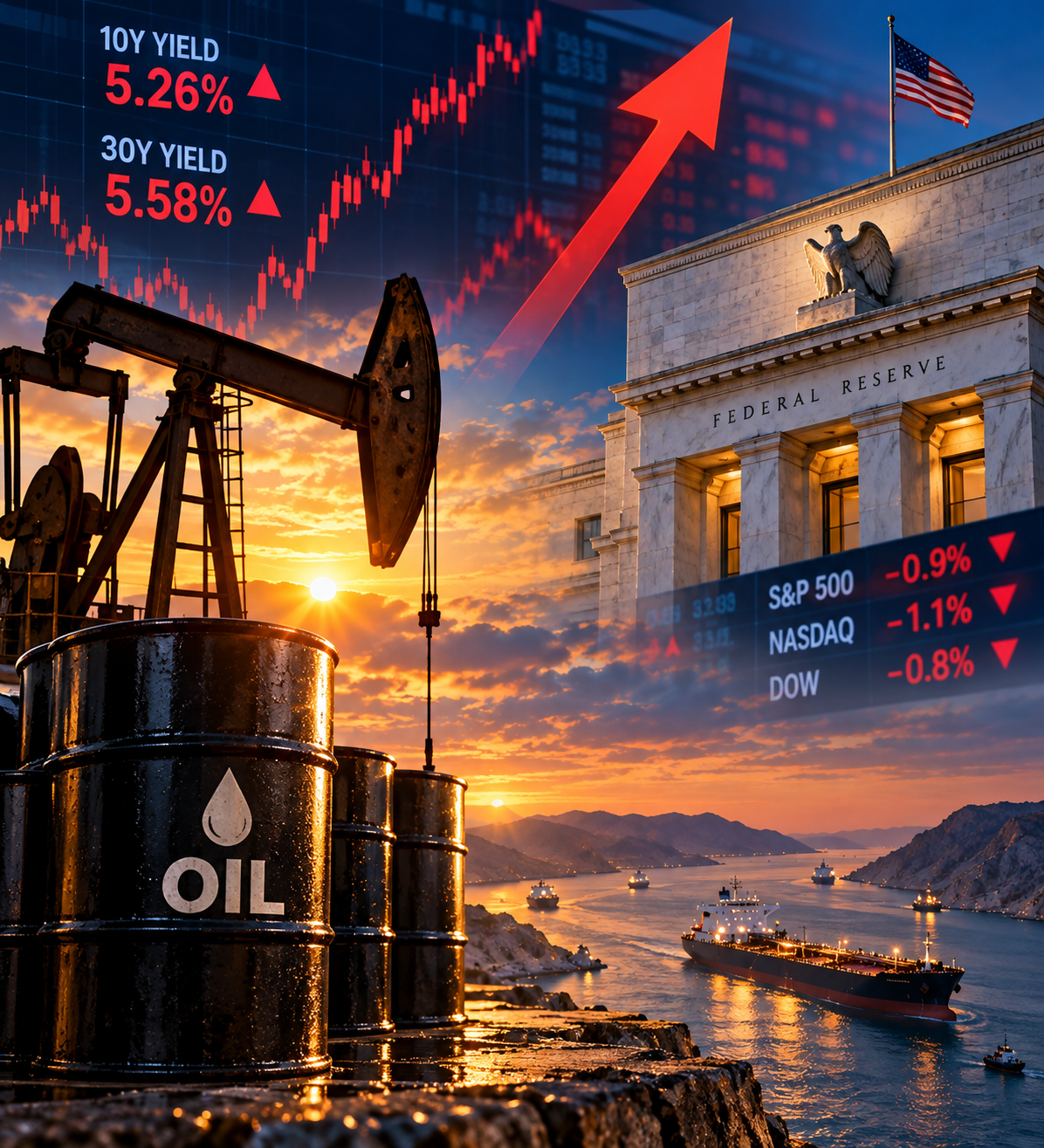
The market consequences of the U.S.-Iran diplomatic stalemate intensified Monday as higher oil prices pushed Treasury yields to multi-decade extremes, pressured Wall Street and strengthened expectations that the Federal Reserve will raise interest rates again.
Brent crude was trading near $107.86 a barrel, up about 3.4%, while U.S. crude rose roughly 3.5% to $95.60 after President Donald Trump rejected an Iranian proposal aimed at ending the conflict and reopening the Strait of Hormuz. Trump has said negotiations are expected to continue.
The significance now extends well beyond energy.
The benchmark 10-year Treasury yield climbed about 8 basis points to 5.26% after touching its highest level since June 2007. The 30-year yield rose to roughly 5.58%, its highest since May 2004. Two-year yields have risen about 56 basis points during September, putting them on course for their largest monthly increase since February 2023.
Wall Street weakened alongside bonds. The S&P 500 was down about 0.9%, the Nasdaq Composite about 1.1% and the Dow roughly 0.8% in the latest market snapshot.
Interest-rate markets were pricing approximately a 70% probability that the Fed will raise rates for a second consecutive meeting in October. That represents an important escalation from the morning narrative: the oil shock is no longer simply an energy-market event but part of a broader repricing of inflation and monetary-policy risk.
Federal Reserve Governor Lisa Cook reinforced the inflation concern Monday, saying she expects continued price pressure in coming months from higher oil prices and AI-related demand. Cook stopped short of endorsing another rate increase, stressing that future policy adjustments will depend on incoming economic data.
Gold provided another signal of the shift. Spot bullion fell almost 4% toward $4,120 an ounce as higher Treasury yields and a firm dollar reduced the appeal of non-yielding assets.
The market now faces a feedback loop in which geopolitical risk raises energy costs, higher energy prices worsen the inflation outlook, and inflation concerns push yields and expected policy rates higher.
That combination matters particularly for richly valued technology companies and other long-duration assets because higher bond yields raise the discount rate applied to future earnings.
The next test is whether U.S.-Iran talks make enough progress to reverse the oil move. Markets will also turn toward this week’s U.S. employment and inflation data, which could determine whether the current repricing toward another Fed hike strengthens or retreats.