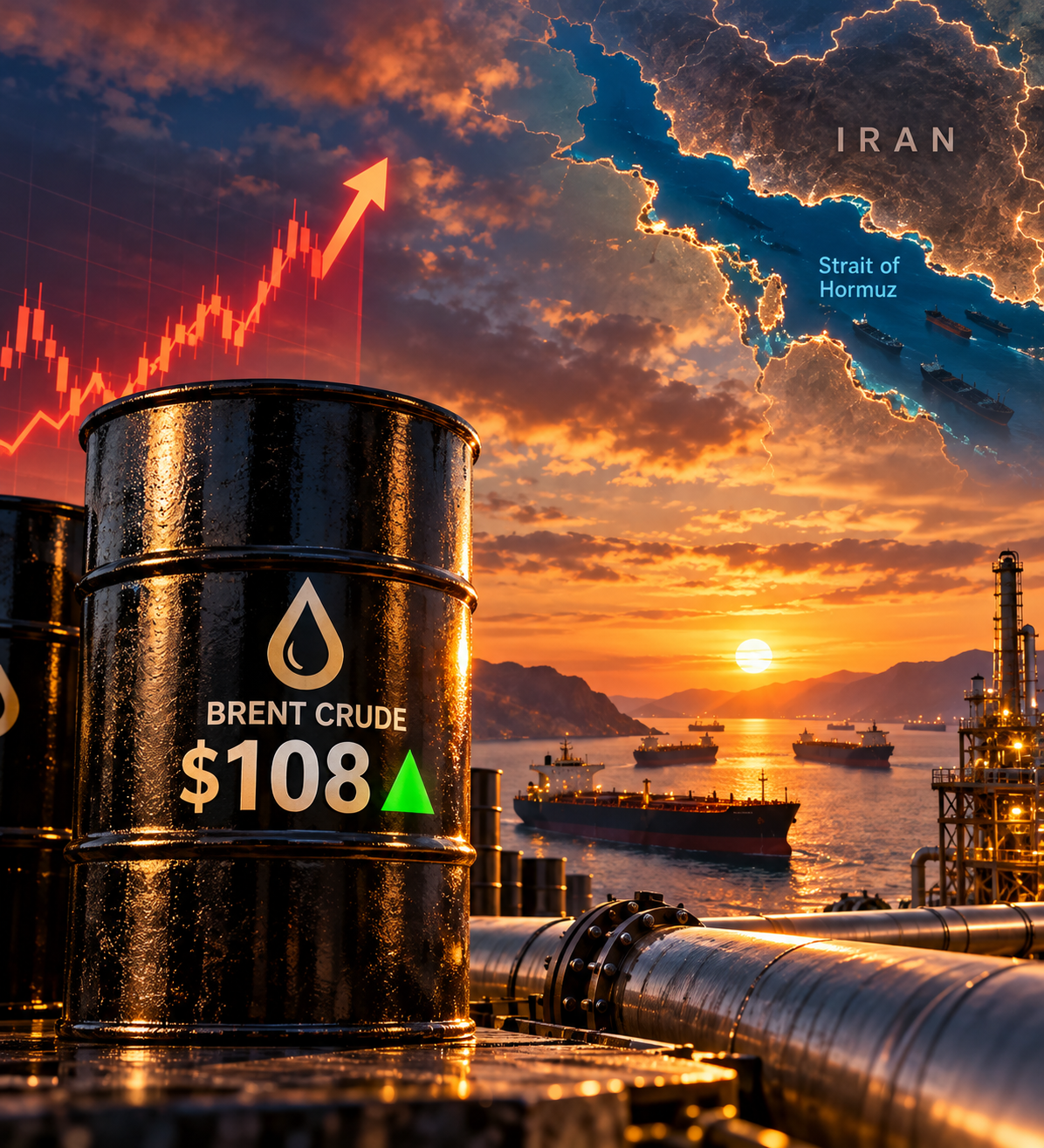
Oil prices surged Monday as stalled negotiations between the United States and Iran revived concerns over Middle East supply risks, feeding directly into inflation expectations and a broader repricing across global markets.
Brent crude rose about 4% to roughly $108 a barrel, while investors simultaneously moved toward a more aggressive Federal Reserve outlook. Interest-rate markets were pricing approximately a 68% probability of a second consecutive Fed rate increase in October.
The move followed President Donald Trump’s rejection of an Iranian peace proposal, although further negotiations are expected. The latest reversal matters because crude had fallen sharply late last week as investors gave greater weight to the possibility that negotiations could eventually normalize traffic through the Strait of Hormuz.
The effect extends beyond energy.
Global equities moved lower Monday while Treasury-market positioning increasingly reflected expectations that U.S. interest rates could remain higher for longer. The two-year Treasury yield is on course for its largest monthly increase since February 2023.
That is particularly important after the Federal Reserve raised rates earlier this month for the first time in more than three years. Additional energy-driven inflation would make it harder for policymakers to conclude that price pressures are moving sustainably toward target.
Gold provided another signal of the shift. Spot gold dropped more than 3% to about $4,156 an ounce, its lowest level since early August, as higher oil prices strengthened expectations for restrictive monetary policy.
Markets now face two interconnected risks: renewed disruption to Middle East energy flows and a potentially longer global tightening cycle.
The immediate variables to watch are whether U.S.-Iran negotiations resume, whether crude holds above $100, and whether the oil rebound continues pushing Fed expectations and Treasury yields higher.
If energy prices remain elevated, the consequences could extend well beyond oil producers. Higher transportation and production costs would complicate the inflation outlook just as investors prepare for major U.S. employment and inflation data later this week.