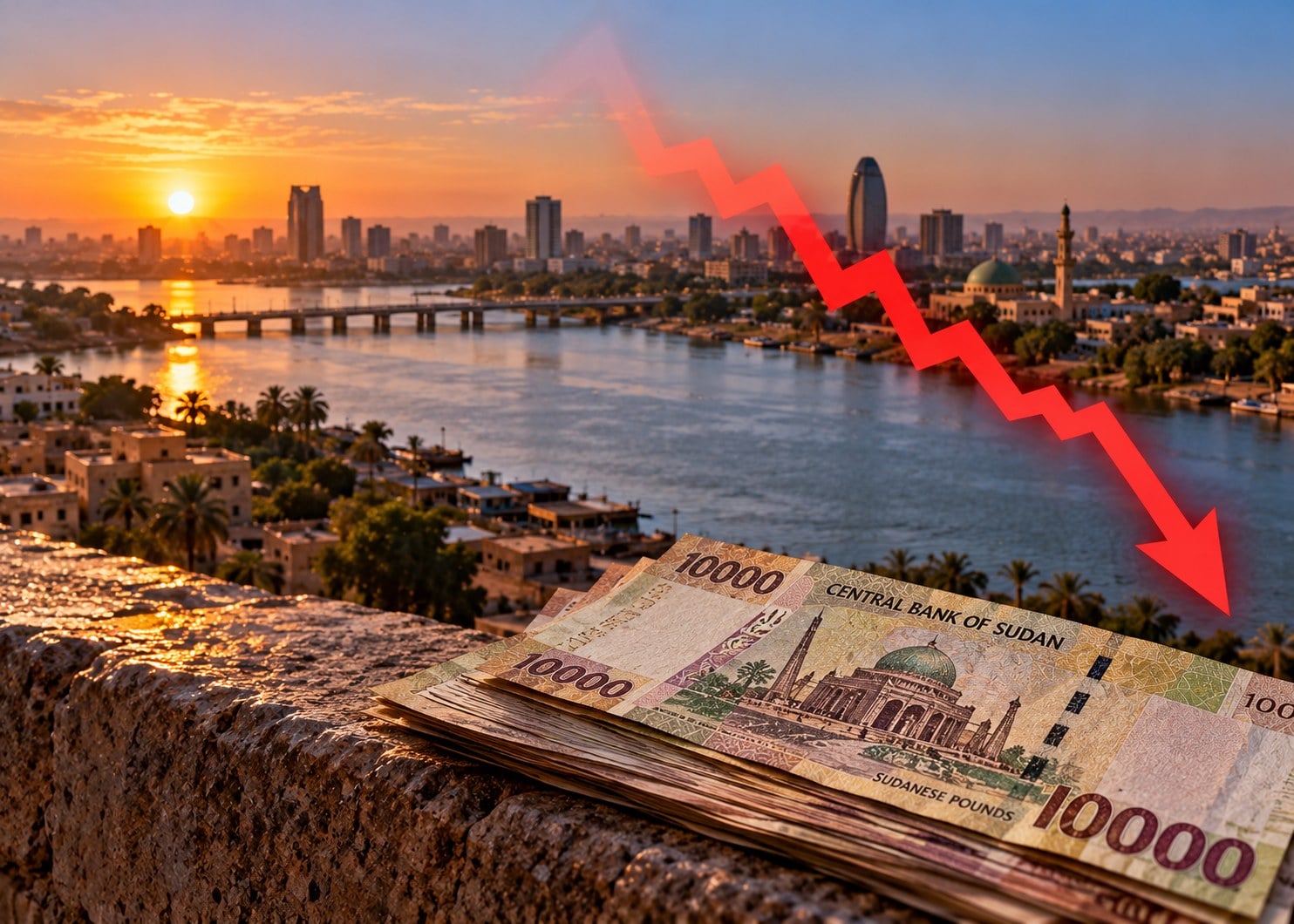
Sudan’s currency has fallen through 10,000 pounds per U.S. dollar in parallel-market trading, marking another record low as war continues to erode production, foreign-currency earnings and household purchasing power.
The Sudanese pound has depreciated roughly 60% in recent months.
A significant portion of the decline occurred during the past month, when the parallel-market rate weakened from around 8,000 pounds per dollar.
Before the war began in April 2023, the exchange rate was approximately 600 pounds per dollar.
The gap between official and informal exchange rates has also become extreme.
The official rate is approximately 4,200 pounds per dollar, compared with around 10,000 in the parallel market when the record was reached.
Currency traders have identified strong import demand as an important source of pressure.
The government also increased the controlled customs exchange rate used to calculate import duties to more than 5,600 pounds per dollar.
The underlying foreign-currency shortage reflects the broader destruction caused by the conflict.
Production of important export goods has declined, while gold — Sudan’s principal export — is increasingly moving outside official channels.
At the same time, imports required for the war and reconstruction consume scarce dollars.
Currency depreciation then feeds back into the domestic economy by increasing the local cost of imported food, fuel and other essential goods.
That mechanism makes the exchange rate more than a financial-market indicator.
For households already affected by displacement and economic disruption, a weaker pound directly reduces purchasing power and increases the cost of basic necessities.
The large difference between official and parallel exchange rates also signals severe distortion in access to foreign currency.
The next indicators to watch are the parallel-market exchange rate, government currency policy, gold-export flows and whether import demand continues exhausting available dollar liquidity.
Without an improvement in foreign-currency supply or the underlying security environment, Sudan’s exchange-rate crisis is likely to remain a central source of economic pressure.