Cedar Global Markets
Subscribe
SAVED POSTS
  • Login
No Result
View All Result
  • Home
  • Markets
  • Economy
  • Business
  • Energy
  • Technology
  • Global
    • Middle East
    • Europe
    • Asia-Pacific
    • Americas
    • Africa
  • Opinion
No Result
View All Result
  • Home
  • Markets
  • Economy
  • Business
  • Energy
  • Technology
  • Global
    • Middle East
    • Europe
    • Asia-Pacific
    • Americas
    • Africa
  • Opinion
Cedar Global Markets
US 2Y4.65%
US 10Y4.96%
US 30Y5.29%
2s10s+31bp
WTI$107.89
Brent$115.22
Fed funds3.75–4.00%
CPI4.0% YoY
Core CPI2.8% YoY
Unemployment4.20%
Cedar Global MarketsData via FRED® (St. Louis Fed). Not endorsed by the St. Louis Fed. Delayed / as published.

Sudanese Pound Breaks 10,000 per Dollar as Wartime Economy Deteriorates

in Economy, Africa
Reading Time: 2 mins read
byCedar Global Markets
October 24, 2026
0
Share on Facebook
Share on X

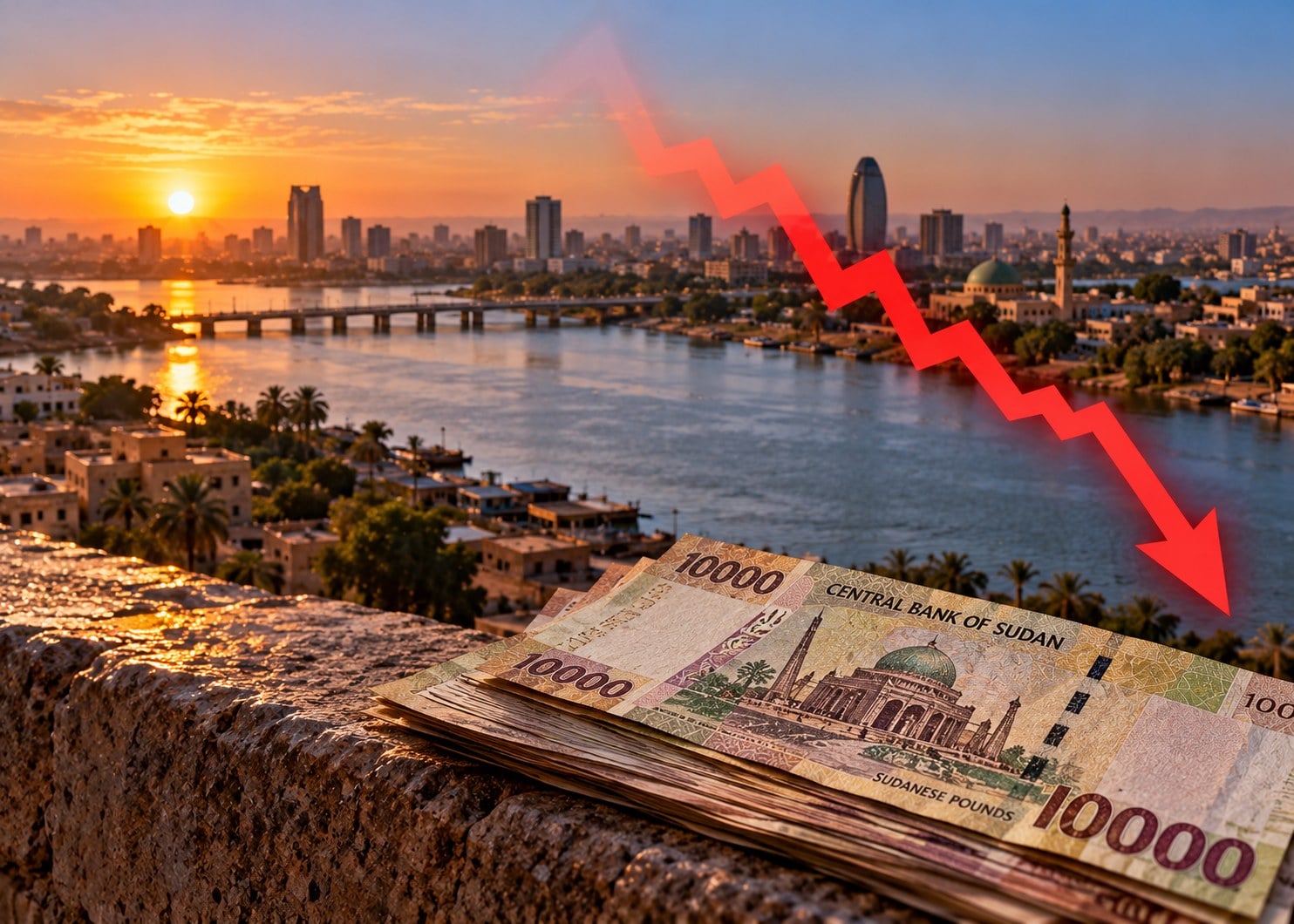
Sudan’s currency has fallen through 10,000 pounds per U.S. dollar in parallel-market trading, marking another record low as war continues to erode production, foreign-currency earnings and household purchasing power.

The Sudanese pound has depreciated roughly 60% in recent months.

A significant portion of the decline occurred during the past month, when the parallel-market rate weakened from around 8,000 pounds per dollar.

Before the war began in April 2023, the exchange rate was approximately 600 pounds per dollar.

The gap between official and informal exchange rates has also become extreme.

The official rate is approximately 4,200 pounds per dollar, compared with around 10,000 in the parallel market when the record was reached.

Currency traders have identified strong import demand as an important source of pressure.

The government also increased the controlled customs exchange rate used to calculate import duties to more than 5,600 pounds per dollar.

The underlying foreign-currency shortage reflects the broader destruction caused by the conflict.

Production of important export goods has declined, while gold — Sudan’s principal export — is increasingly moving outside official channels.

At the same time, imports required for the war and reconstruction consume scarce dollars.

Currency depreciation then feeds back into the domestic economy by increasing the local cost of imported food, fuel and other essential goods.

That mechanism makes the exchange rate more than a financial-market indicator.

For households already affected by displacement and economic disruption, a weaker pound directly reduces purchasing power and increases the cost of basic necessities.

The large difference between official and parallel exchange rates also signals severe distortion in access to foreign currency.

The next indicators to watch are the parallel-market exchange rate, government currency policy, gold-export flows and whether import demand continues exhausting available dollar liquidity.

Without an improvement in foreign-currency supply or the underlying security environment, Sudan’s exchange-rate crisis is likely to remain a central source of economic pressure.


Tags: Homepage Supporting

Related Posts

Bank of Israel Rejects Netanyahu Proposal to Use Crypto Against Potential Sanctions

Bank of Israel Rejects Netanyahu Proposal to Use Crypto Against Potential Sanctions

by Cedar Global Markets
October 25, 2026
0

The Bank of Israel has publicly rejected Prime Minister Benjamin Netanyahu’s suggestion that cryptocurrency and blockchain technology could...

UK Plans £20.4 Billion Capital Boost for State Investment Lenders

UK Plans £20.4 Billion Capital Boost for State Investment Lenders

by Cedar Global Markets
October 24, 2026
0

Britain plans to provide £20.4 billion, or approximately $27.3 billion, in additional capital to two state-backed investment institutions...

Russia Holds Rates at 14% as Fuel Shock Forces Inflation Forecast Higher

Russia Holds Rates at 14% as Fuel Shock Forces Inflation Forecast Higher

by Cedar Global Markets
October 23, 2026
0

Russia’s central bank kept its benchmark interest rate unchanged at 14% Friday as persistent inflation prevented policymakers from...

Latest Briefing

MiniMax Clears China Export Registration for Overseas AI Model Licensing

October 25, 2026

Brazil Votes in Knife-Edge Presidential Runoff as Markets Await Policy Direction

October 25, 2026

Western Sydney International Opens as Australia’s First Major New Airport in More Than 50 Years

October 25, 2026

Bank of Israel Rejects Netanyahu Proposal to Use Crypto Against Potential Sanctions

October 25, 2026
Next Post
China Pushes Back as U.S. Moves to Expand Investment Curbs Into Biotech and Advanced Computing

China Pushes Back as U.S. Moves to Expand Investment Curbs Into Biotech and Advanced Computing

Cedar Global Markets

Categories
  • Africa
  • Americas
  • Asia-Pacific
  • Banking
  • Business
  • Commodities
  • Economy
  • Energy
  • Europe
  • Global
  • Industry
  • Markets
  • Middle East
  • Opinion
  • Policy
  • Technology
  • Trade
[mc4wp_form]

© 2026 Cedar Global Markets

Welcome Back!

Login to your account below

Forgotten Password?

Retrieve your password

Please enter your username or email address to reset your password.

Log In
No Result
View All Result
  • Home
  • Markets
  • Economy
  • Business
  • Energy
  • Technology
  • Global
    • Middle East
    • Europe
    • Asia-Pacific
    • Americas
    • Africa
  • Opinion
SAVED POSTS

© 2026 Cedar Global Markets