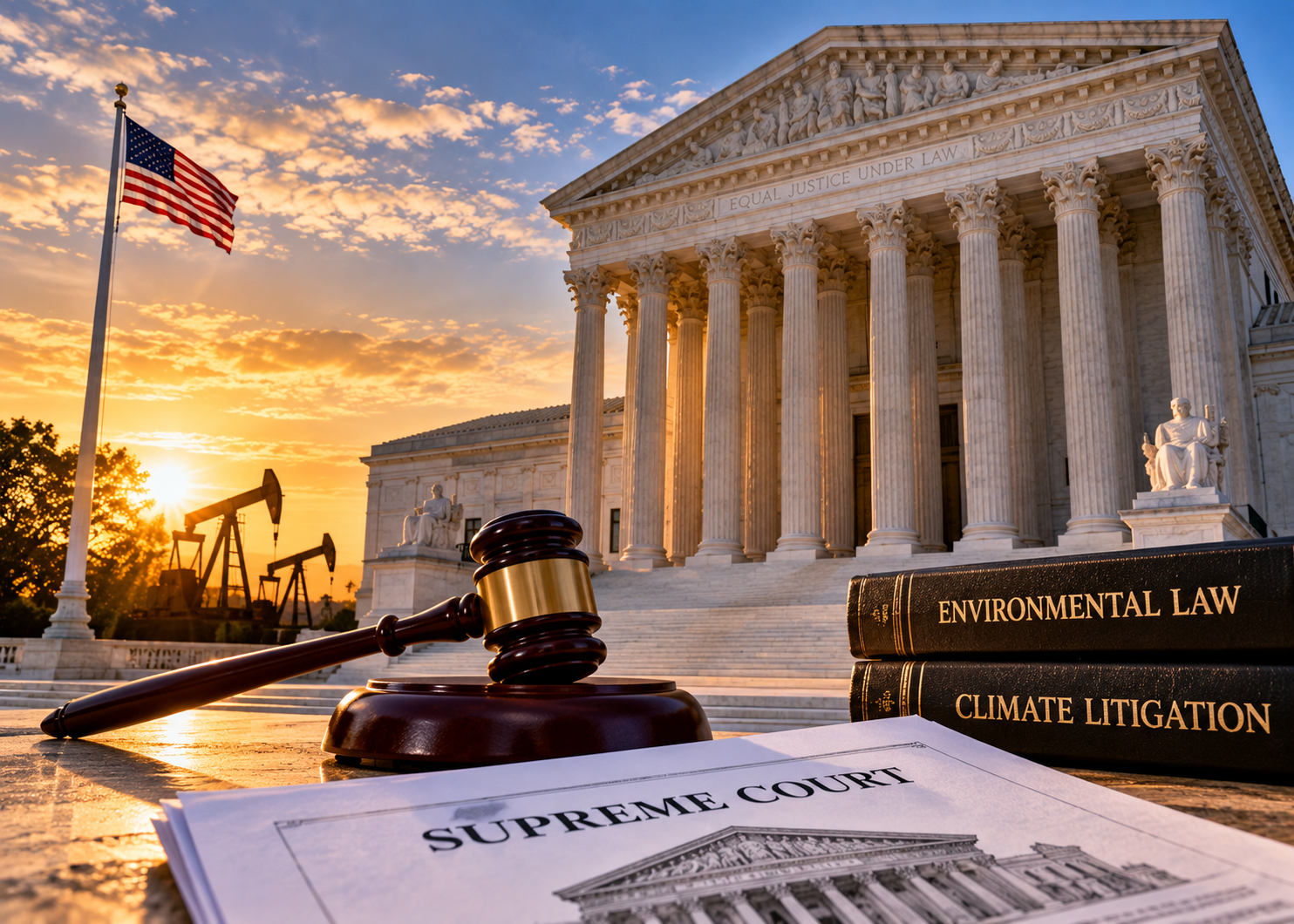
The U.S. Supreme Court begins its new term Monday with a case that could determine the future of dozens of climate-related lawsuits against major oil companies.
ExxonMobil and Suncor Energy are asking the court to block a lawsuit brought by the city and county of Boulder, Colorado, seeking monetary damages associated with climate change.
Colorado’s Supreme Court previously allowed the case to proceed, prompting the companies to take the dispute to the nation’s highest court.
The implications extend far beyond Boulder.
State and local governments have filed dozens of similar lawsuits against fossil-fuel companies seeking compensation for costs they attribute to climate change.
Boulder alleges that Exxon and Suncor contributed to climate-related harm while misleading the public about risks associated with fossil fuels. Those remain allegations being litigated rather than established findings of liability.
The companies argue that Boulder’s claims involve interstate and global greenhouse-gas emissions and therefore are governed by federal rather than state law.
That legal question carries potentially substantial financial consequences for the energy industry.
Climate litigation has become a growing source of potential liability as governments seek compensation for infrastructure damage, wildfire costs, drought, public-health consequences and other expenses they associate with climate change.
A Supreme Court ruling restricting state-law claims could significantly reduce that potential exposure.
A ruling allowing Boulder to proceed would not establish liability against Exxon or Suncor. Instead, it would permit the underlying litigation to continue and could strengthen the procedural position of governments pursuing similar cases.
The Supreme Court’s new nine-month term begins Monday, October 5. Justice Samuel Alito has recused himself from the case.
For investors, the case is important because it could establish legal boundaries affecting billions of dollars in potential claims against major energy producers.
The court’s decision will therefore be watched well beyond Colorado as governments and the energy industry determine how much climate-related litigation can proceed through state courts.