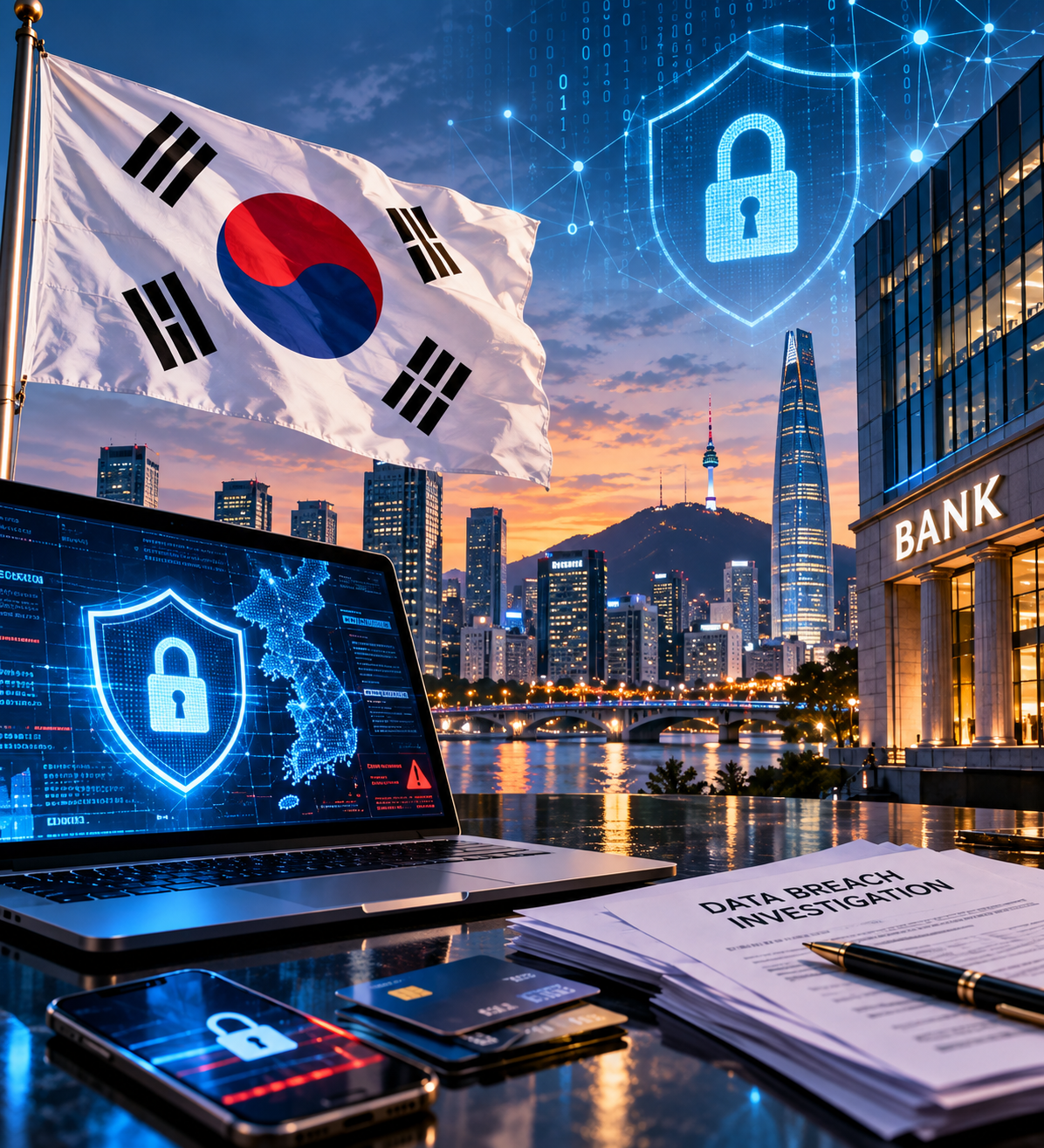
South Korean President Lee Jae Myung has ordered a comprehensive investigation into a series of personal-data leaks affecting banks, other financial companies and public institutions, escalating the government’s response to a widening cybersecurity problem.
The directive follows breaches reported by several major financial institutions. Shinhan Bank disclosed an incident affecting about 25,000 customers, while KB Kookmin Bank, Hana Bank and BNK Busan Bank subsequently reported incidents. Yegaram Savings Bank reported a leak involving roughly 40,000 customers, while Hyundai Capital disclosed exposure involving personal information belonging to 146 housing-loan agents.
Exposed information included names and phone numbers as well as financial information such as annual income and loan limits. Some resident-registration numbers were also compromised.
The incidents are especially significant because South Korea operates one of the world’s most highly digitized financial systems, with extensive use of mobile banking, online lending and electronic payments.
Authorities are examining similarities among the attacks. South Korean financial regulators have reported that the same attacker internet-protocol address appeared in breaches involving multiple financial companies, although investigators have not established that every incident resulted from a single coordinated operation.
Regulators have distributed security information to hundreds of financial companies and ordered reviews of systems that may lack adequate authentication or access controls.
For banks, the financial consequences of a large-scale breach extend beyond immediate remediation costs. Institutions can face regulatory penalties, compensation expenses, higher cybersecurity investment and reputational damage.
The incidents also demonstrate how artificial intelligence is changing cybersecurity risk. South Korean investigators are examining evidence that automated tools may have been used to conduct large numbers of attacks against vulnerable systems.
For financial markets, the immediate issue is whether authorities identify significant weaknesses at major banks or other institutions that require substantial technology investment or additional regulation.
The larger implication extends beyond South Korea.
As banking becomes increasingly digital and AI-driven, cybersecurity is becoming a core operational and regulatory risk rather than simply an information-technology problem.
The next developments to watch are the government’s investigation results, whether additional institutions disclose breaches and what new cybersecurity requirements Seoul imposes on its financial industry.