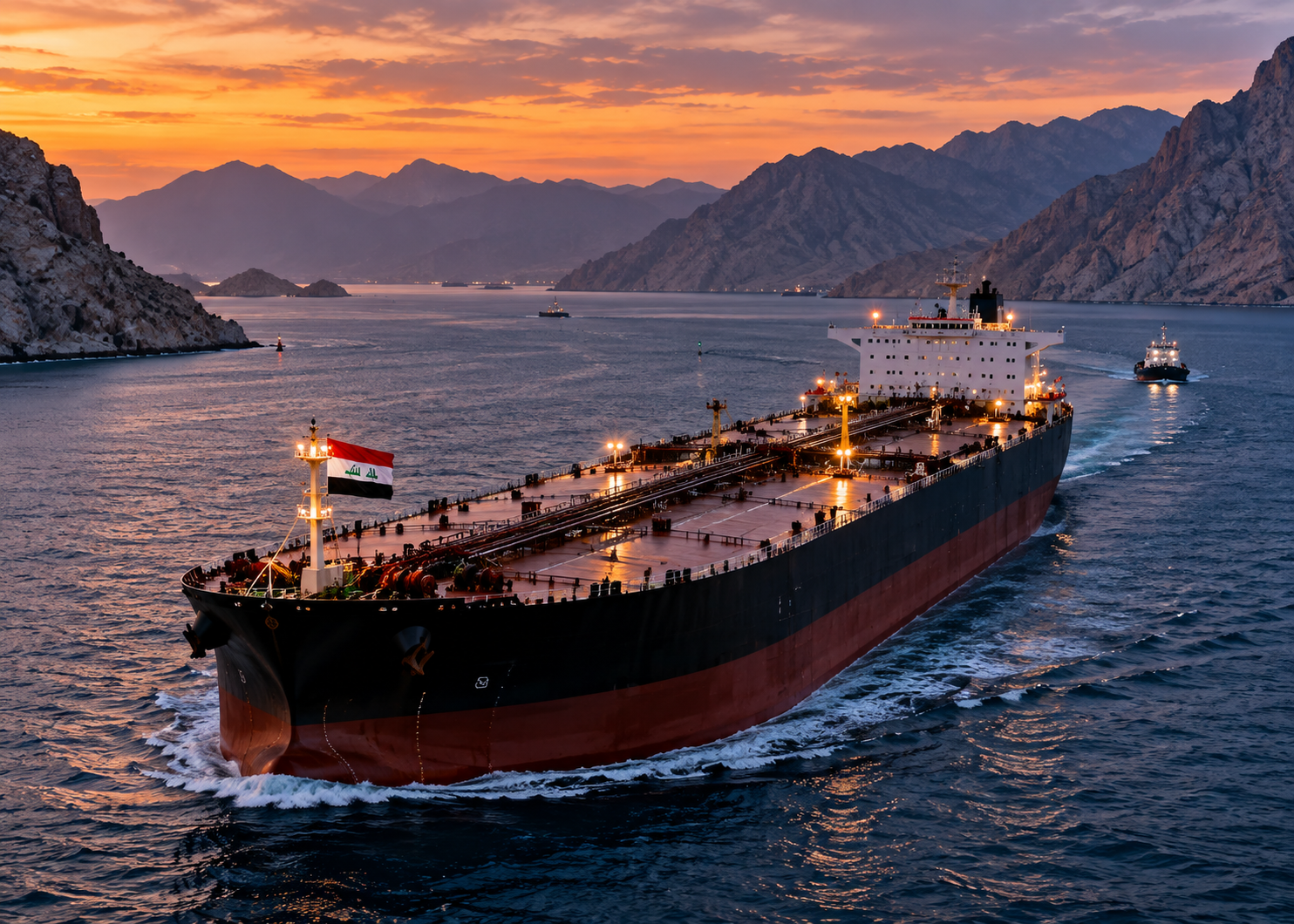
Iraq’s state-owned oil tanker company has transported 2 million barrels of crude through the Strait of Hormuz aboard a very large crude carrier, marking what the company’s director general described as its first such operation in decades.
The shipment is significant because the Strait of Hormuz remains one of the world’s most important energy chokepoints and has faced heightened disruption risk during the continuing Middle East conflict.
Iraq’s Oil Tanker Company carried the crude aboard a VLCC, the class of vessel commonly used to transport very large oil cargoes over long distances.
A 2-million-barrel shipment represents a substantial individual cargo, but its broader importance lies in what it demonstrates about Iraq’s ability to move crude through the Gulf under difficult operating conditions.
The Strait connects producers including Iraq, Saudi Arabia, Kuwait, Qatar and the United Arab Emirates with global energy markets.
Any sustained disruption can therefore affect oil supply far beyond the region.
That risk has already changed shipping economics.
War-risk insurance, vessel availability and security concerns have increased the cost and complexity of moving energy cargoes through Gulf waters, while producers and traders have looked for alternative export routes where possible.
Iraq has fewer alternatives than some neighboring producers, making reliable Gulf access particularly important to its oil-dependent economy.
The successful movement of the cargo does not mean the broader shipping risk surrounding Hormuz has disappeared.
One completed voyage cannot establish that normal commercial traffic has been fully restored, particularly while regional military tensions remain elevated.
It does, however, provide a concrete indication that large crude carriers remain capable of moving significant Iraqi volumes through the waterway.
For oil markets, the next question is whether this becomes part of a sustained pattern.
If additional large Iraqi cargoes transit successfully, traders may gain greater confidence in the continuity of Gulf exports. Renewed attacks or shipping disruptions, however, could quickly reverse that assessment and restore a larger geopolitical premium to crude prices.
The Strait of Hormuz therefore remains one of the most important variables in the global oil market, and Iraq’s 2-million-barrel shipment provides a new test of how effectively Gulf producers can maintain exports despite the region’s elevated security risks.