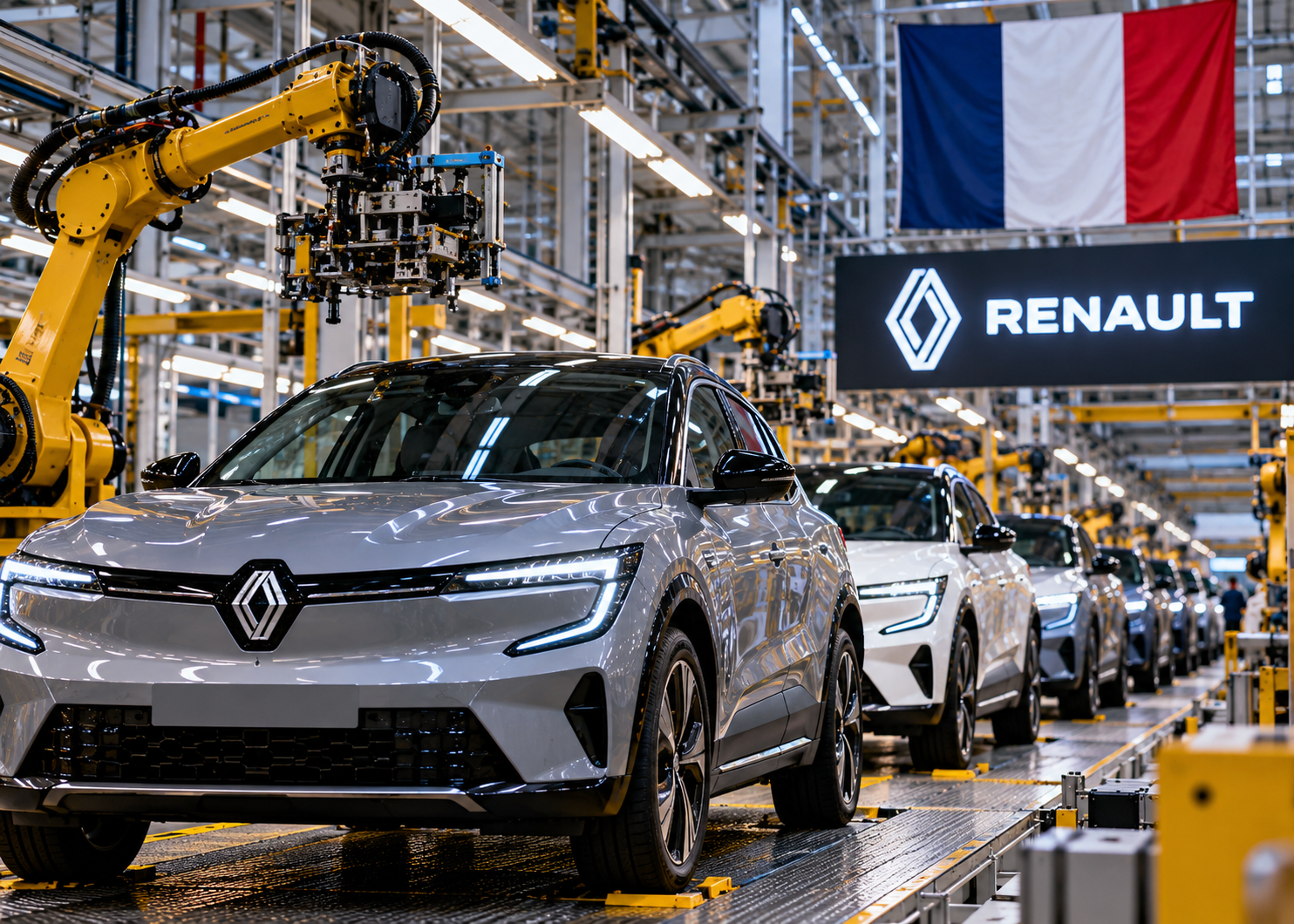
Renault plans to invest more than €10 billion, approximately $11 billion, in France over the next several years as the automaker expands electric-vehicle production and develops more affordable cars.
Chief Executive François Provost announced the investment Saturday, according to Reuters, reinforcing Renault’s commitment to domestic manufacturing as European automakers confront intense competition and a rapidly changing vehicle market.
The investment will cover electric vehicles as well as lower-cost models, an increasingly important segment as European manufacturers compete with Chinese automakers that have expanded aggressively with comparatively inexpensive electric vehicles.
For Renault, affordability is becoming strategically important.
European automakers spent years concentrating much of their electric-vehicle development on relatively expensive models, partly because high battery costs made it difficult to produce inexpensive EVs profitably.
That equation is beginning to change as battery technology improves, manufacturing scales and competition forces companies to reduce costs.
The challenge is particularly acute in Europe, where manufacturers must simultaneously finance the transition away from internal-combustion vehicles, comply with emissions rules and defend market share against new competitors.
Large domestic investments can also carry broader economic consequences.
Automotive manufacturing supports extensive supplier networks involving batteries, electronics, metals, software and industrial equipment. Renault’s planned spending therefore has implications beyond its own assembly operations.
The investment also provides another indication that European automakers are responding to competitive pressure with additional capital spending rather than retreating from electrification.
Investors will now focus on how Renault allocates the more than €10 billion, which models receive investment, how quickly production capacity expands and whether lower-cost vehicles can generate acceptable margins.
The larger test is commercial.
European automakers do not simply need more electric vehicles. They increasingly need electric vehicles that mass-market consumers can afford while still producing sufficient returns to finance the industry’s costly technological transition.