U.S. job growth slowed sharply in September, delivering a substantially weaker-than-expected employment report that immediately reduced expectations for another Federal Reserve interest-rate increase this month.
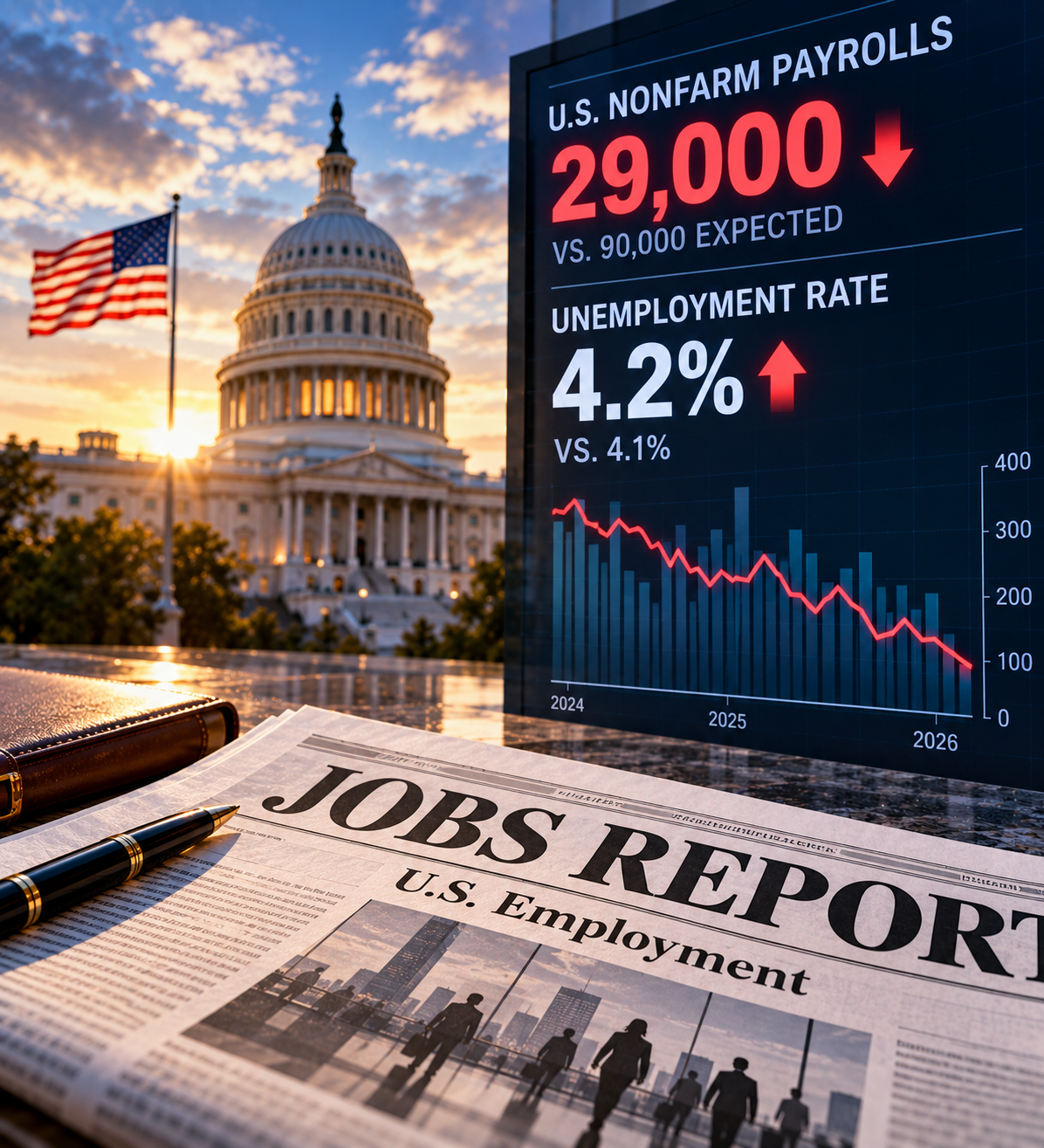
Nonfarm payrolls increased by just 29,000 in September, the Labor Department reported Friday. Economists surveyed by Reuters had expected an increase of 90,000.
August payroll growth was also revised down to 133,000 from the previously reported 162,000.
The unemployment rate increased to 4.2% from 4.1%, while economists had expected it to remain unchanged at 4.1%.
The report is especially important because payrolls are one of the Federal Reserve’s most closely watched indicators of economic momentum and labor-market conditions.
There is an important qualification to September’s weak headline number. Economists said seasonal-adjustment effects associated with the unusually late Labor Day holiday likely distorted the September payroll count and contributed to the downward revision for August.
Other labor indicators have not shown a broad deterioration. Initial unemployment claims have remained near historically low levels, suggesting companies are still reluctant to dismiss workers on a large scale.
Markets nevertheless reacted quickly to the weaker payroll report.
Shortly after the release, Dow futures were up about 0.85%, S&P 500 futures gained 0.79% and Nasdaq-100 futures advanced 1.01%. The response reflected expectations that weaker employment growth gives the Federal Reserve less reason to tighten monetary policy again immediately.
Before the employment report, futures markets were pricing roughly a 22% probability of another rate increase at the Fed’s October 27-28 meeting, down sharply from about 69% a week earlier.
September’s report therefore complicates the Fed’s policy calculation.
Inflation and energy costs remain elevated, but a central bank considering additional tightening must now weigh those pressures against a labor market that produced substantially fewer jobs than expected.
The underlying economy may still be stronger than the 29,000 headline suggests. Economists estimate that the economy currently needs roughly 50,000 to 80,000 additional jobs per month to keep pace with growth in the working-age population. September’s reported gain fell below that range.
Markets will now focus on whether subsequent labor indicators confirm September’s weakness or show that the payroll slowdown was primarily a temporary statistical distortion.
For the Federal Reserve, that distinction could be decisive. A sustained slowdown would strengthen the argument for keeping rates unchanged, while a rebound in employment combined with persistent inflation could revive the tightening debate.