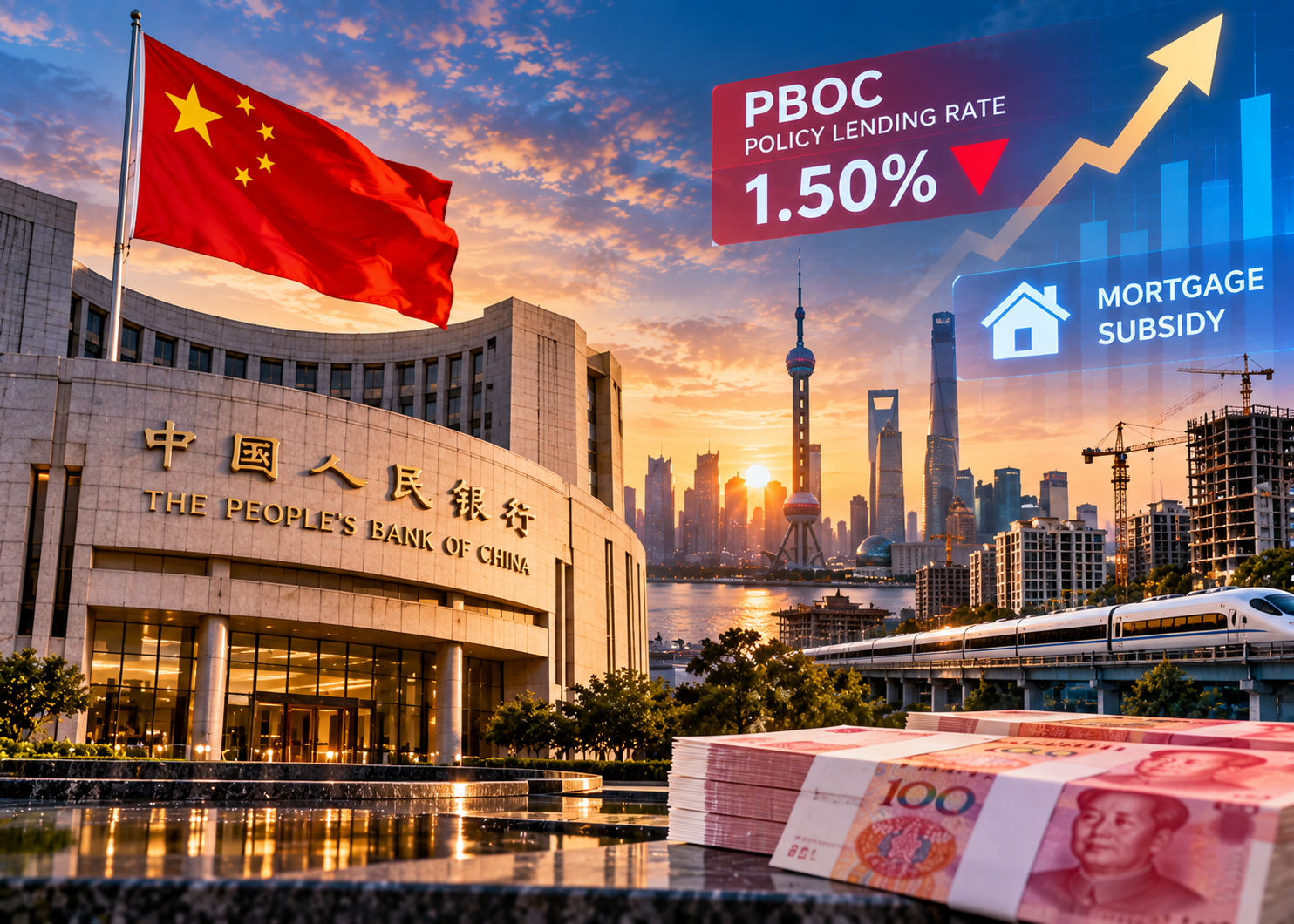
China introduced a new package of monetary and housing measures Tuesday, combining a targeted central-bank rate cut with nationwide mortgage subsidies as Beijing intensifies efforts to support investment and household demand.
The People’s Bank of China cut the rate on its pledged supplementary lending facility by 25 basis points to 1.50%.
Authorities also expanded the facility’s eligible uses to infrastructure projects involving areas including water systems, electricity grids and technology.
Additional targeted funding will be directed toward other parts of the economy.
China increased its science-and-technology relending facility by 200 billion yuan, added 500 billion yuan in financing support for agriculture and small businesses and provided another 300 billion yuan for private enterprises.
The housing component marks another attempt to stabilize a property sector that has weighed heavily on Chinese growth.
First-time buyers taking qualifying new commercial mortgages can receive an annual interest subsidy of one percentage point for as long as five years.
The subsidy applies to qualifying loans of up to 1 million yuan on homes meeting specified size and price limits.
The measures are significant because Beijing is combining support for investment with direct assistance aimed at households rather than relying exclusively on conventional benchmark-rate reductions.
China left its one-year and five-year loan prime rates unchanged earlier this month for a 16th consecutive month.
Tuesday’s action therefore represents a different form of policy support. Beijing has moved through targeted lending facilities and mortgage subsidies while leaving benchmark lending rates unchanged.
The approach reflects the constraints facing Chinese policymakers.
Domestic demand and property activity remain weak, but aggressive broad-based monetary easing could increase pressure on bank margins and the currency at a time when U.S. interest rates and Treasury yields are rising.
Targeted measures allow policymakers to direct financing toward strategic industries, infrastructure and households while limiting some of those broader monetary risks.
For markets, the key question is whether the package generates stronger credit demand rather than merely making financing cheaper.
Investors will watch property transactions, household borrowing, infrastructure investment and private-sector credit for evidence that the new measures are translating into actual economic activity.