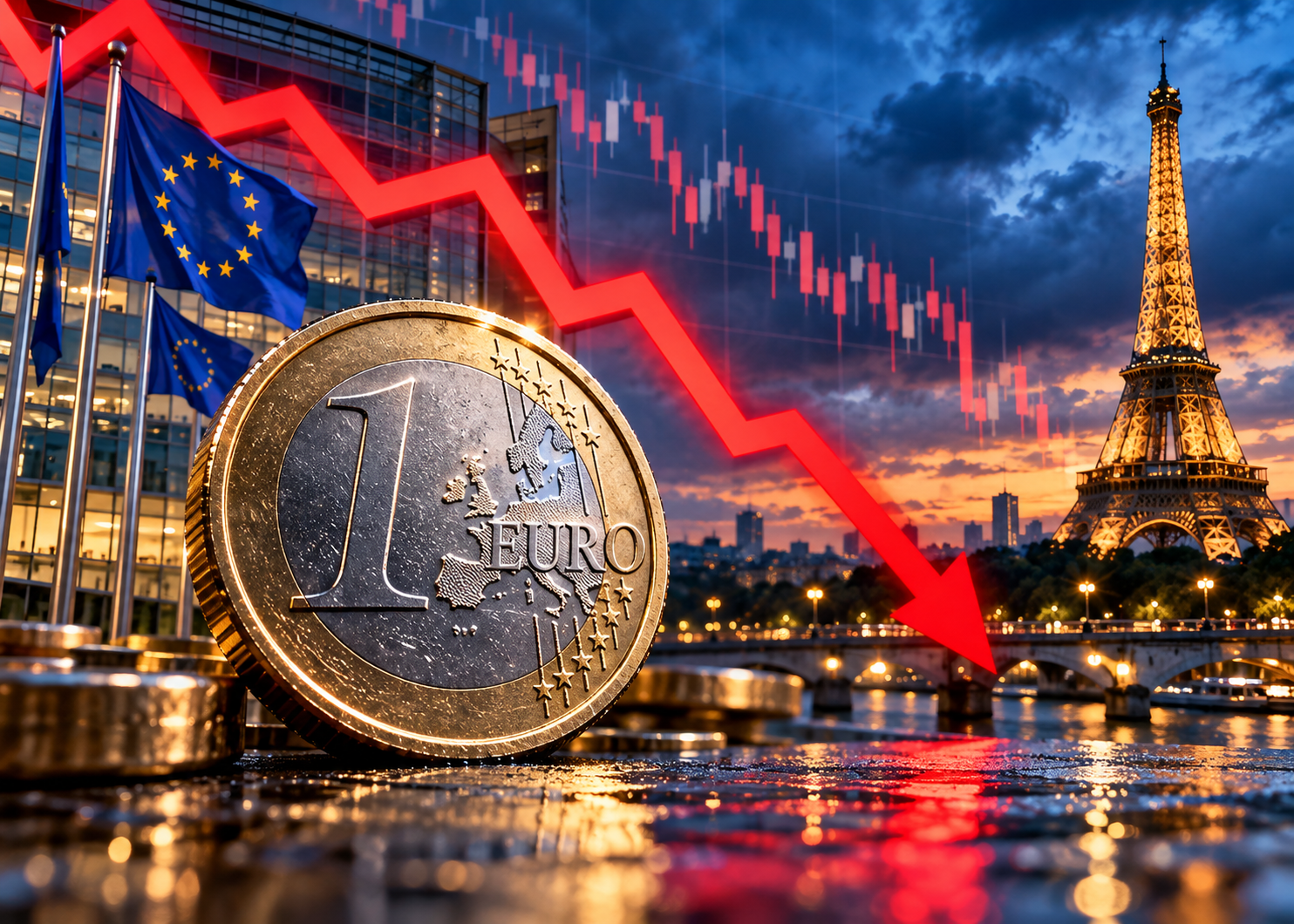
The euro fell to a 17-month low against the U.S. dollar Monday, providing the clearest evidence yet that concerns surrounding France’s finances are spreading beyond sovereign bonds and into global currency markets.
The euro dropped to approximately $1.116, while French equities also came under pressure. France’s CAC 40 fell to a six-month low during Monday’s trading.
The new development is not simply another deterioration in French government bonds.
Investors are increasingly pricing French fiscal and political risk directly into the common European currency.
The spread between French and German government borrowing costs has widened sharply as investors demand greater compensation for holding French debt.
France’s proposed 2027 budget includes politically difficult spending reductions intended to narrow the government’s deficit, but uncertainty remains over whether those measures can survive the country’s fragmented political environment.
The currency move also demonstrates how European risk is beginning to offset developments in the United States.
Friday’s weaker U.S. employment report reduced expectations that the Federal Reserve will raise interest rates again this month. Ordinarily, falling expectations for U.S. rates could weaken the dollar.
Instead, the dollar strengthened against the euro as investors focused on European fiscal risks.
The consequences extend beyond foreign exchange.
A weaker euro can increase the local cost of imported commodities, particularly energy, potentially complicating the European Central Bank’s inflation outlook.
At the same time, elevated government bond yields are already tightening financial conditions across parts of Europe.
That combination creates a difficult environment: fiscal stress is raising borrowing costs while currency weakness can increase imported inflation.
For investors, the next threshold is whether pressure remains concentrated in French assets or increasingly becomes a broader euro-area repricing.
The euro’s fall to a 17-month low suggests markets are assigning greater probability to the second possibility.