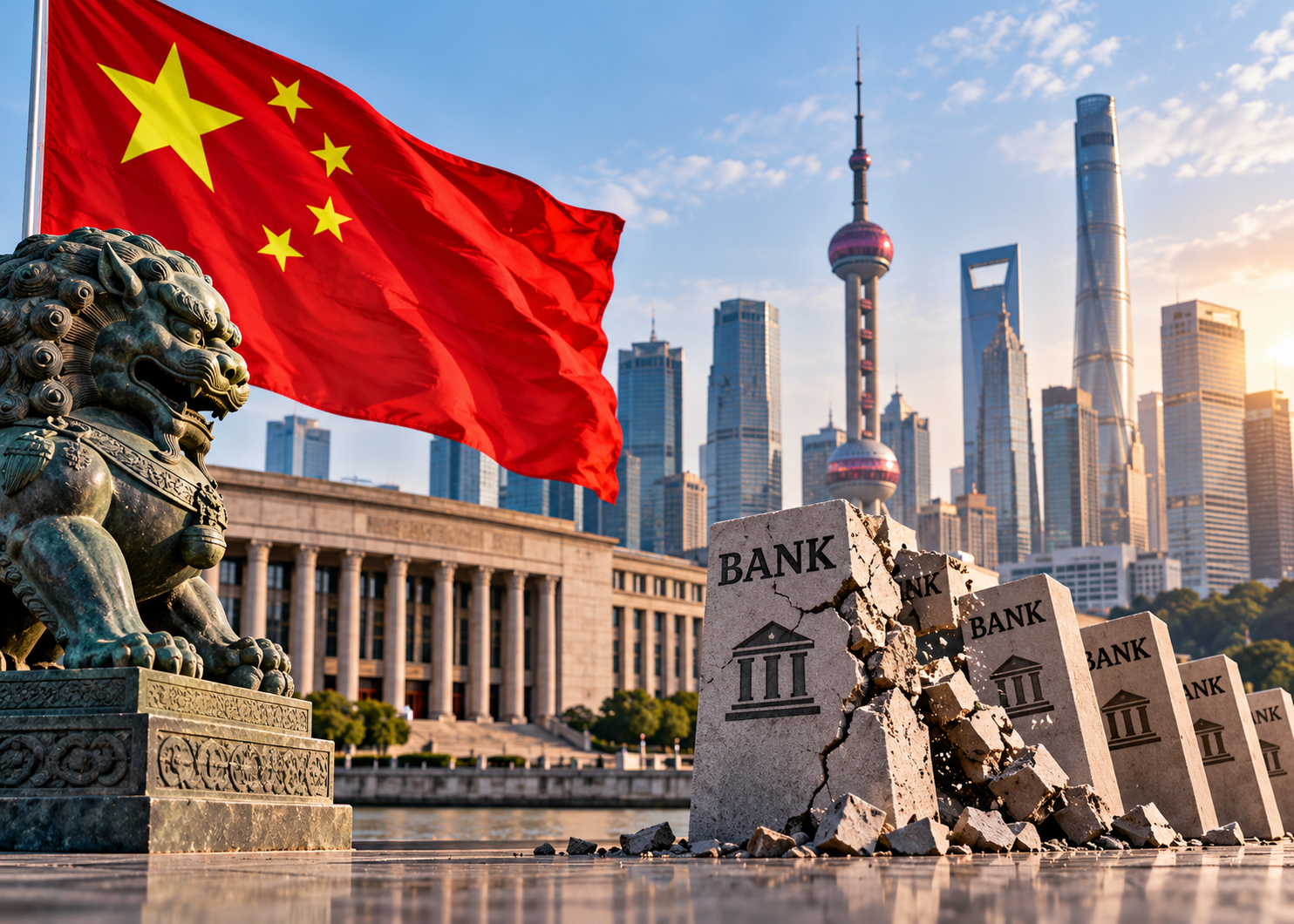
China has eliminated more than 670 banking institutions during a multiyear consolidation campaign aimed at reducing vulnerabilities among smaller lenders as weak credit demand and the prolonged property downturn pressure the country’s financial system.
The number of banking entities fell approximately 23% over four years to 3,139 by the end of 2025.
Most institutions removed from the system were smaller rural lenders, frequently through mergers, acquisitions or regulatory restructuring rather than conventional bank failures.
The consolidation is significant because China’s banking system holds roughly $64 trillion in assets, making its stability important far beyond the domestic economy.
Smaller rural and regional lenders account for a substantial portion of Chinese banking assets and are generally more exposed than the country’s largest banks to weaker borrowers, local economies and property-related stress.
The operating environment has also become increasingly difficult.
Low interest rates have compressed banks’ net interest margins, while weak household borrowing and the prolonged property downturn have reduced demand for traditional mortgage and property-related lending.
Beijing has simultaneously reinforced larger institutions, including substantial capital injections into major state-controlled banks.
The restructuring therefore represents a two-sided strategy: consolidate vulnerable smaller institutions while strengthening the capital position of systemically important lenders.
China’s challenge is accomplishing that process without restricting credit enough to further weaken domestic demand.
The banking cleanup also intersects with Beijing’s broader effort to stabilize an economy still dealing with the consequences of its property downturn despite signs of improvement in parts of manufacturing.
Investors should watch bank asset quality, net interest margins, property exposure and additional consolidation among rural lenders.
A faster restructuring could ultimately strengthen China’s financial system. But the scale of the consolidation also demonstrates the pressure that has accumulated beneath the country’s headline economic growth figures.