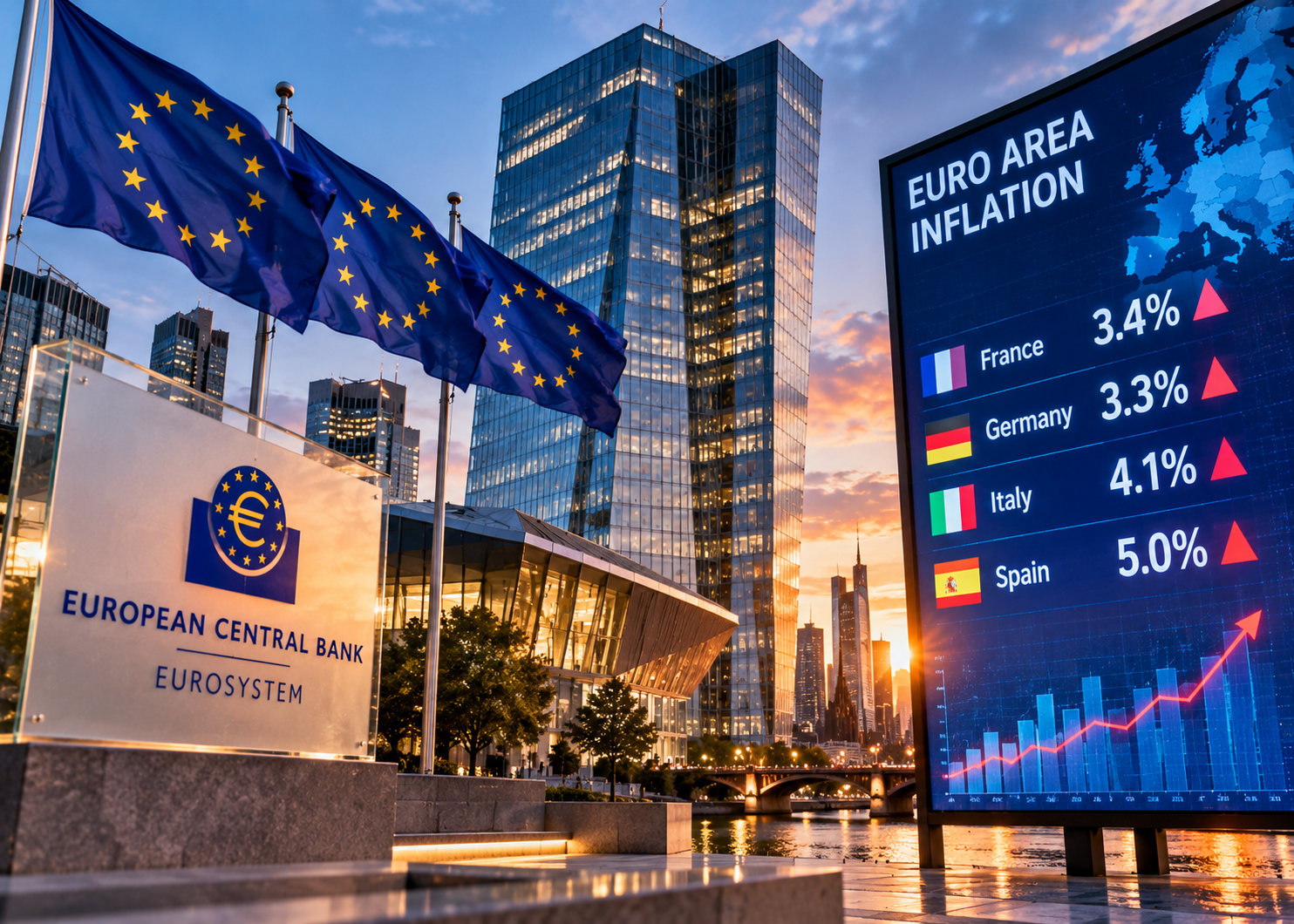
Inflation accelerated across several of the euro area’s largest economies in September, increasing pressure on the European Central Bank as elevated energy prices feed back into consumer costs.
Preliminary national data showed harmonized annual inflation reaching 3.4% in France, 4.1% in Italy, 3.3% in Germany and 5.0% in Spain.
Energy was the principal driver.
Oil and gas costs have risen sharply during the prolonged Middle East conflict, pushing fuel and household-energy prices higher across Europe.
Germany’s energy prices were 14.9% higher than a year earlier in September, while underlying inflation excluding food and energy remained materially lower than headline inflation.
The acceleration complicates the ECB’s policy outlook.
The central bank has already shifted toward tighter policy as officials attempt to prevent the energy shock from becoming embedded in broader inflation.
Economists surveyed by Reuters expect euro-area inflation to reach about 3.6% in September, with some forecasts pointing toward approximately 4% by year-end if energy pressure persists.
Markets are consequently assessing how much additional tightening may be necessary.
The central question is whether higher energy costs remain concentrated in fuel and utilities or begin spreading more forcefully into wages, services and other core prices.
Core inflation has so far been more stable, which gives policymakers reason to distinguish between an externally driven energy shock and generalized domestic inflation.
But the longer energy prices remain elevated, the greater the risk that companies pass higher costs to consumers.
Investors will now focus on the consolidated euro-area inflation data and upcoming ECB communication for evidence of how policymakers are interpreting the September acceleration.