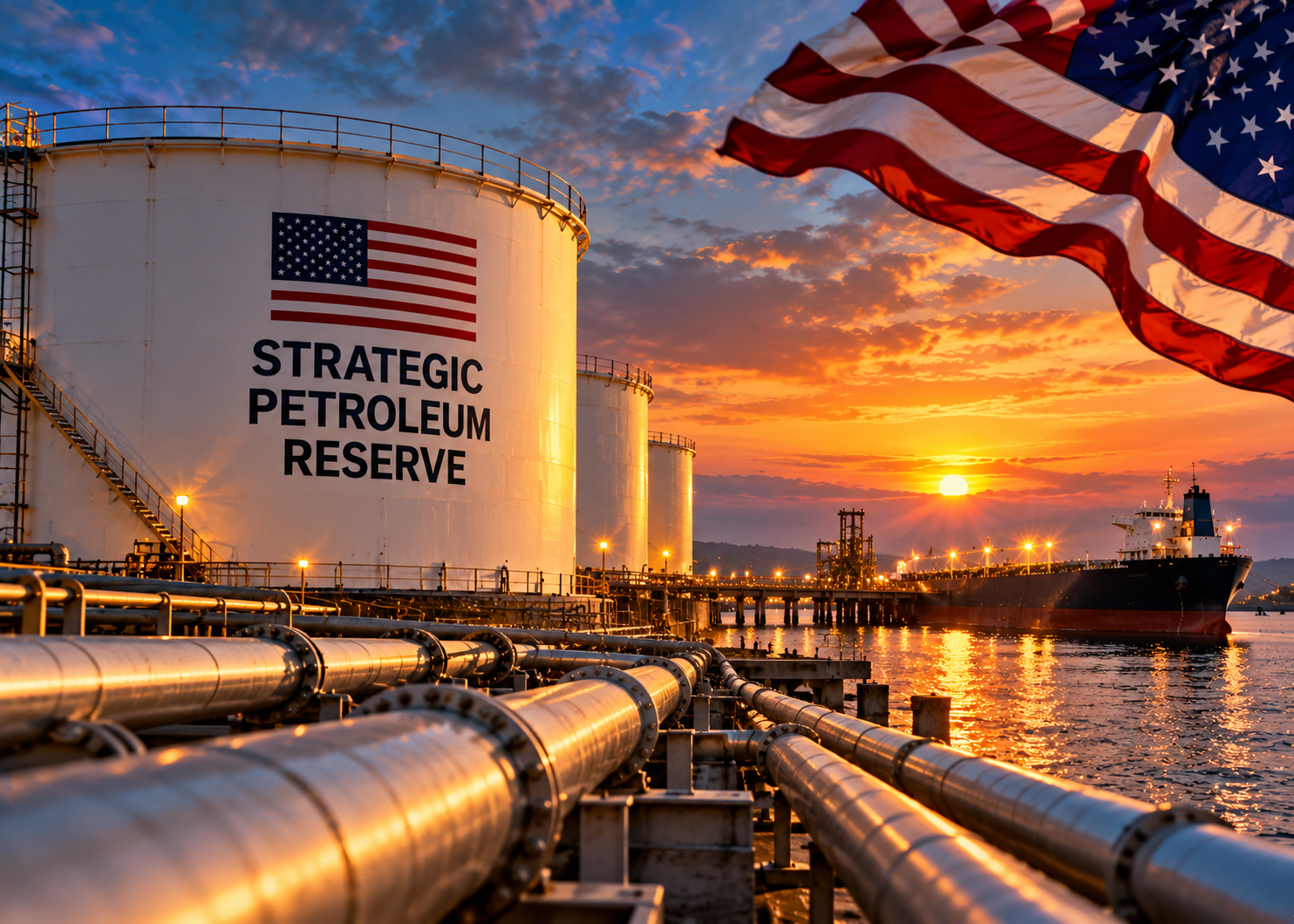
The United States is offering energy companies loans of up to 40 million barrels of crude from the Strategic Petroleum Reserve, completing Washington’s contribution to a coordinated international reserve-release program launched in response to the war with Iran.
The latest offer is part of an agreement involving roughly 30 International Energy Agency countries to make 400 million barrels of emergency reserves available globally.
The United States committed 172 million barrels under that agreement.
Tuesday’s move revives an earlier attempt to place the final 40 million barrels. When Washington offered that volume in June, companies ultimately agreed to borrow only about 500,000 barrels.
The renewed offer arrives with U.S. fuel costs still significantly elevated.
The national gasoline price is around $4.45 a gallon, almost 50% higher than when the Iran war began in late February, while diesel has climbed roughly 70% and reached record levels around $6.50 a gallon.
The reserve itself has already been substantially depleted.
U.S. SPR inventories stand below 284 million barrels, the lowest level since 1982.
That creates an increasingly important constraint. U.S. law restricts routine small drawdowns once the reserve falls below 252.4 million barrels, although emergency releases remain permissible.
The latest transaction is structured as a loan rather than an outright sale. Companies receiving crude must return oil to the government, with repayment premiums of as much as 24%. Full repayment is not expected until late 2028.
Companies have until October 6 to submit proposals.
The effectiveness of the program will therefore depend partly on commercial demand. June’s weak participation demonstrated that making reserve barrels available does not guarantee refiners or traders will borrow the full amount.
For energy markets, the broader issue remains whether emergency inventories can meaningfully offset persistent physical supply disruptions.
The United States and Japan have delivered on their commitments under the international agreement, according to Energy Secretary Chris Wright, while he said several European members have released only part of what they pledged.
Markets should watch the October 6 bids, actual barrels borrowed and developments in Middle East supply routes to determine whether the latest SPR offer materially changes physical crude availability.