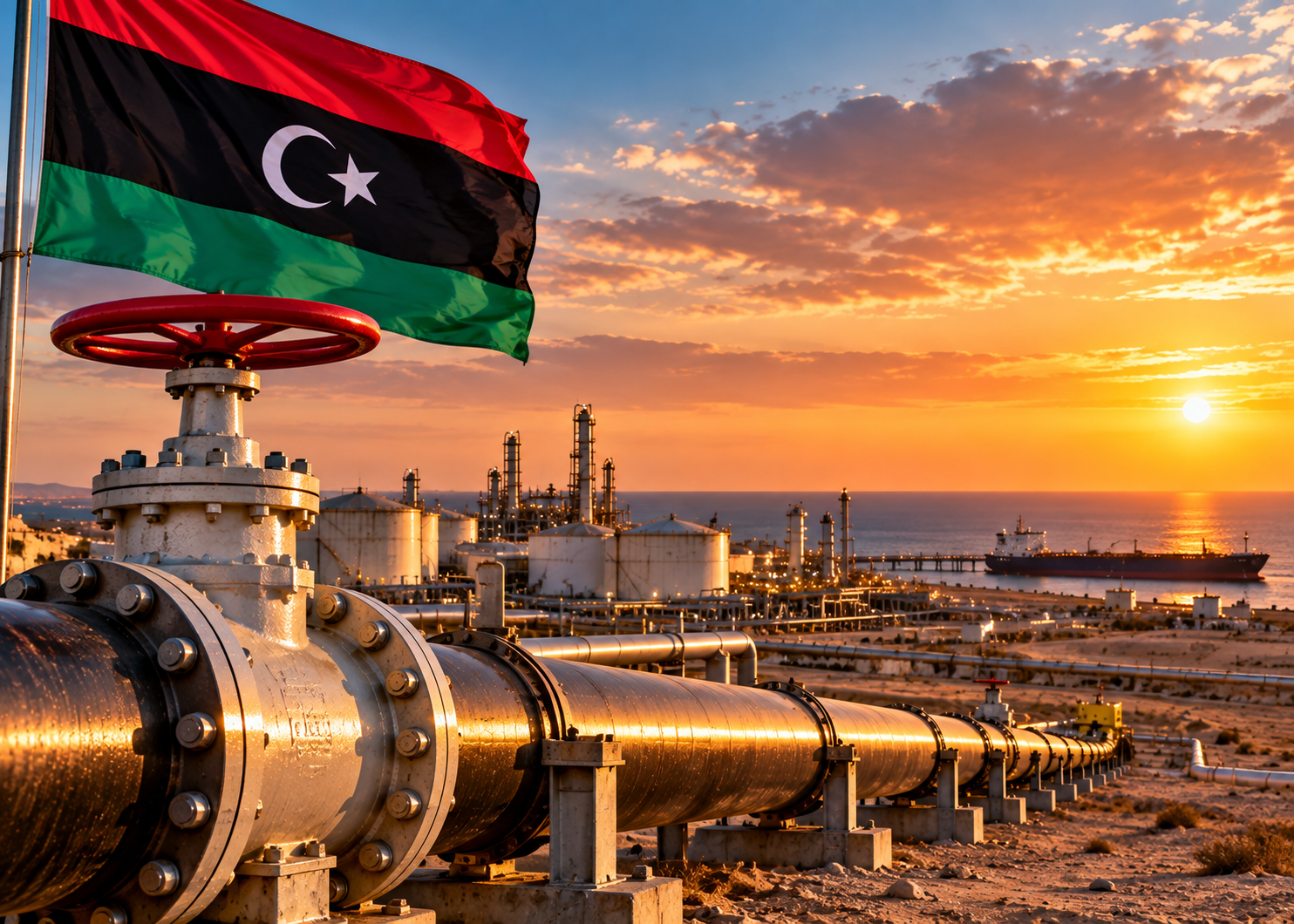
Libya’s National Oil Corporation has reopened a key valve on the Sharara-Zawiya crude pipeline and resumed pumping operations after a disruption that removed nearly 1 million barrels of production.
NOC said valve No. 7 on the main pipeline had reopened Saturday and crude flows were gradually returning toward normal.
The restart reverses an escalating disruption that had begun affecting both upstream production and refining operations.
Earlier Saturday, NOC said it had shut one refining unit at the Zawiya refinery because armed groups associated with the Petroleum Facilities Guard had forced the closure of the Sharara pipeline valve.
The interruption reduced cumulative production from the Sharara field by 942,376 barrels over five days through Friday, according to NOC.
The company estimated direct financial losses at approximately $95 million.
Friday alone accounted for 222,014 barrels of lost output.
Sharara is one of Libya’s most important oil fields, making disruptions there relevant beyond the country’s domestic finances.
Libyan production has repeatedly been vulnerable to political disputes, armed groups and infrastructure interruptions, contributing another source of uncertainty to global crude supply.
The latest restart is therefore positive for immediate production but does not eliminate the structural risk surrounding Libyan exports.
The disruption also illustrates how quickly upstream problems can affect refining.
NOC warned before the reopening that prolonged interruption of crude flows could reduce state revenue, raise fuel-import costs and damage the broader economy.
For oil markets, Libya is currently one component of a much larger supply picture already shaped by Middle East conflict and uncertainty surrounding major shipping routes.
The immediate question is whether Sharara production returns fully to normal without another interruption.
Traders should also watch Zawiya refinery operations and any further security developments affecting the pipeline network.