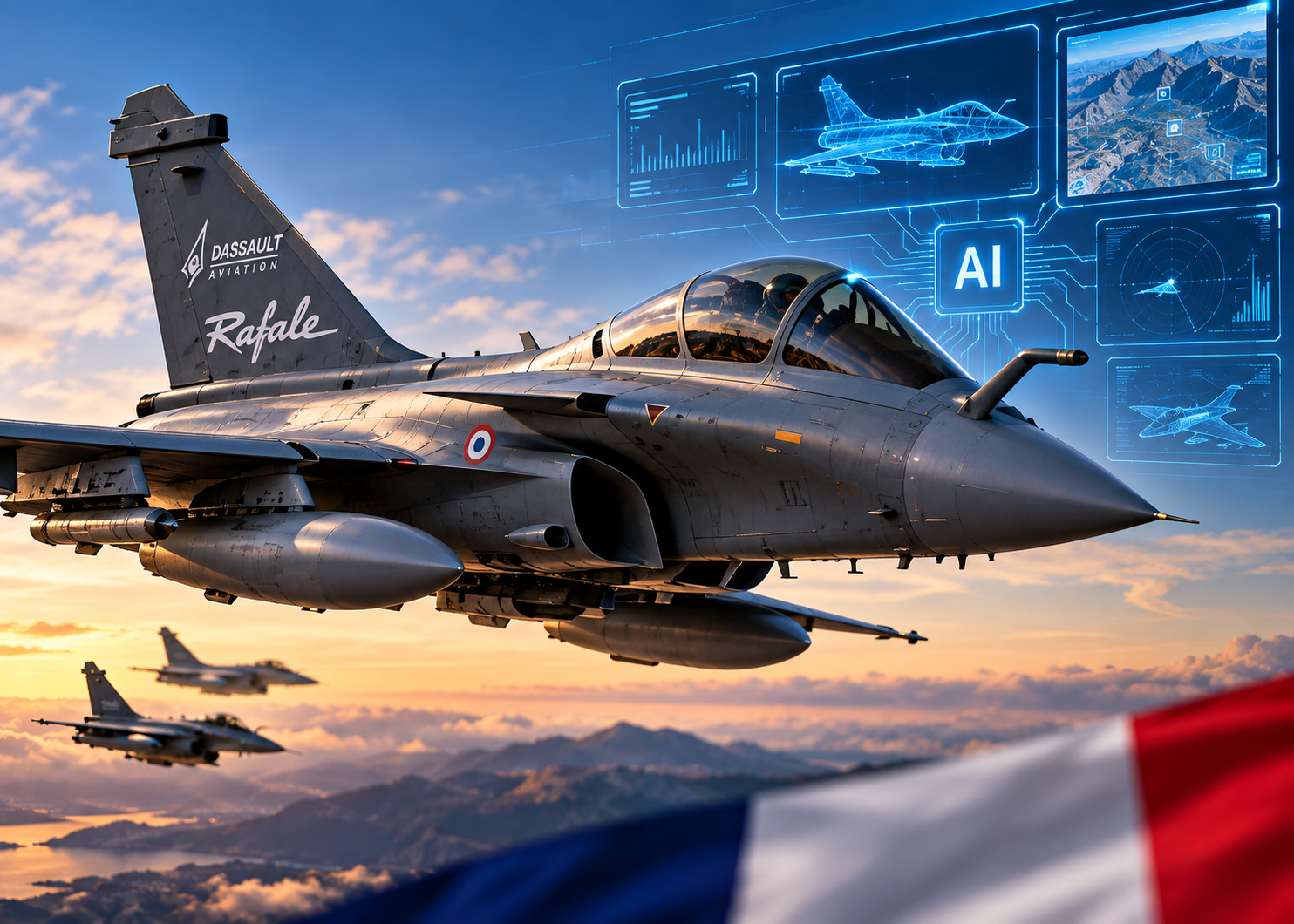
Dassault Aviation has successfully flight-tested two artificial-intelligence algorithms aboard a Rafale fighter, advancing efforts to integrate AI-assisted capabilities into future versions of France’s flagship combat aircraft.
One algorithm was developed internally by Dassault, while another resulted from work with French defense-electronics company Thales. Dassault said both technologies had reached sufficient maturity to be considered for future Rafale developments.
Dassault has not publicly disclosed the detailed operational functions performed by the algorithms.
That distinction is important. The tests do not establish that the Rafale is becoming an autonomous combat aircraft. Instead, the development forms part of a broader effort to use artificial intelligence to assist human crews and improve the ability of crewed aircraft to operate alongside increasingly autonomous systems.
Military aviation manufacturers and air forces are experimenting with AI for areas including sensor processing, mission support, tactical decision assistance and coordination with uncrewed aircraft.
For Dassault, successful flight testing provides another potential technology path for extending the capabilities of the Rafale while France considers the architecture of its longer-term combat-air systems.
The commercial implications extend beyond one aircraft program.
Artificial-intelligence integration is becoming another competitive dimension in international fighter-aircraft procurement alongside radar performance, electronic warfare, weapons integration, survivability and operating costs.
The next significant milestone will be whether the tested technology progresses from experimental flights into defined Rafale modernization programs or future combat-air platforms.