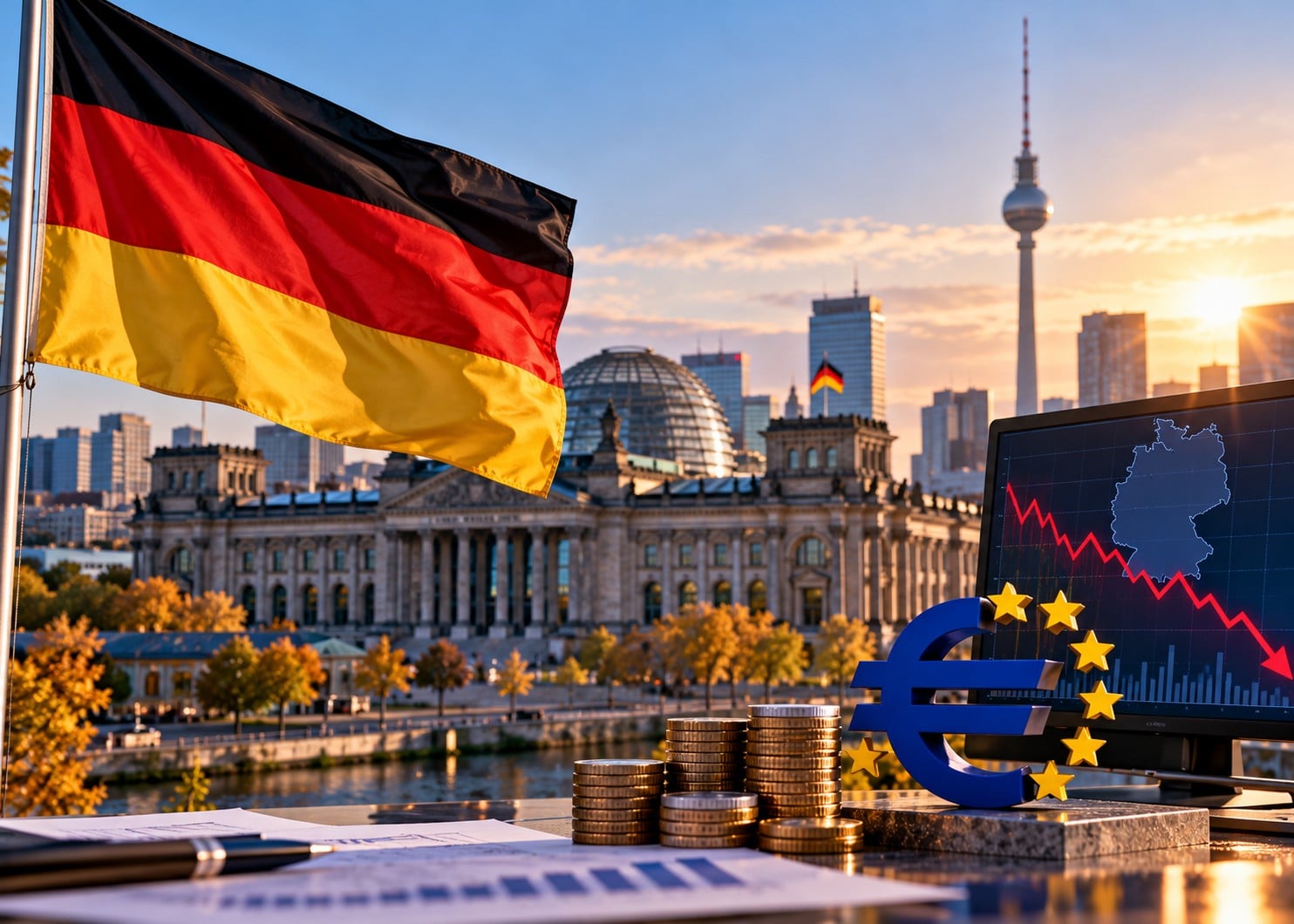
German investor confidence deteriorated more than expected in October as high energy prices weighed on consumption and investment in Europe’s largest economy.
The ZEW economic institute said its economic-sentiment indicator fell 6.6 points to 28.1, ending five consecutive months of improvement.
Economists had expected the index to decline to approximately 30 from September’s 34.7.
The weakness reflects growing concern that expensive energy is slowing Germany’s emergence from years of economic stagnation.
ZEW said high energy costs are reducing household purchasing power, raising corporate production expenses and contributing to inflation remaining elevated for longer.
German producer prices also increased sharply in September, with energy costs providing an important source of pressure.
The survey was not uniformly negative.
ZEW’s measure of Germany’s current economic situation improved substantially to minus 35.9 from minus 47.1 in September. Germany’s economy also expanded 0.3% during the second quarter.
That combination suggests the economy is improving from a weak base while expectations for the next stage of the recovery are becoming less optimistic.
The October survey included 178 analysts and institutional investors and was conducted between October 12 and October 19.
For European markets, the central issue is whether elevated energy costs continue feeding inflation strongly enough to constrain household demand, industrial competitiveness and monetary policy.
The next German activity and inflation releases will show whether October’s decline in confidence represents temporary caution or the beginning of another deterioration in Europe’s largest economy.