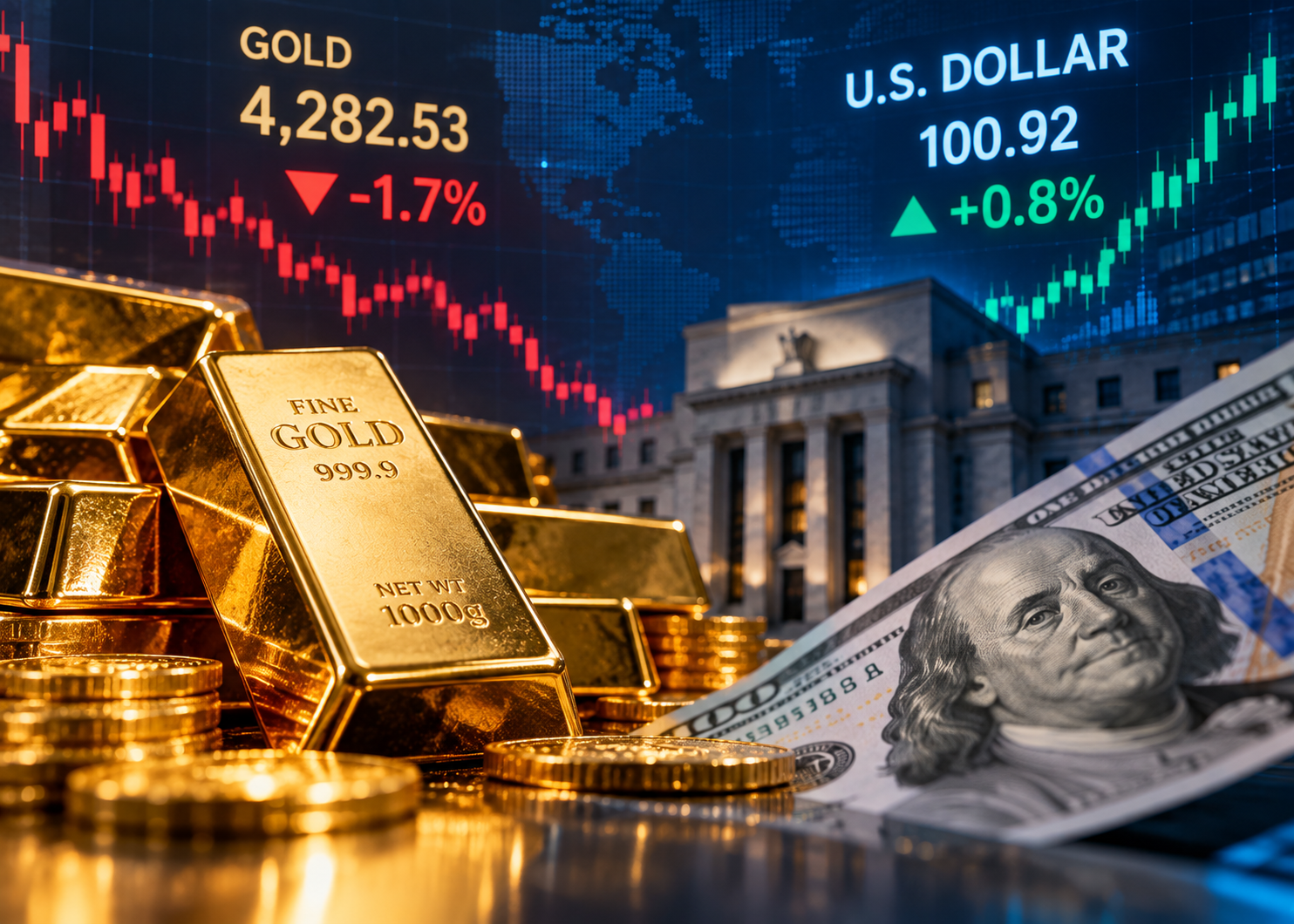
Gold fell sharply Wednesday as expectations for further Federal Reserve tightening strengthened the U.S. dollar and increased pressure on non-yielding assets.
Spot gold was down approximately 1.7% at $4,282.53 an ounce during U.S. trading, while December U.S. gold futures settled 1.3% lower at $4,318.40.
The dollar simultaneously reached a two-month high, adding another headwind for bullion because a stronger U.S. currency makes dollar-denominated gold more expensive for buyers using other currencies.
The interest-rate mechanism is also important.
Gold generates no interest income. When investors expect policy rates and bond yields to remain elevated—or move higher—the opportunity cost of holding bullion increases relative to interest-bearing assets.
The latest move followed hawkish signals from Federal Reserve policymakers after the central bank’s September rate increase. Those comments strengthened market expectations that additional monetary tightening could occur if inflation remains persistent.
Gold’s decline does not eliminate the other forces supporting demand for the metal. Geopolitical uncertainty and demand for defensive assets remain relevant, while changes in energy prices, inflation expectations or monetary-policy expectations can quickly alter the relationship between gold, yields and the dollar.
For investors, the immediate variables are therefore the dollar, Treasury yields, inflation data and Federal Reserve communication.
Continued expectations for tighter monetary policy would maintain pressure on gold through higher yields and a stronger dollar. A meaningful reversal in those expectations would change that market dynamic.