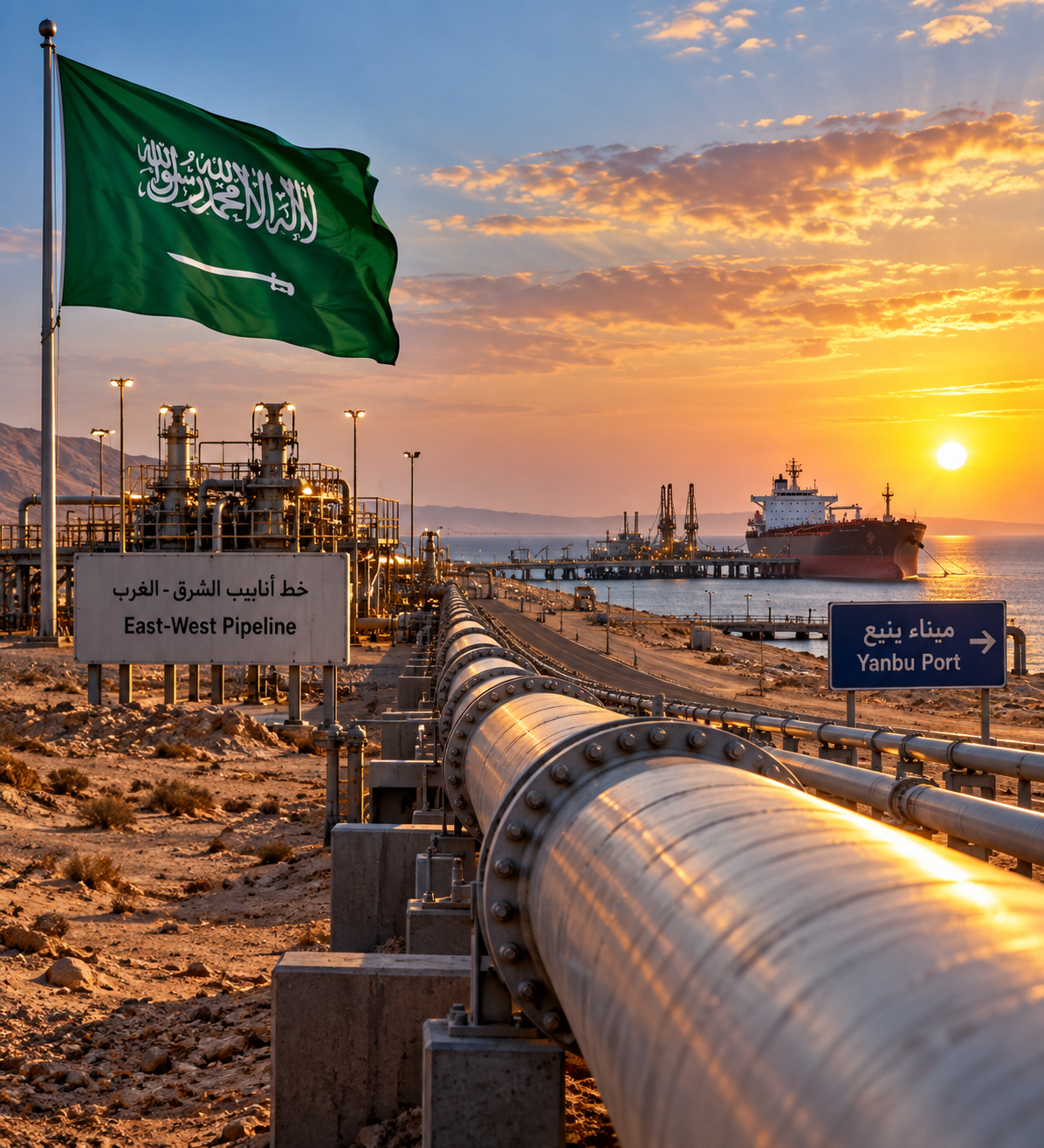
Saudi Arabia has restarted its East-West Pipeline after a nine-day shutdown, restoring a critical route for crude exports that bypasses the Strait of Hormuz.
Operations resumed Tuesday and crude exports from the Red Sea port of Yanbu could restart as the system returns to service. Drone attacks forced Saudi Arabia to shut the pipeline on September 13, halting crude loadings at Yanbu.
The restart is significant because Saudi Arabia has been using the route to move roughly 4 million barrels per day—equivalent to about 4% of global oil supply—around disruptions affecting the Strait of Hormuz.
The pipeline initially returned at a reduced pumping rate, with Saudi Aramco working to gradually restore flows. A full recovery could take longer as operators work through the effects of the disruption.
Oil markets reacted quickly to the improved supply outlook. Brent crude futures fell by more than $2 a barrel and touched their lowest level since September 8 as traders priced in the prospect of additional Saudi crude reaching international markets.
The East-West system carries crude from Saudi Arabia’s eastern producing regions across the kingdom to the Red Sea, providing an alternative export route when shipments through Hormuz face disruption.
That role has become increasingly important as instability around the Gulf has forced producers and traders to reassess shipping routes and available export capacity.
The immediate question is how quickly the pipeline can return to sustained high-volume operation and whether crude loadings at Yanbu normalize.
A durable recovery would restore one of the Gulf region’s most important alternatives to the Strait of Hormuz and ease some of the supply pressure that has supported oil prices during the recent disruption.