

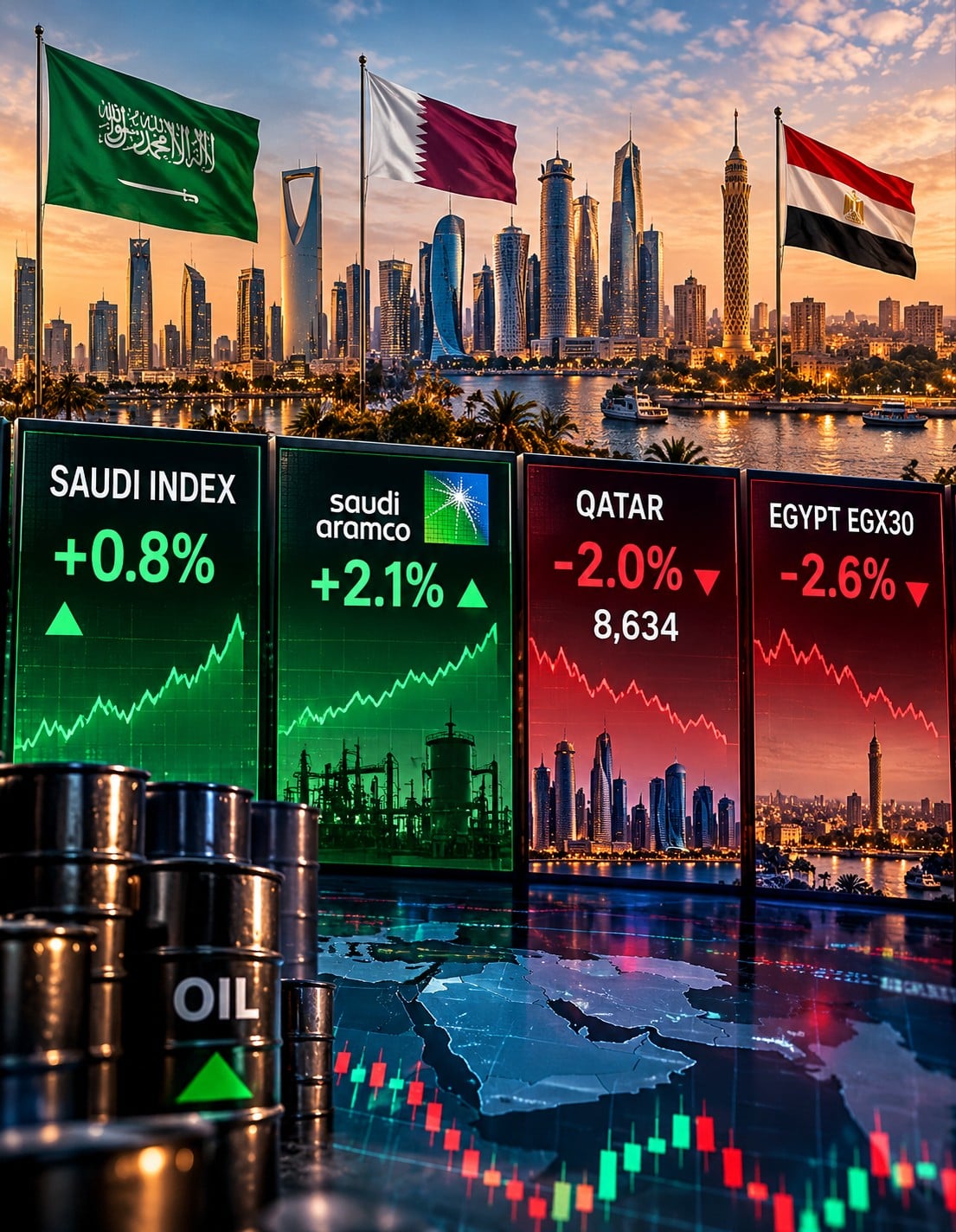
Gulf markets ended sharply divided Sunday as escalating Middle East tensions pushed investors toward Saudi energy shares while weighing heavily on Qatar and Egypt.
Saudi Arabia’s benchmark index gained 0.8%, led by a 2.1% rise in Saudi Aramco. Brent crude had closed Friday at $109.86 a barrel, up 3.7% and at its highest level since May 19, reinforcing the earnings and revenue outlook for the region’s largest oil producer.
Elsewhere, the market response was considerably weaker.
Qatar’s benchmark dropped 2% to 8,634, its lowest close since April 2020. Industries Qatar fell 4.3% and Qatar Islamic Bank declined 2.6%. Egypt’s EGX30 lost 2.6%, its largest intraday decline since February.
The divergence reflects how the same geopolitical shock can benefit energy exporters while increasing risk premiums across neighboring markets.
Egypt has moved deeper into the regional security situation by signaling its readiness to assist Saudi Arabia against escalating Houthi attacks. At the same time, Iranian Foreign Minister Abbas Araqchi said Tehran’s proposal to reopen the Strait of Hormuz within seven days remained available.
For markets, the important question is whether higher crude prices remain an earnings tailwind for Saudi producers or develop into a broader inflation and risk-off shock.
Investors will also watch whether the Egyptian and Qatari declines extend when regional markets reopen and whether progress toward reopening Hormuz reduces the geopolitical premium embedded in crude.