Bangladesh has sharply increased domestic fuel prices as higher international energy and freight costs feed into an economy heavily exposed to imported fuel.
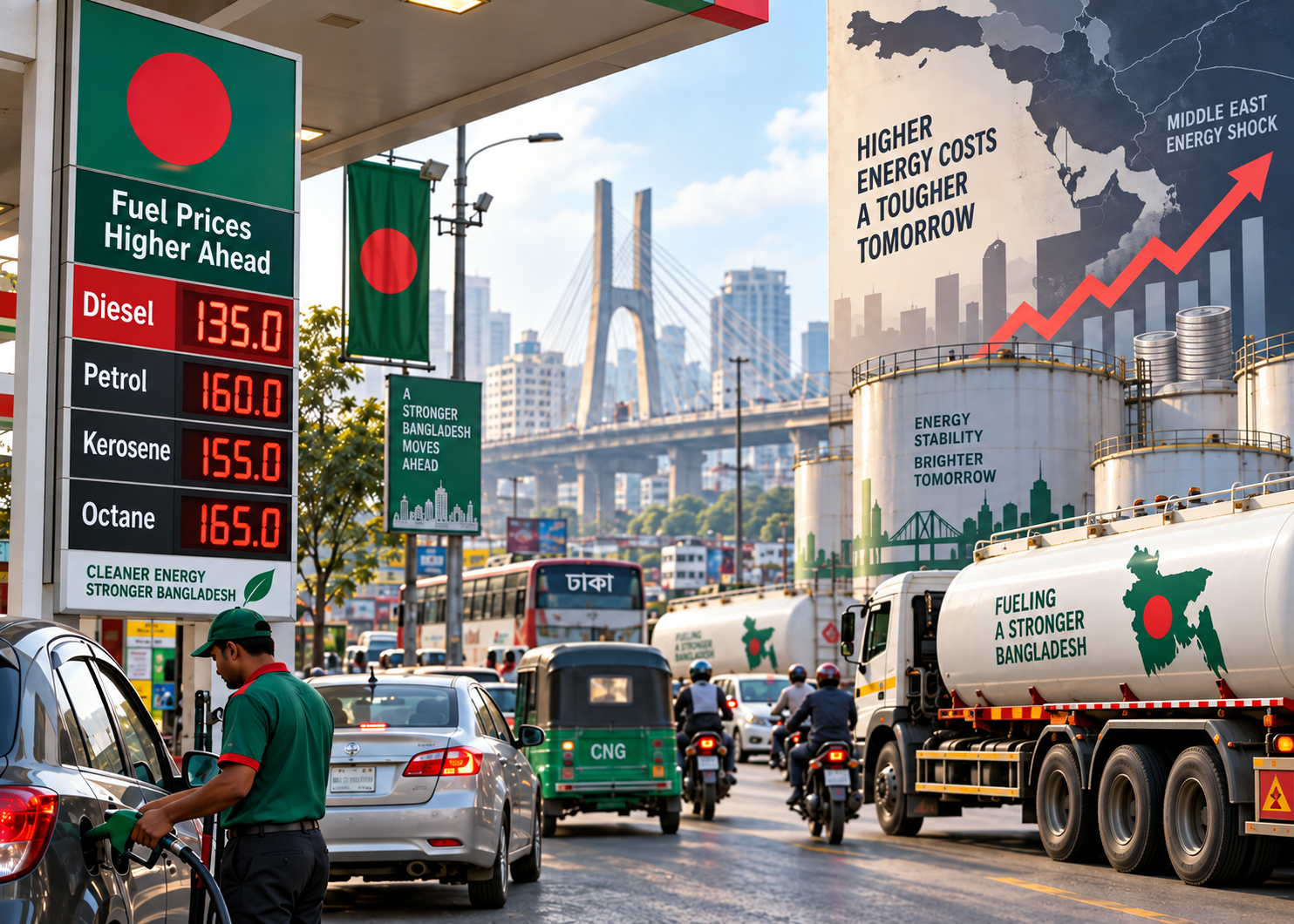
The government raised diesel, kerosene, petrol and octane prices by Tk20 per liter effective September 21.
Diesel rose 17.4% to Tk135 per liter from Tk115. Petrol increased to Tk160 from Tk140, kerosene to Tk155 from Tk135 and octane to Tk165 from Tk145.
The Energy and Mineral Resources Division attributed the adjustment to sharply higher international petroleum prices and freight costs linked to the Middle East conflict.
The financial pressure on the state fuel system has become substantial. Bangladesh Petroleum Corporation accumulated losses of roughly Tk22,875.66 crore between March and August, according to government figures.
The economic effect extends beyond motorists.
Diesel is embedded in freight, agriculture, manufacturing and backup power generation. Higher fuel costs can therefore move through transport and production expenses and ultimately into consumer prices.
That transmission is particularly important for Bangladesh’s export industries, including garments, where energy shortages and tight margins already constrain producers.
For markets, the immediate question is whether the price increase materially reduces the state fuel company’s losses without triggering a broader inflation shock.
The next signals will come from transport prices, food costs, industrial margins and Bangladesh’s foreign-exchange position.