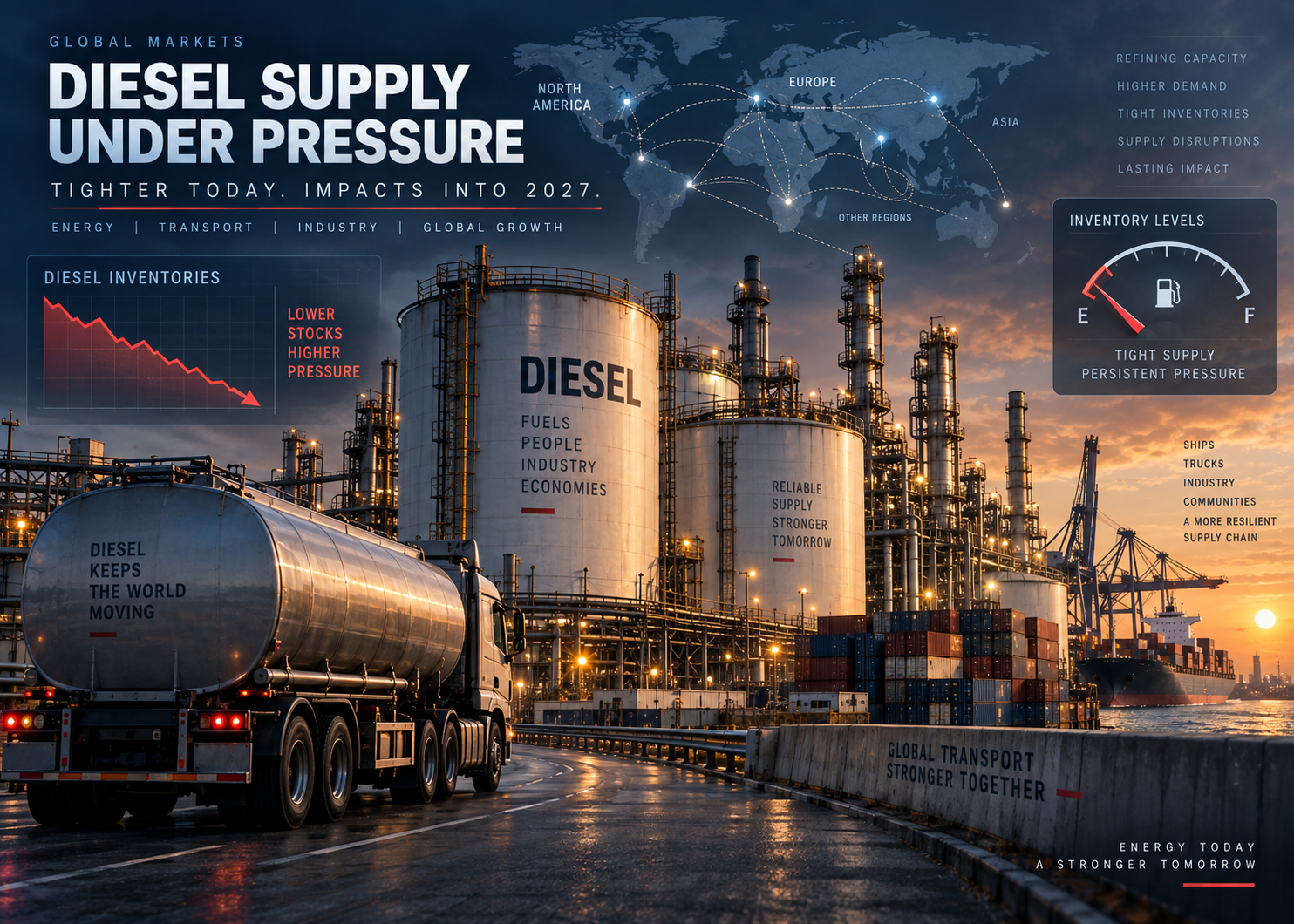
The global diesel shortage could persist well into 2027 as depleted inventories, disrupted Middle Eastern supply and reduced Russian refinery output leave fuel markets with little capacity to absorb additional shocks.
The United States is entering the period with particularly thin inventories.
The U.S. Energy Information Administration expects American distillate stocks — the category that includes diesel and heating oil — to fall below 100 million barrels in September and remain below the five-year seasonal low through the end of 2026 and for most of 2027.
The shortage reflects more than crude-oil availability.
Distillate supply has been reduced by disruptions affecting refineries and trade flows in the Middle East and Russia. At the same time, low inventories have encouraged U.S. refiners to export more diesel into a tight international market.
The EIA said U.S. net distillate exports have been near or above their five-year highs every month since February.
Seasonality could intensify the problem.
Refineries normally reduce production during autumn maintenance while agricultural demand increases during the U.S. harvest. Winter then raises demand for heating oil, another distillate product.
The EIA estimates U.S. diesel crack spreads will exceed $2 per gallon from August through November before gradually declining through mid-2027 under its baseline assumptions.
Those assumptions matter.
The agency’s forecast incorporates a normalization of tanker traffic through the Strait of Hormuz and improving Middle Eastern distillate exports. If those flows remain constrained beyond 2026, global distillate margins could remain higher than currently forecast.
Diesel is economically important because it sits directly inside freight, agriculture, construction, mining and industrial supply chains. Persistent diesel inflation therefore reaches the economy differently from a temporary spike in crude oil.
The market question is no longer simply whether crude prices decline.
It is whether refiners can rebuild depleted product inventories quickly enough to restore a buffer before another supply disruption occurs.