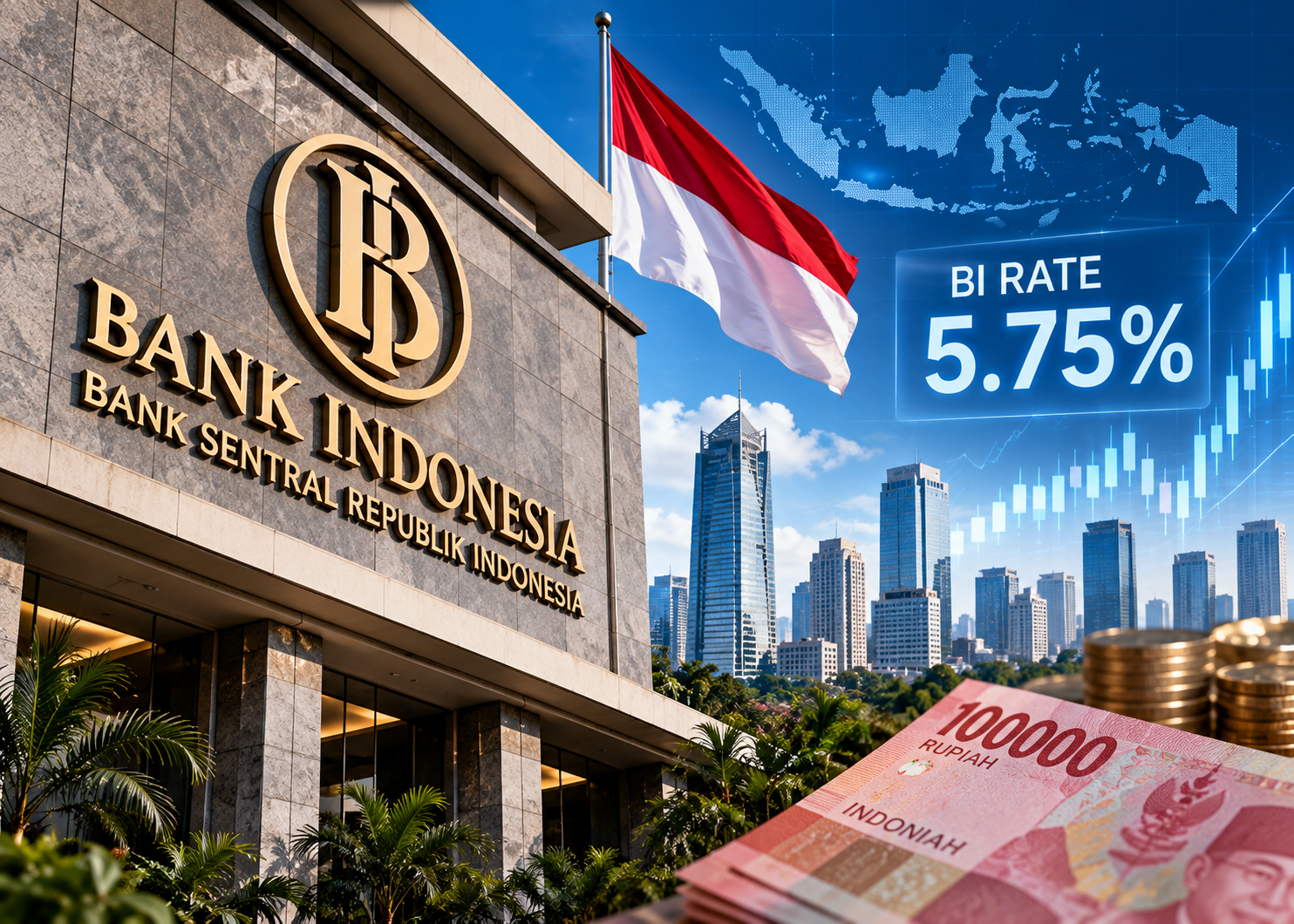
Bank Indonesia kept its benchmark interest rate at 5.75% at its September meeting, maintaining restrictive monetary settings as policymakers balance rupiah stability against the need to support economic growth.
The central bank also maintained its Deposit Facility rate at 4.75% and Lending Facility rate at 6.50% following its September 22–23 Board of Governors meeting.
Bank Indonesia said the decision remained consistent with its strategy of stabilizing the rupiah amid strong external pressures, maintaining inflation within its 2.5% ±1 percentage point target range for 2026 and 2027, and supporting sustainable economic growth.
The decision illustrates the difficult position confronting emerging-market central banks when global borrowing costs remain elevated.
Higher U.S. interest rates can increase the relative attractiveness of dollar-denominated assets, strengthening the dollar and creating additional pressure on emerging-market currencies and capital flows.
That means Indonesia’s monetary-policy outlook is influenced not only by domestic inflation and economic activity but also by global financial conditions and the direction of U.S. monetary policy.
Maintaining the rate at 5.75% gives Bank Indonesia additional time to assess currency conditions and the domestic economy without immediately imposing another increase in borrowing costs.
The central bank has also emphasized policies intended to attract foreign capital inflows and deepen Indonesia’s money and foreign-exchange markets as part of its broader rupiah-stabilization strategy.
Markets will now watch the rupiah, inflation, capital flows and international interest-rate conditions for indications of whether Bank Indonesia can maintain its current policy setting or will eventually need to adjust rates again.