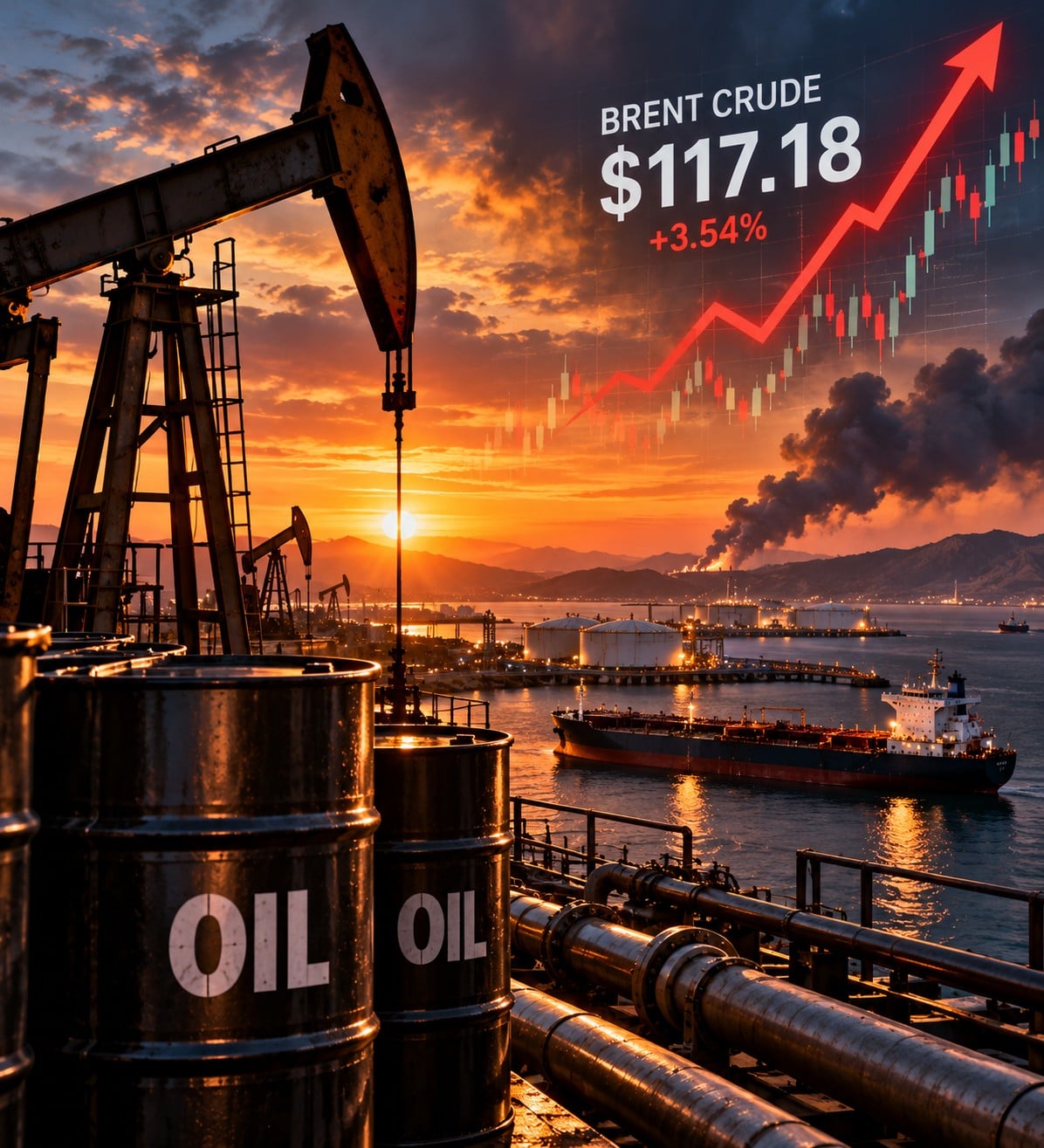
Oil prices surged Friday as escalating fighting involving Saudi Arabia and Yemen’s Houthis intensified concerns over Middle East supply disruptions, pushing Brent crude to its highest level since late April.
Brent futures gained $4.01, or 3.54%, to $117.18 a barrel by 12:21 p.m. ET, after reaching an intraday high of $117.38. U.S. West Texas Intermediate climbed $3.75, or 3.77%, to $103.22.
Brent was on course for a 6.7% weekly gain, its third consecutive weekly advance, while WTI was positioned for a roughly 1.8% weekly increase.
The latest move reflects more than a routine geopolitical premium.
Saudi Aramco ordered the evacuation of its headquarters in Dhahran on Thursday as fighting between Saudi-backed forces and the Houthis intensified.
Meanwhile, UAE authorities reported an oil spill from a tanker off Umm Al Quwain on Friday. The cause of the spill and the tanker involved had not been identified.
Shipping risk has also increased.
October has become the worst month for attacks on commercial shipping in the Strait of Hormuz and nearby waterways since the maritime-security dataset cited by Reuters began in 2017.
The combination of attacks, shipping uncertainty and elevated crude prices matters far beyond energy equities.
Oil above $117 increases pressure on transportation, manufacturing and consumer costs while complicating the inflation outlook for central banks already confronting persistent price pressures.
It also raises the possibility that energy markets could again influence expectations for Federal Reserve policy.
The immediate question is whether the current disruption remains primarily a risk premium or begins removing additional physical supply from the market.
Traders will watch Saudi energy infrastructure, tanker movements around the Strait of Hormuz, developments surrounding the UAE spill and any diplomatic signals capable of reducing the regional risk premium.