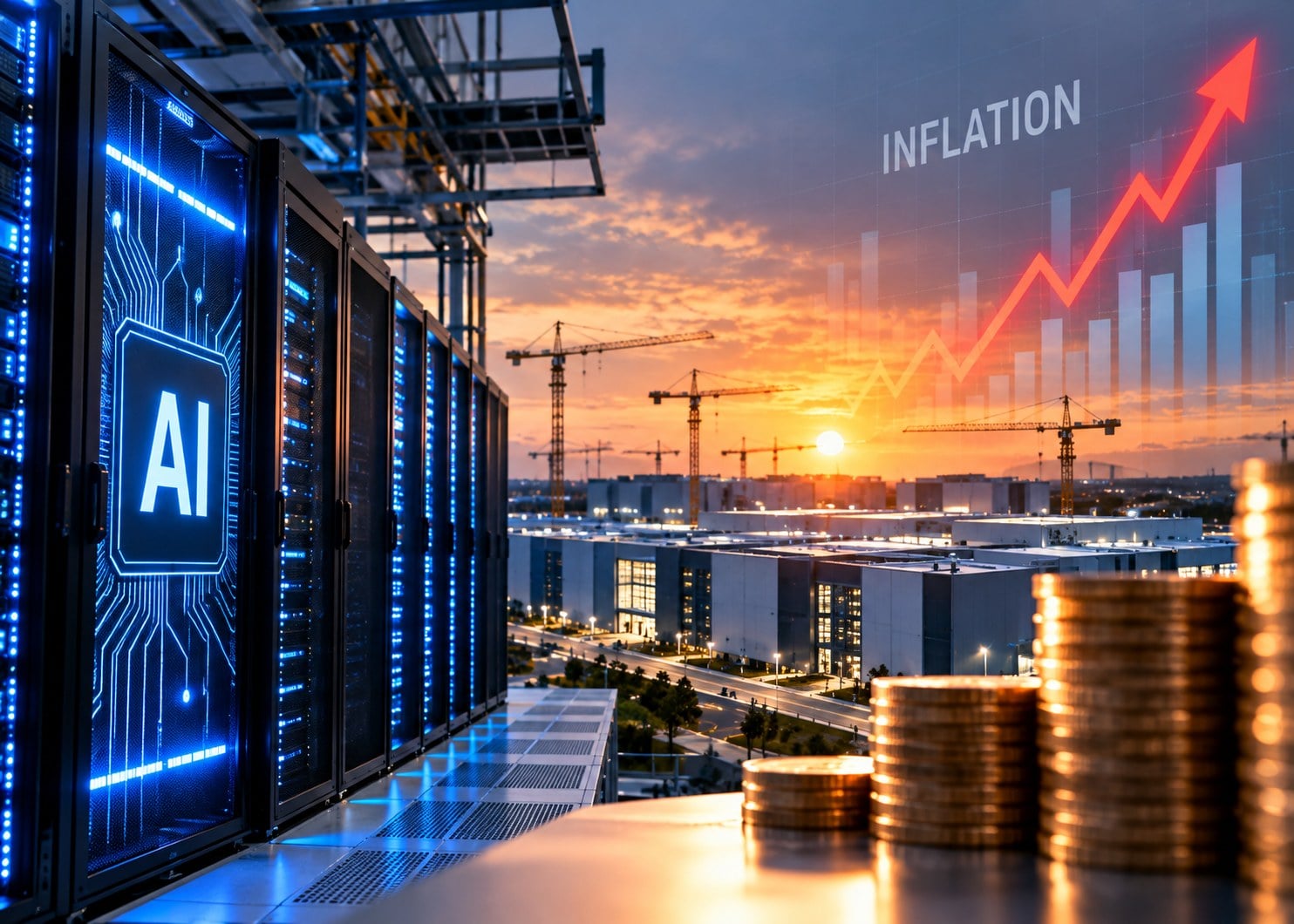
Federal Reserve Chair Kevin Warsh said the investment boom surrounding artificial intelligence is contributing to near-term demand pressures as central banks confront inflation that remains stubbornly elevated across major economies.
Speaking during the IMF and World Bank meetings in Bangkok, Warsh described the U.S. economy as resilient and pointed to a broad investment surge initially driven by artificial intelligence but increasingly spreading into other areas of the economy.
That investment is economically important because building AI infrastructure requires enormous amounts of capital, electricity, semiconductor equipment, construction capacity and other resources.
The spending can eventually increase productivity, but its immediate effect can also increase demand at a time when economies are already dealing with constrained energy supplies and elevated prices.
Warsh said discussions with other central bankers showed inflation remained a common challenge.
His comments arrive as policymakers reconsider assumptions about how quickly interest rates can return to the low levels that prevailed before the recent inflation cycle.
The issue extends beyond the United States.
Central bankers gathering at the IMF meetings are confronting simultaneous investment requirements involving artificial intelligence, energy infrastructure, defense and industrial policy. Those demands are competing for capital and potentially placing upward pressure on the neutral level of interest rates.
For financial markets, that creates an important tension.
Artificial intelligence has supported economic growth, corporate investment and equity valuations. But if the infrastructure boom contributes to inflation and keeps borrowing costs elevated, the same investment cycle could pressure highly leveraged companies funding expansion with debt.
That dynamic has become increasingly visible as investors scrutinize financing across the AI data-center industry.
Warsh did not provide a new explicit path for Federal Reserve rates.
Markets will therefore focus on incoming inflation and employment data ahead of the Fed’s next policy decision, while assessing whether the AI investment boom is becoming an increasingly important factor in monetary policy.