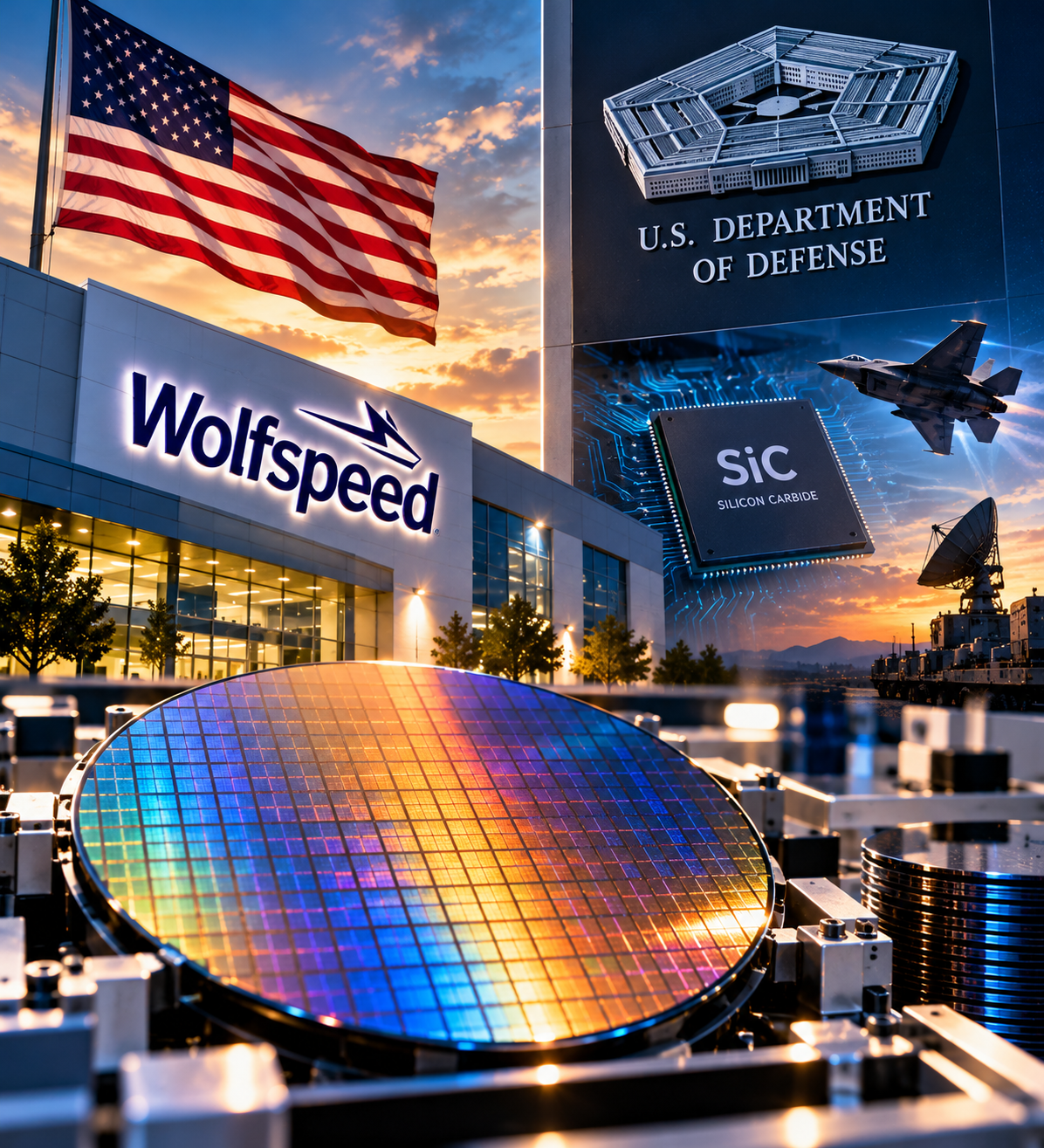
Wolfspeed shares surged in extended trading Wednesday after the U.S. Department of Defense offered the semiconductor manufacturer a conditional loan commitment of up to $1.5 billion, strengthening Washington’s effort to expand strategically important chip production inside the United States.
The proposed financing would support Wolfspeed’s production of silicon-carbide materials and power devices while also helping the company develop technologies with national-security applications.
Wolfspeed shares jumped approximately 27% in after-hours trading following the announcement.
The financing would come through the Defense Department’s Office of Strategic Capital and carry a potential 30-year term.
Silicon carbide is particularly important in applications requiring efficient conversion of large amounts of electricity. The technology is used in electric vehicles, solar inverters, industrial equipment and other high-power systems.
But the Pentagon’s interest extends beyond those commercial markets.
Wolfspeed said it plans to use the financing partly to upgrade its gallium-nitride technology for next-generation communications infrastructure and electronic-warfare systems and to develop radiation-hardening capabilities.
Those applications make the investment part of a broader U.S. effort to strengthen domestic semiconductor manufacturing and reduce dependence on foreign supply chains for technologies considered important to national security.
The commitment is conditional rather than completed financing.
It remains subject to due diligence, definitive agreements, government approvals and other conditions. Under the proposed terms, Wolfspeed would also issue the Defense Department warrants allowing it to purchase up to 7.5% of the company’s fully diluted equity.
For Wolfspeed, the financing could provide something equally important: additional balance-sheet support as the company works to strengthen its financial position while expanding capital-intensive semiconductor manufacturing.
For Washington, the transaction illustrates how industrial policy is moving beyond traditional chip subsidies toward financing structures directly connected to defense and strategic technology.
The next milestone will be whether Wolfspeed satisfies the conditions required to convert the Pentagon commitment into definitive financing.