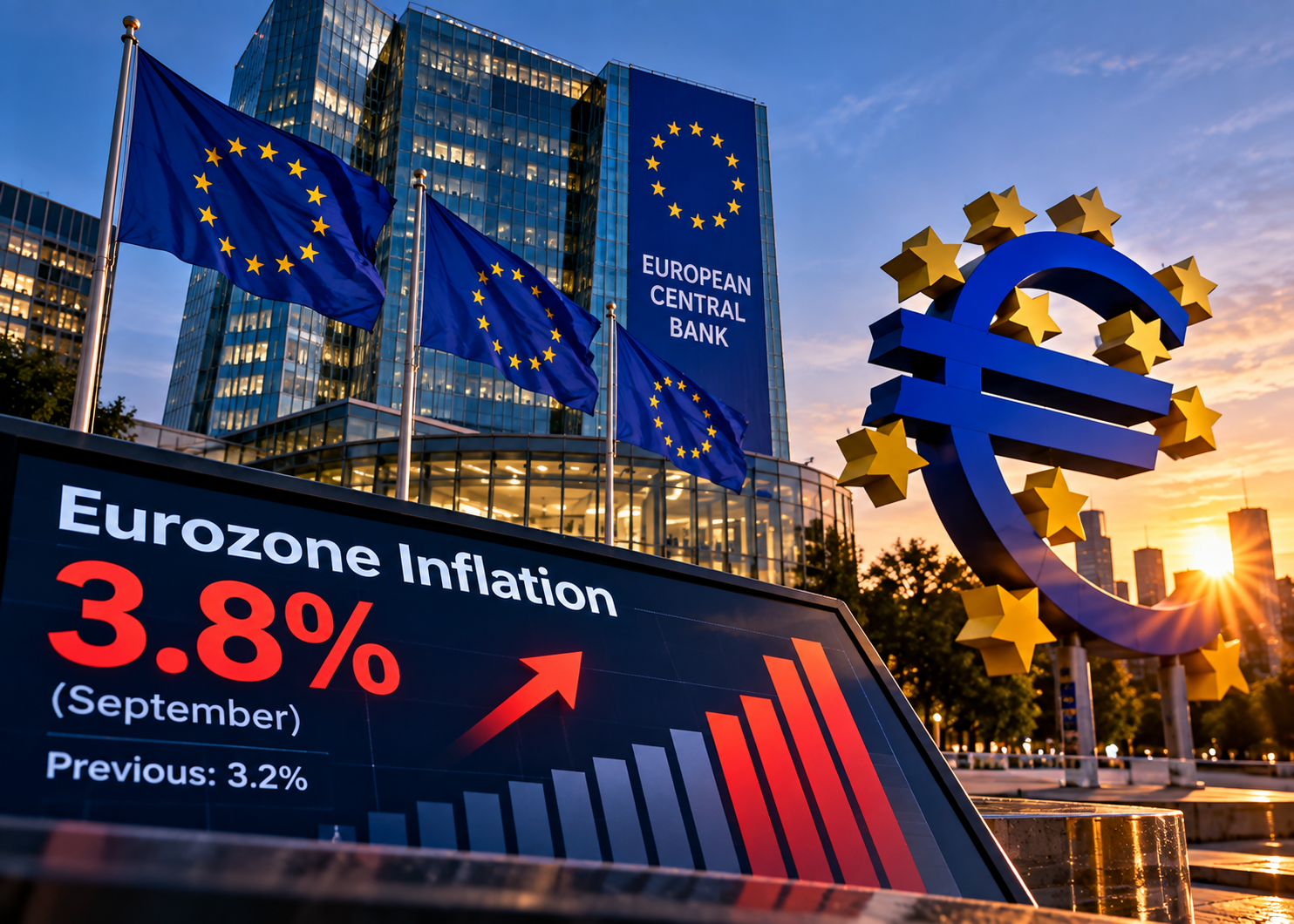
Eurozone inflation accelerated sharply in September as expensive energy and food pushed consumer prices further above the European Central Bank’s target.
Eurostat’s preliminary estimate put annual inflation across the 21-country currency bloc at 3.8%, up from 3.2% in August. The result exceeded the 3.6% consensus forecast in a Reuters survey.
Underlying inflation also moved higher.
Core inflation excluding volatile food and energy components increased to 2.5% from 2.4%, with services contributing to the acceleration.
The divergence between headline and core inflation is important for monetary policy.
Energy costs are responsible for much of the latest increase, but the ECB must determine whether those increases remain concentrated in fuel and utilities or begin spreading into wages, services and other prices.
The central bank has already raised rates twice this summer. Its deposit rate currently stands at 2.5%.
Markets expect additional tightening over the coming year, although investors currently see little probability of another increase this month and have not fully priced the next move until January.
That leaves policymakers confronting competing risks.
Inflation at 3.8% is substantially above the ECB’s 2% medium-term target, but European borrowing costs have also risen sharply as the global sovereign-bond selloff has tightened financial conditions.
French debt is a particular concern. The spread between French and German government borrowing costs has widened to levels not seen in decades, increasing the potential financial-stability consequences of additional tightening.
The inflation shock is also moving into fiscal policy.
European governments face increasing pressure to shield households and businesses from high energy costs. Existing support measures remain relatively limited, but larger or longer-lasting subsidies would place additional pressure on government budgets.
The next ECB decision will therefore depend not simply on headline inflation but on whether energy inflation spreads more broadly through the economy.
Investors should watch energy prices, services inflation, wage data, sovereign-bond spreads and ECB communications for evidence that policymakers are moving toward another rate increase.