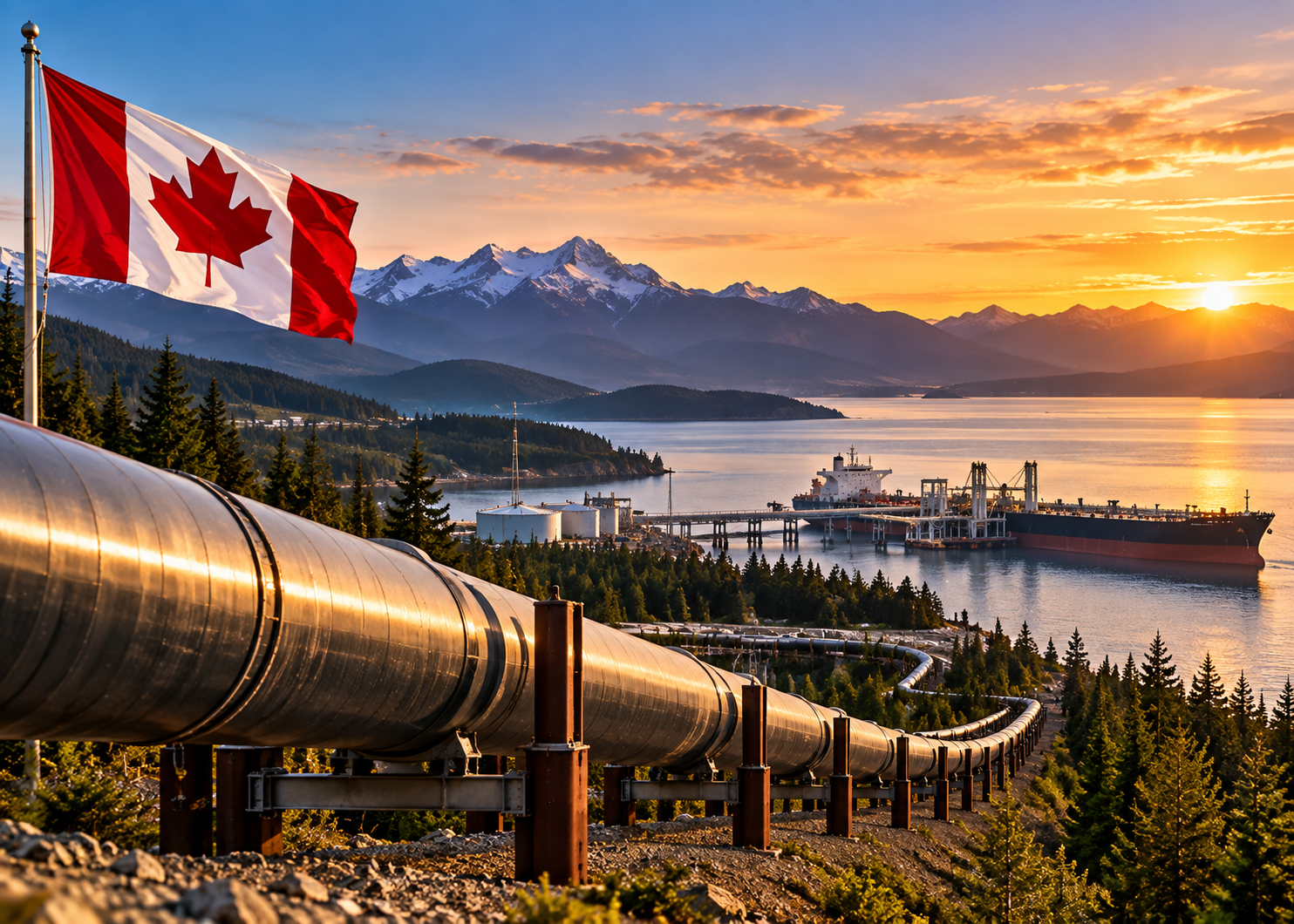
Canada has formally designated the proposed Pacific Link oil pipeline a project of national interest, accelerating the regulatory path for a one-million-barrel-a-day export route designed to reduce the country’s dependence on the United States.
Prime Minister Mark Carney announced the designation Thursday in Fort McMurray, Alberta.
The federal government aims to complete the regulatory review by September 1, 2027, using the streamlined process established under Canada’s Building Canada Act.
The proposed pipeline would carry an additional one million barrels of crude per day to Canada’s west coast, giving Canadian producers greater access to Asian markets.
That would represent a substantial change in Canada’s export infrastructure.
More than 90% of Canadian crude exports currently move to the United States by pipeline. The Trans Mountain system is Canada’s principal existing westward oil-export route and is already operating near capacity.
The Canadian government estimates Pacific Link could generate more than C$20 billion in annual economic output and C$100 billion in government revenue by 2060.
Alberta estimates construction could cost approximately C$35.2 billion to C$43.7 billion.
The federal government and Alberta plan to become majority owners, while Indigenous communities would be offered at least a 10% ownership interest supported by government loan-guarantee programs.
The project is economically important because Canada is attempting to diversify its trade relationships as dependence on a single major export market creates increasing strategic risk.
Energy security adds another dimension.
Asian buyers have been seeking additional crude supplies outside the Middle East amid geopolitical instability, potentially increasing the strategic value of Canadian access to Pacific export markets.
But designation as a national-interest project does not mean construction is guaranteed.
Pacific Link still faces regulatory review, Indigenous consultation, financing requirements and the need for sufficient additional oil-sands production to support the pipeline.
Large Canadian pipeline projects have historically encountered substantial legal, environmental and cost challenges.
Investors should therefore distinguish Thursday’s accelerated regulatory status from a final investment decision.
The next milestones will be route development, consultation, regulatory approval, financing and evidence that producers are prepared to commit enough supply to support the project’s economics.