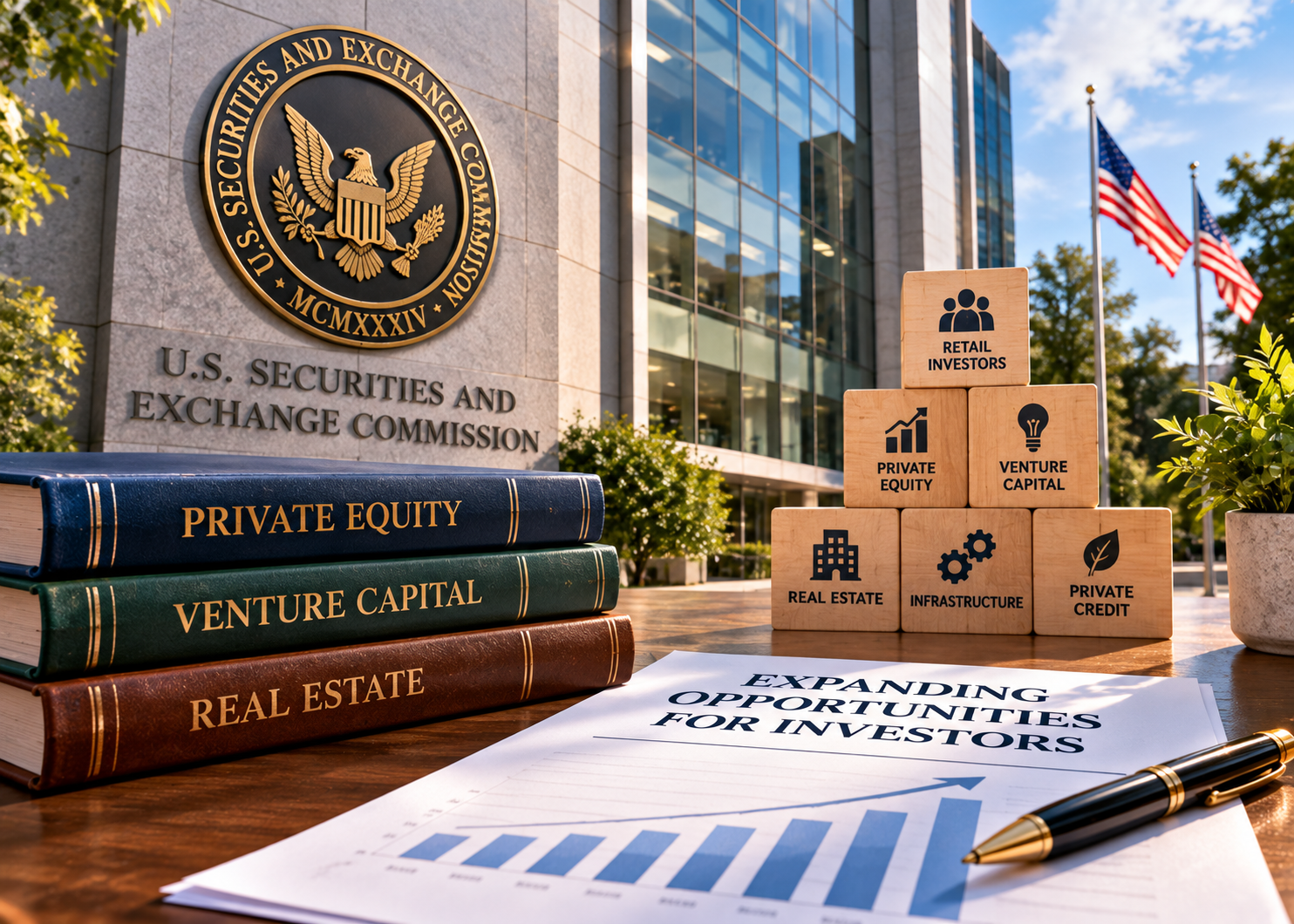
The U.S. Securities and Exchange Commission is moving toward a significant expansion of retail investors’ access to private-market investments, potentially opening more private equity, venture capital and real-estate strategies to individual investors.
The SEC is set to consider a series of proposals aimed at what Chair Paul Atkins has described as the responsible “retailization” of private assets.
The measures include potential changes affecting performance-based fees, closed-end investment funds and the standards used to determine who qualifies as an accredited investor.
Under existing rules, many private investments are largely limited to institutions and individuals meeting specified wealth or income requirements.
One proposal under consideration would broaden accredited-investor eligibility by recognizing certain professional certifications or credentials rather than relying exclusively on financial thresholds.
Other changes could affect the circumstances under which investment advisers charge performance fees and how closed-end funds handle share offerings and redemptions.
Supporters argue that broader access could allow individual investors to participate in companies and assets that remain private for longer periods before entering public markets.
The potential benefits come with additional risks.
Private assets generally have less frequent pricing, lower liquidity and more complicated fee structures than publicly traded stocks and bonds. Investors may also have fewer opportunities to exit positions quickly during periods of market stress.
That tradeoff is likely to be central to the regulatory debate.
The proposals would not immediately change investor-access rules. SEC proposals normally proceed through a public-comment process before commissioners consider final regulations.
For asset managers, any eventual expansion of the retail market could create a large new distribution channel for private funds.
For investors, the important details will be the eligibility standards, disclosure requirements, liquidity protections and fee structures contained in the final rules.