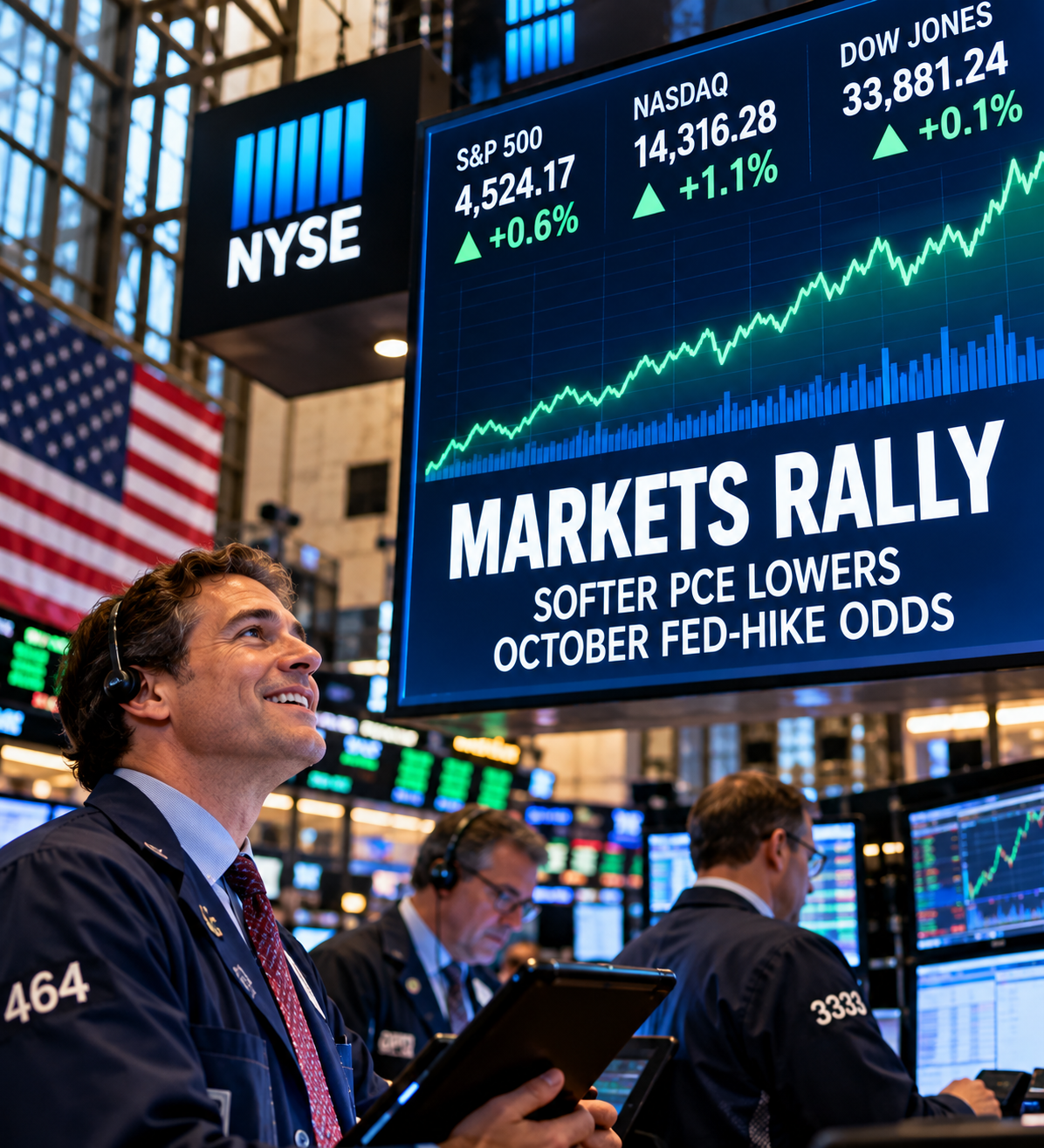
Wall Street moved higher Wednesday as investors responded to softer-than-expected U.S. inflation by reducing bets that the Federal Reserve will raise interest rates again in October.
The Nasdaq Composite gained about 1.1% by late morning in New York, while the S&P 500 advanced roughly 0.6%. The Dow Jones Industrial Average was little changed.
The move followed the release of the Federal Reserve’s preferred inflation measure. The headline Personal Consumption Expenditures price index rose 0.3% in August, below the 0.4% increase economists surveyed by Reuters had expected. On a year-over-year basis, PCE inflation stood at 3.4%, compared with a 3.7% consensus forecast.
The inflation report changed the immediate interest-rate calculation.
Traders put the probability of a quarter-point Fed increase in October at roughly 38%, down from more than 50% a day earlier, according to CME FedWatch data cited by Reuters. That is a significant shift from the much more aggressive tightening expectations markets had priced during the recent surge in oil prices and Treasury yields.
Technology and other growth shares benefited most from the repricing. Amazon and Apple were up around 2% each, Alphabet gained about 3%, Microsoft rose 1.9%, Palo Alto Networks added 3.7% and Intuit gained 2.6%. Semiconductor performance was more mixed, with AMD and Broadcom down nearly 1%.
The rally does not mean the inflation problem has disappeared.
The 10-year Treasury yield remained close to its highest level since June 2007, while oil prices were still elevated. Those conditions continue to impose tighter financial conditions even as Wednesday’s PCE report reduced the urgency surrounding another immediate Fed increase.
There is also an important statistical caveat. Barclays analysts said methodology changes associated with the Bureau of Economic Analysis’ annual update contributed to the lower PCE reading. That makes the revisions and underlying inflation trend important alongside the headline number.
The market reaction nevertheless represents a material development from Cedar’s morning PCE report: investors have now had several hours to price the data, October tightening expectations have fallen substantially, and the Nasdaq and S&P 500 have moved higher.
Investors will next watch comments from Federal Reserve officials and Friday’s employment report for evidence on whether the combination of moderating inflation and labor-market conditions can keep the Fed from tightening again in October.