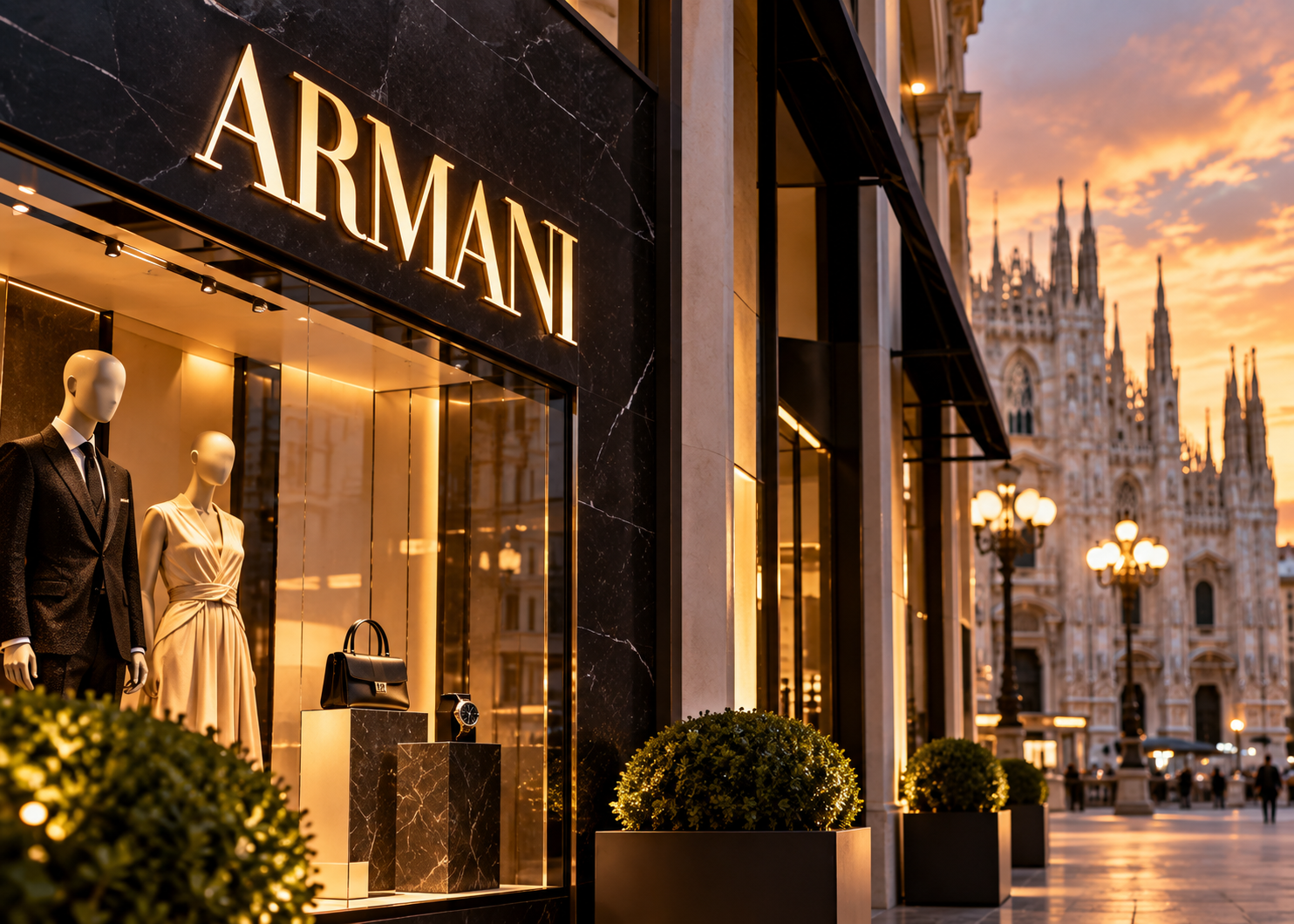
Italian luxury group Armani is open to bringing in more than one investor as it prepares for the sale of an initial 15% stake required under founder Giorgio Armani’s succession plan.
Chief Executive Giuseppe Marsocci said the company is not required to select a single investor and that the stake could potentially be divided among multiple buyers. He emphasized that no decision has been made.
The ownership transition follows instructions contained in Giorgio Armani’s will.
The founder, who died last September at age 91, directed that an initial 15% interest in the company be sold between 12 and 18 months after his death. His plan then calls for either the sale of a larger stake or a public-market listing.
The will identified luxury group LVMH, cosmetics company L’Oréal and eyewear group EssilorLuxottica as preferred potential buyers while allowing other investors of comparable standing to be considered.
Marsocci said Armani intends to respect the timetable established by its founder, although any transaction will ultimately depend on agreement over valuation and other terms.
Armani is preparing for discussions with LVMH, L’Oréal and EssilorLuxottica in the coming weeks, according to reports. One possibility discussed informally would divide the 15% interest among the three groups.
That structure has not been agreed.
The process matters because Armani has historically maintained unusual independence within a luxury sector dominated by large multinational groups.
Bringing in one or more strategic shareholders could therefore reshape both the company’s ownership and its commercial relationships while preserving more independence than an outright sale.
The eventual choice of investor will also be closely watched across the European luxury sector. Each of the preferred groups brings a different strategic profile spanning fashion, beauty, eyewear and global distribution.
For now, the important development is structural: Armani’s management has confirmed that the first ownership transfer does not necessarily have to produce a single dominant outside shareholder.
The next phase will depend on negotiations over valuation, governance and the strategic role any new investor would receive.