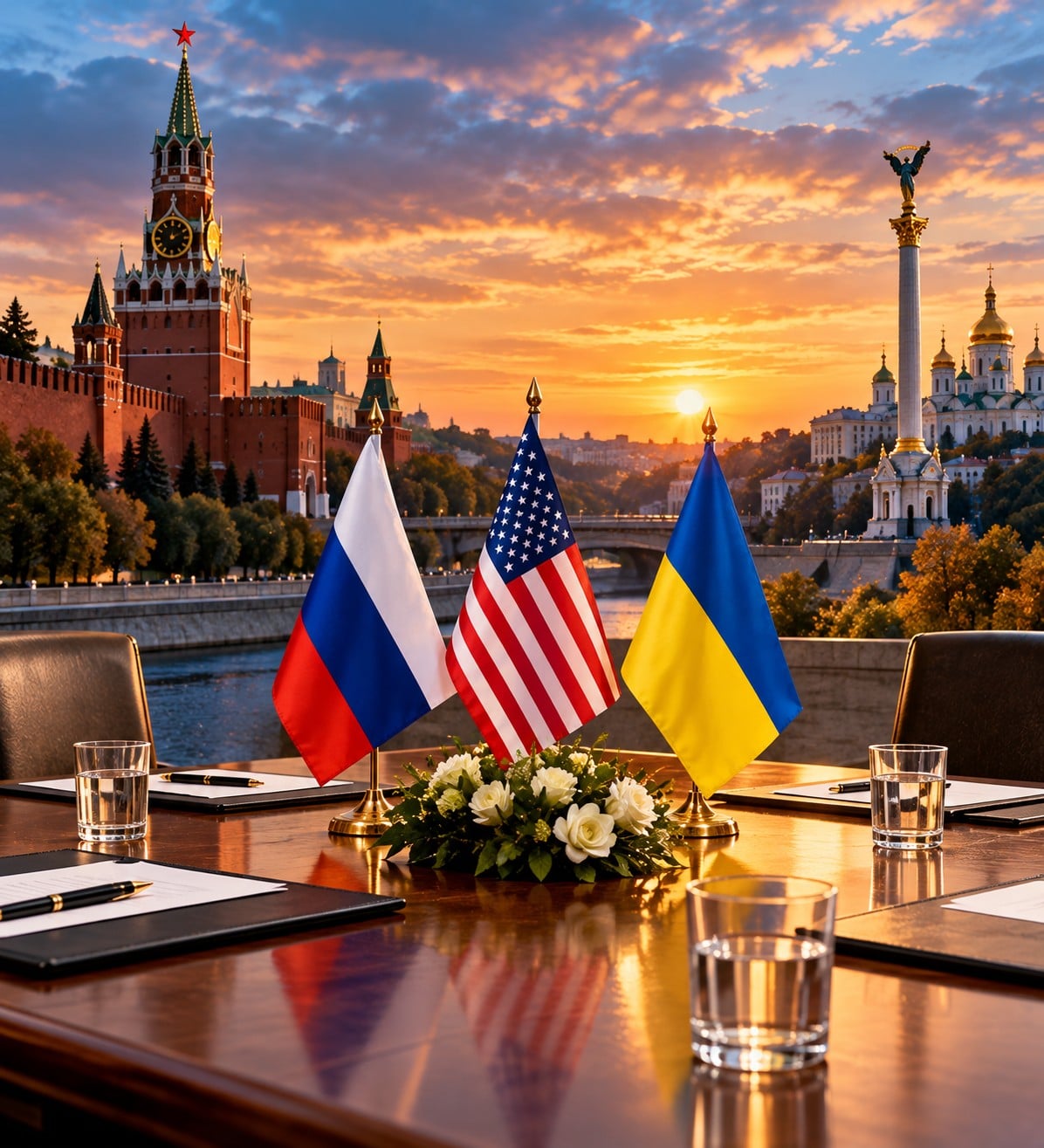
Russian President Vladimir Putin has agreed in principle to resume U.S.-mediated negotiations with Ukraine, reopening a diplomatic channel that has been largely dormant since February.
The development followed a nearly three-hour meeting between Putin and U.S. special envoy Steve Witkoff in St. Petersburg.
The Kremlin said Russia is prepared to participate in renewed three-way negotiations involving Moscow, Kyiv and Washington, potentially beginning in November.
The diplomatic opening remains preliminary.
No ceasefire has been agreed, and major differences remain between Russia and Ukraine over territory, security guarantees and Ukraine’s future relationship with NATO.
Putin continues to seek Russian control over the entire Donetsk region and restrictions on Ukrainian NATO membership, positions Kyiv has resisted.
The renewed negotiations matter beyond the battlefield.
Russia remains an important global supplier of oil and refined petroleum products, while the war and sanctions have repeatedly affected energy flows, shipping patterns and European security spending.
Any credible movement toward ending the conflict could therefore influence sanctions expectations, European defense policy, Russian commodity exports and geopolitical risk premiums embedded in energy markets.
Those consequences should not be treated as certain.
An agreement to resume negotiations is materially different from an agreement on a ceasefire or peace settlement, and previous diplomatic efforts have failed to resolve the central territorial and security disputes.
Markets will now watch whether the proposed November negotiations occur, whether the sides can establish a workable security framework and whether Russia and Ukraine demonstrate flexibility on the issues that have repeatedly blocked a settlement.