The financing behind the artificial-intelligence infrastructure boom is becoming harder to measure, with S&P Global warning that the world’s largest technology companies may carry more AI-related liabilities than markets can currently see.
S&P’s global head of digital infrastructure, Mark Habib, said interconnected financing structures can leave hyperscalers effectively supporting enormous data-center projects or smaller AI companies without every resulting obligation appearing directly in conventional disclosures.
The warning comes as investors increasingly scrutinize the debt supporting AI infrastructure after bonds issued by some data-center and neocloud companies came under pressure.
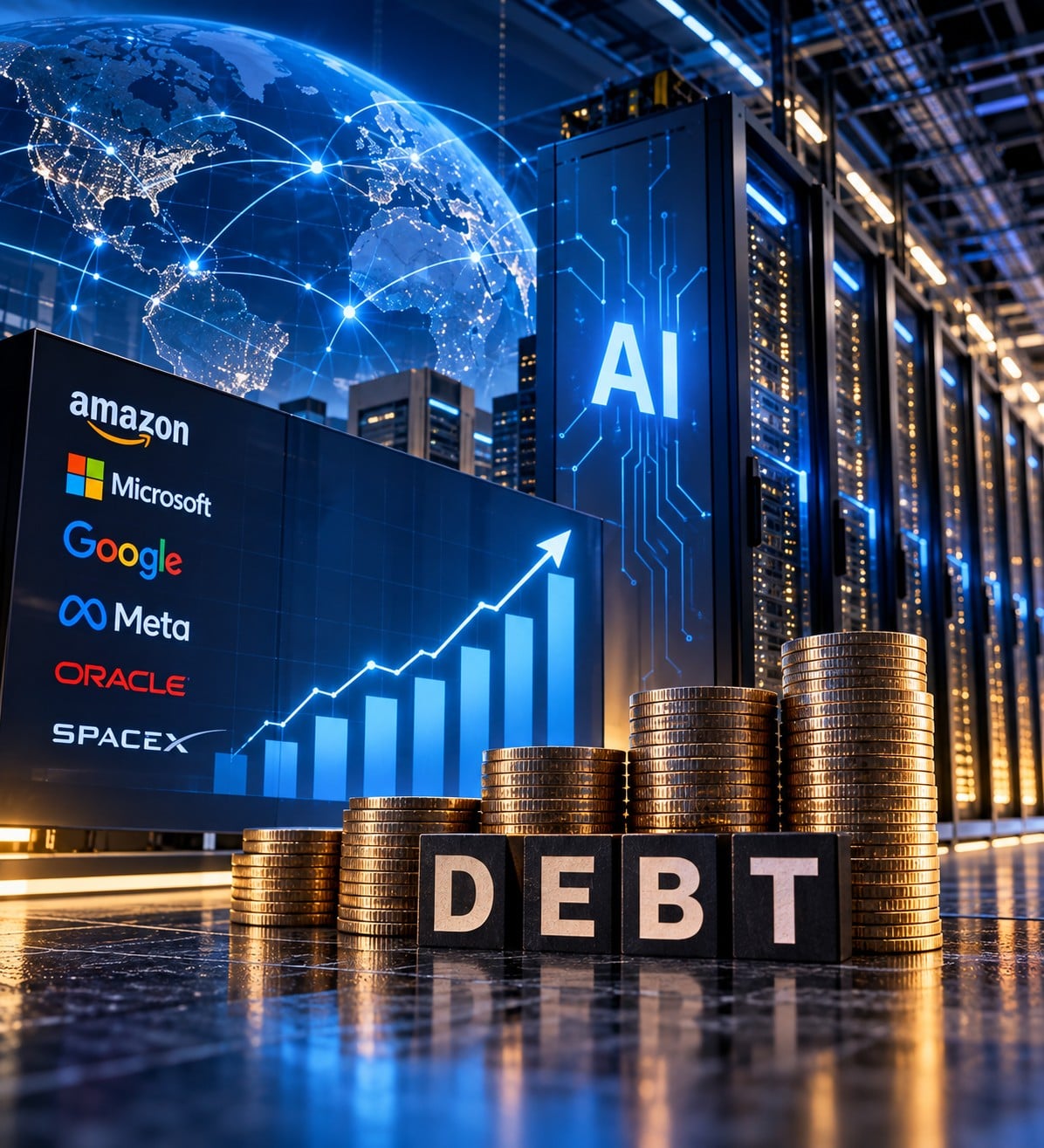
S&P expects six major U.S. hyperscalers — Amazon, Microsoft, Alphabet, Oracle, Meta and SpaceX — to spend more than $7 trillion on data centers and other AI-related capital expenditure between 2025 and 2030. The ratings firm also expects the group collectively to remain under significant free-cash-flow pressure as investment continues.
The concern is not that S&P currently expects an immediate wave of credit downgrades.
Instead, the risk lies in visibility and future profitability.
Large technology companies can participate in financing structures involving data-center developers, infrastructure providers and AI companies. Those relationships can create economic exposure that is more complicated than ordinary corporate borrowing.
S&P has already downgraded Oracle to BBB-, the lowest investment-grade rating, citing concerns around AI spending and uncertainty surrounding the path to profitability.
The central question for credit markets is whether future AI revenue grows quickly enough to justify the enormous capital commitments being made today.
If spending continues increasing while expected returns weaken, rating agencies could eventually reassess leverage and credit quality across parts of the technology sector.
For investors, that makes financial disclosure increasingly important. The AI boom is no longer only an equity-valuation story. It is becoming a major test of corporate balance sheets, private financing structures and global credit markets.