
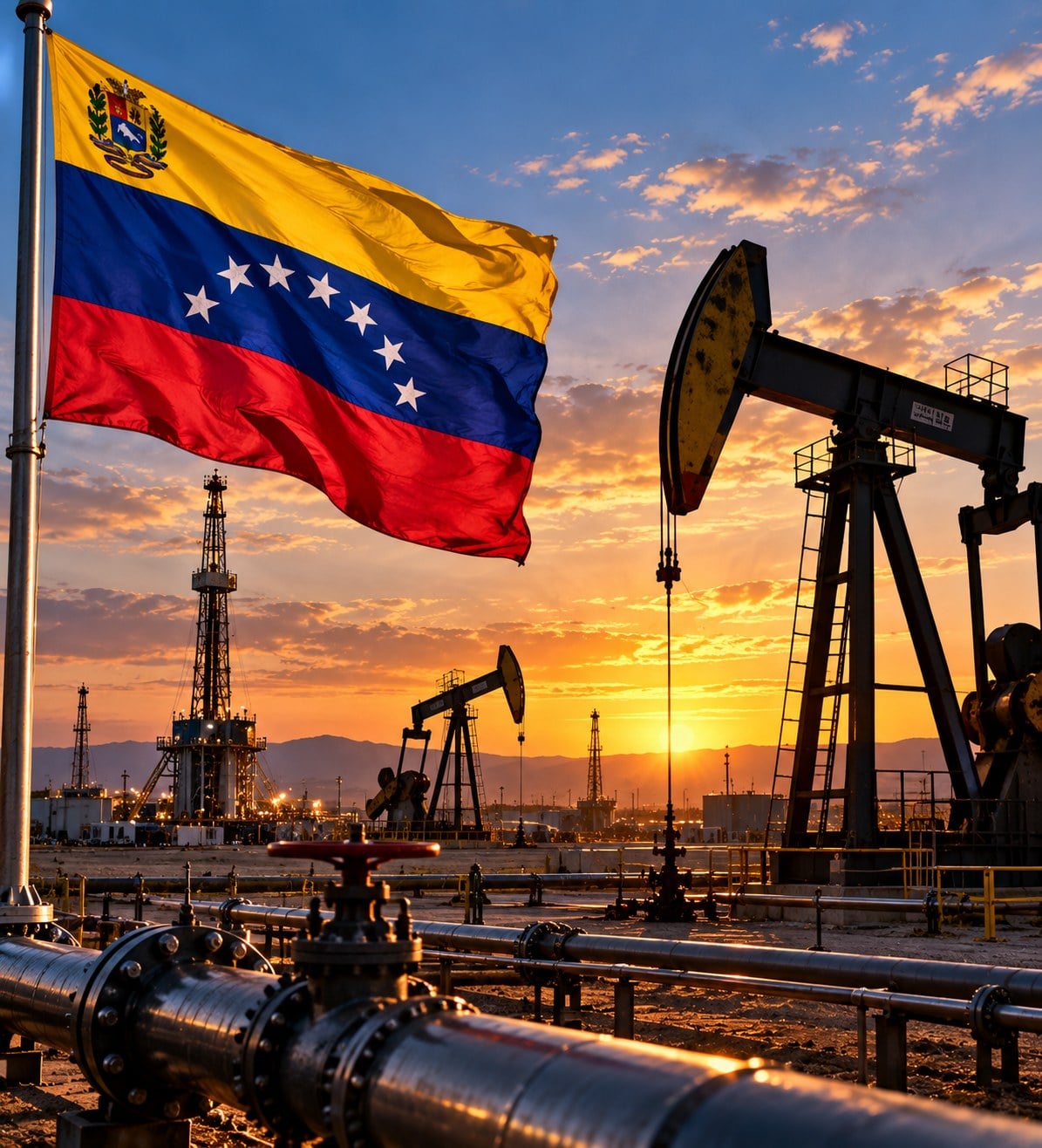
Venezuela expects nearly $76 billion of oil-sector investment over the next five years under recently signed agreements as the country attempts to rebuild production after years of underinvestment, operational problems and sanctions.
Acting President Delcy Rodríguez announced the investment estimate Saturday, saying a bilateral agreement with the United States includes plans involving 250 drilling rigs.
The U.S. agreement covers 17 oil fields and forms part of a broader package of 61 agreements, according to Rodríguez. The investment figure represents the Venezuelan government’s expectation rather than independently confirmed committed capital.
The scale matters because Venezuela holds the world’s largest proven crude reserves but continues to produce substantially less oil than it did before years of economic disruption and declining investment.
The country has been reopening its energy sector to foreign capital, creating a potentially important shift in the global oil-supply picture.
Rodríguez also pointed to a sharp recovery in western Venezuela.
She said production in Zulia state has risen from about 70,000 barrels per day to approximately 370,000 barrels per day and is expected to reach 400,000 barrels per day by year-end. She did not specify the period over which the increase from 70,000 barrels occurred.
The investment announcement comes while global crude markets remain unusually sensitive to supply.
Middle East disruptions have kept oil prices elevated, while governments and producers are looking for additional barrels capable of reducing pressure on fuel markets.
Venezuela therefore represents a potentially significant longer-term source of supply, but investment announcements alone will not determine how quickly production rises.
Markets will need to watch actual capital deployment, drilling activity, infrastructure rehabilitation and field-level production.
If the announced investment converts into operating projects at scale, Venezuela could begin reclaiming a much larger position in global oil supply.
For now, the critical distinction is between the government’s nearly $76 billion investment expectation and capital that has actually been committed and deployed.