

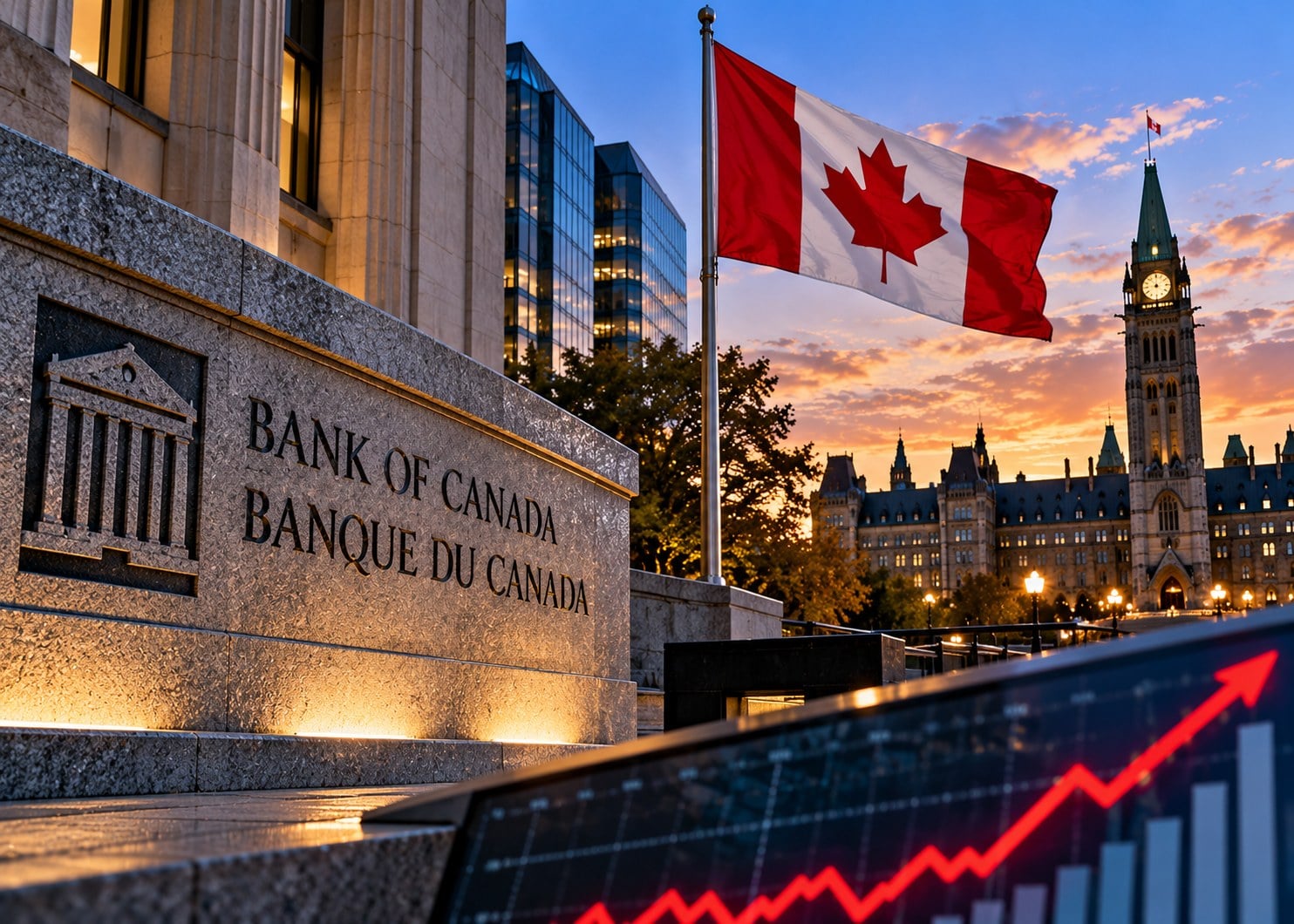
The Bank of Canada expects to make a significant upward revision to its inflation outlook as high oil and petroleum-product prices continue feeding through the Canadian economy.
Governor Tiff Macklem said Saturday that the energy shock has become more persistent than previously expected, increasing the risk that inflation pressures spread beyond their initial source.
The central bank remains committed to returning inflation sustainably to its 2% target and is prepared to adjust monetary policy if necessary.
The warning comes ahead of the Bank of Canada’s October 28 policy decision, when policymakers will receive updated quarterly inflation and growth forecasts.
Financial markets currently do not expect a rate change at either the October or December meeting but are pricing substantial tightening over the following year.
The policy challenge is becoming increasingly difficult.
Canada is simultaneously confronting higher energy costs, tighter global financial conditions and uncertainty surrounding economic growth.
The central question is whether higher crude and petroleum-product prices remain concentrated in energy or spread into the broader economy.
Higher energy costs directly affect gasoline and transportation expenses. They can also move through supply chains as businesses face more expensive freight, production and operating costs.
If those costs are passed on to consumers, what began as an energy shock can become a broader inflation problem.
The October forecast will therefore be important for determining how far the Bank’s inflation outlook has deteriorated.
If inflation appears likely to move back toward target without additional intervention, policymakers could continue holding rates steady. If price pressures become broader and more persistent, the case for renewed tightening would strengthen.