
Cedar Global Markets
Subscribe
SAVED POSTS
  • Login
No Result
View All Result
  • Home
  • Markets
  • Economy
  • Business
  • Energy
  • Technology
  • Global
    • Middle East
    • Europe
    • Asia-Pacific
    • Americas
    • Africa
  • Opinion
No Result
View All Result
  • Home
  • Markets
  • Economy
  • Business
  • Energy
  • Technology
  • Global
    • Middle East
    • Europe
    • Asia-Pacific
    • Americas
    • Africa
  • Opinion
Cedar Global Markets
US 2Y4.77%
US 10Y5.10%
US 30Y5.43%
2s10s+33bp
WTI$101.91
Brent$126.55
Fed funds3.75–4.00%
CPI4.0% YoY
Core CPI2.8% YoY
Unemployment4.20%
Cedar Global MarketsData via FRED® (St. Louis Fed). Not endorsed by the St. Louis Fed. Delayed / as published.

French Supermarket Cyberattack Exposes Insurance Gap as Physical Losses Reach Millions

in Technology, Europe
Reading Time: 2 mins read
byCedar Global Markets
October 17, 2026
0
Share on Facebook
Share on X

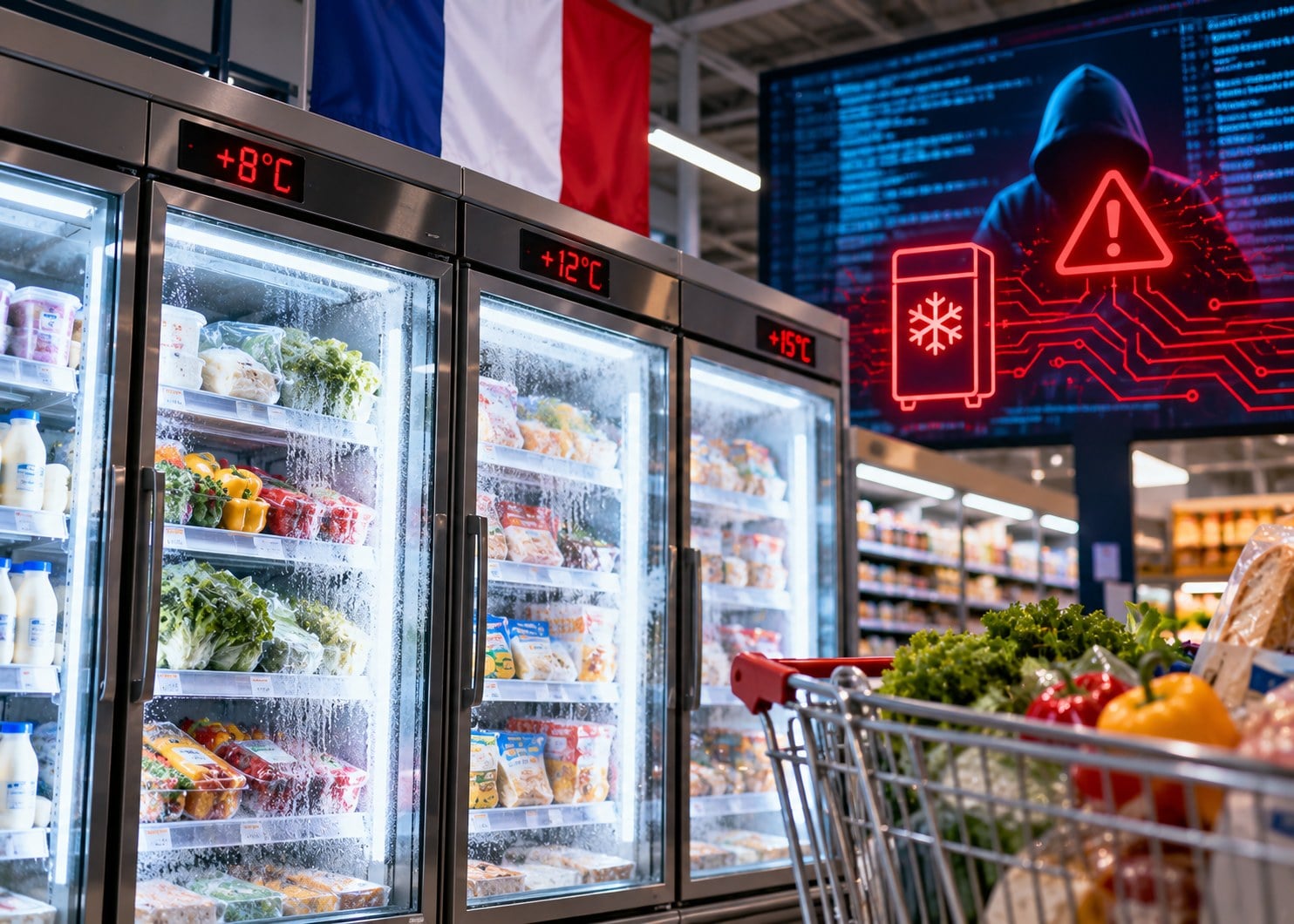
A cyberattack targeting connected refrigeration systems at French supermarkets is exposing a significant gap in corporate cyber insurance after retailers were forced to discard large quantities of food that may not be covered by conventional policies.

Hackers took control of internet-connected refrigeration equipment at roughly 350 French supermarkets, raising temperatures inside refrigerators and freezers to as high as 50 degrees Celsius.

The attack forced affected stores to dispose of spoiled food and could generate losses totaling tens of millions of euros nationwide.

The incident is significant because the damage crossed the boundary between digital disruption and physical economic loss.

Traditional cyber-insurance policies generally cover expenses such as incident investigation, system restoration, legal costs and crisis management.

Physical losses resulting from a cyberattack, however, are frequently excluded.

Insurance brokers said claims could also depend on whether affected companies maintained required software updates and complied with cybersecurity conditions contained in their policies.

France’s cybersecurity agency said affected refrigeration equipment included systems using software supplied by Danfoss, Copeland and Dixell.

Danfoss said many affected appliances were operating outdated software or had reached the end of their supported life and no longer received security updates.

The attack illustrates a growing vulnerability created by the expansion of the Internet of Things.

Equipment that was once largely mechanical—including refrigeration, industrial machinery, building controls and energy systems—is increasingly connected to corporate networks and the internet.

That connectivity creates operational efficiencies but also gives attackers additional pathways for causing physical disruption.

The insurance industry is beginning to respond.

Some businesses are seeking policies specifically covering physical damage and perishable inventory resulting from cyber incidents. Similar coverage already exists in parts of the energy, marine-cargo and defense industries.

The French incident could accelerate that shift across retail, pharmaceuticals and other industries dependent on temperature-controlled products.

For companies, the lesson extends beyond conventional cybersecurity.

As physical infrastructure becomes digitally connected, cyber risk increasingly becomes operational and financial risk as well.


Tags: Homepage Supporting

Related Posts

The Euro, NATO and the Quiet Battle for Global Capital

The Euro, NATO and the Quiet Battle for Global Capital

by Cedar Global Markets
October 18, 2026
0

For decades, the transatlantic relationship rested on a straightforward bargain: the United States supplied much of the military...

France Counts Economic Cost After Nationwide Protests Erupt Into Worst Unrest in Years

France Counts Economic Cost After Nationwide Protests Erupt Into Worst Unrest in Years

by Cedar Global Markets
October 18, 2026
0

France is assessing the economic and political consequences of its worst unrest in years after nationwide demonstrations over...

Samsung Reportedly Turns to TSMC 3-Nanometer Technology for Nvidia’s Next-Generation AI Memory

Samsung Reportedly Turns to TSMC 3-Nanometer Technology for Nvidia’s Next-Generation AI Memory

by Cedar Global Markets
October 18, 2026
0

Samsung Electronics will reportedly use manufacturing technology from TSMC to produce a key component of next-generation high-bandwidth memory...

Latest Briefing

The Euro, NATO and the Quiet Battle for Global Capital

October 18, 2026

Egypt Signals Readiness to Support Saudi Arabia as Houthi Conflict Draws in Regional Powers

October 18, 2026

China’s Solar-Equipment Exports Fall 6.4% as Global Shipment Slump Extends Into September

October 18, 2026

France Counts Economic Cost After Nationwide Protests Erupt Into Worst Unrest in Years

October 18, 2026
Next Post
Microsoft Pulls Out of Nscale UK Data-Center Deal as Power Bottleneck Delays AI Project Into 2030s

Microsoft Pulls Out of Nscale UK Data-Center Deal as Power Bottleneck Delays AI Project Into 2030s

Cedar Global Markets

Categories
  • Africa
  • Americas
  • Asia-Pacific
  • Banking
  • Business
  • Commodities
  • Economy
  • Energy
  • Europe
  • Global
  • Markets
  • Middle East
  • Opinion
  • Policy
  • Technology
  • Trade
[mc4wp_form]

© 2026 Cedar Global Markets

Welcome Back!

Login to your account below

Forgotten Password?

Retrieve your password

Please enter your username or email address to reset your password.

Log In
No Result
View All Result
  • Home
  • Markets
  • Economy
  • Business
  • Energy
  • Technology
  • Global
    • Middle East
    • Europe
    • Asia-Pacific
    • Americas
    • Africa
  • Opinion
SAVED POSTS

© 2026 Cedar Global Markets